
Broward cops’ operation sold them crack 30 years ago. Now they get a second chance | Opinion
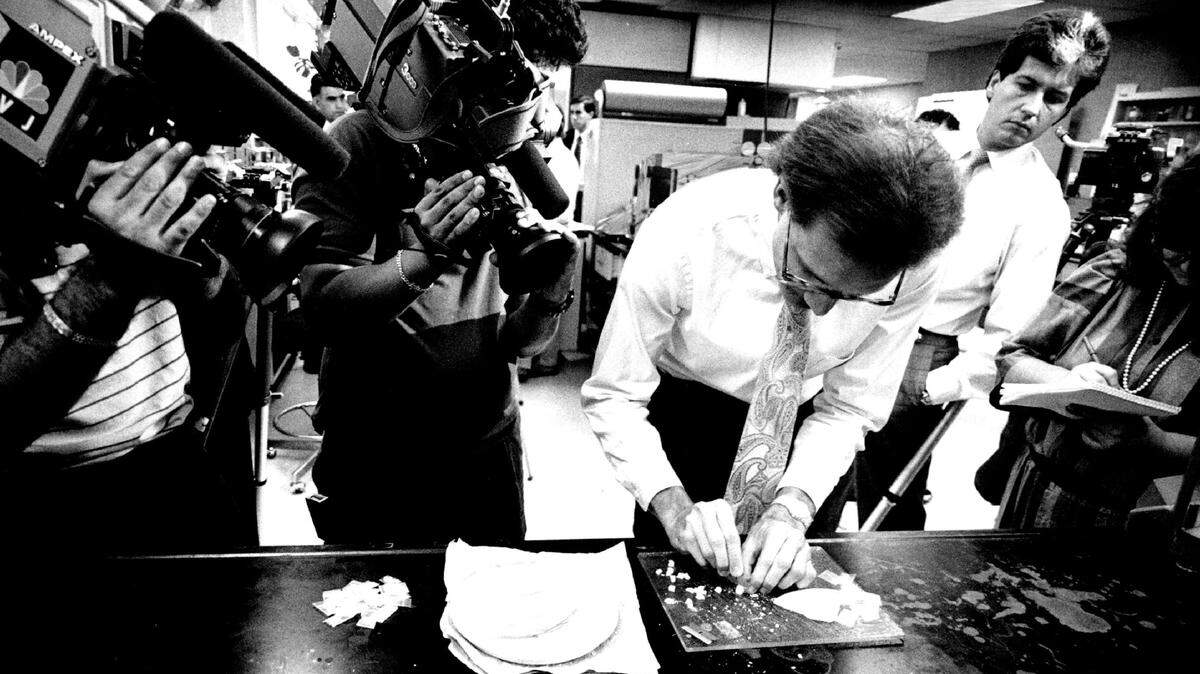
It sounds almost too bizarre to be true: Back in the ‘80s, deep in the crack cocaine era, the Broward County Sheriff’s Office decided to manufacture its own crack to use in reverse stings.
Now, due to an effort by the current Broward state attorney, the convictions stemming from that bad behavior by law enforcement may be finally — and rightfully — erased.
Here’s how it went: Starting in the late ‘80s, a sheriff’s office chemist used seized cocaine to cook up crack — in the courthouse, no less. Then-Sheriff Nick Navarro, a frequent face on local TV, signed off on the policy himself. The rationale: to guarantee a supply of crack for undercover operations in the ongoing war on drugs.
Deputies, posing as drug dealers with real crack in hand, made thousands of arrests and sent a slew of people to prison. Some of those undercover sales took place near schools, which meant a minimum mandatory sentence of three years in prison.
The whole thing was a mindbogglingly bad idea — allowing government to manufacture a highly addictive illegal drug with the supposed intent of reducing drug activity — and, in 1993, the Florida Supreme Court ruled that the practice was illegal.
But some 2,600 people who were caught in the sheriff’s web of deception still had convictions on their records. That’s something Broward State Attorney Harold Pryor wants to change.
At the end of 2024, Pryor announced a welcome and long overdue plan to vacate the convictions in those cases, which stretched from about 1989 to 1993. His office has begun digging through case archives to find those who qualify. You don’t have to contact the state attorney’s office for the process to go forward, the office said. All cases will be reviewed. The records came to light during a routine review of public records that had been kept longer than required under records retention rules.
The idea that so many convictions based on manufactured evidence remained on the record all this time, though they stemmed from a practice ruled illegal by the state supreme court, is an injustice. How many people were denied jobs or housing based on one of these fundamentally flawed convictions? How many people lived and died under that shadow?
There have been mixed reactions to the news. That’s understandable. Some will say this is a case of too little, too late. Maybe so. But this isn’t such a distant past that there’s no point at all. Lifting the stain on people’s records — for those convicted or their families — is a worthy effort, even this many years later. It’ll take a long time for the state attorney’s office to sort through the records and follow the legal channels to vacate the convictions — for those who qualify — but it is absolutely the right thing to do.
There are also those who will say that, regardless of the actions of the sheriff’s office, those who were convicted bought drugs, so they deserve what they got. But that’s not how the justice system is supposed to work. If the evidence used was illegal, the convictions shouldn’t stand.
As Pryor wrote in a letter to the current Broward Sheriff, Tony Gregory, “the state has an ethical duty and obligation to correct this injustice.” In a written statement, he added that “it is never too late to do the right thing.”
Reverse sting operations — when an undercover officer sells drugs to a person and then arrests them — were more common a few decades ago. These days, law enforcement has changed for the better. Now it’s time to correct the record on these 30-year-old cases. As Pryor wrote, the convictions “may be a dim memory or an unfortunate part of history to many, but they have had a long-lasting and severe impact on the lives of the people who were arrested — as well as their families and the wider community.”
Those who may be affected may contact the Broward State Attorney’s Office at casereview@browardsao.com or call 954-831-6543.
Click here to send the letter.
BEHIND THE STORY
MOREWhat's an editorial?
Editorials are opinion pieces that reflect the views of the Miami Herald Editorial Board, a group of opinion journalists that operates separately from the Miami Herald newsroom. Miami Herald Editorial Board members are: opinion editor Amy Driscoll and editorial writers Isadora Rangel and Mary Anna Mancuso. Read more by clicking the arrow in the upper right.
What's the difference between an op-ed and a column?
How does the Miami Herald Editorial Board decide what to write about?
The Editorial Board, made up of experienced opinion journalists, primarily addresses local and state issues that affect South Florida residents. Each board member has an area of focus, such as education, COVID or local government policy. Board members meet daily and bring up an array of topics for discussion. Once a topic is fully discussed, board members will further report the issue, interviewing stakeholders and others involved and affected, so that the board can present the most informed opinion possible. We strive to provide our community with thought leadership that advocates for policies and priorities that strengthen our communities. Our editorials promote social justice, fairness in economic, educational and social opportunities and an end to systemic racism and inequality. The Editorial Board is separate from the reporters and editors of the Miami Herald newsroom.
How can I contribute to the Miami Herald Opinion section?
The Editorial Board accepts op-ed submissions of 650-700 words from community members who want to argue a specific viewpoint or idea that is relevant to our area. You can email an op-ed submission to oped@miamiherald.com. We also accept 150-word letters to the editor from readers who want to offer their points of view on current issues. For more information on how to submit a letter, go here.
This story was originally published January 6, 2025 at 12:21 PM.