
Haiti desperately needs a new, bigger UN mission — and American leadership | Opinion
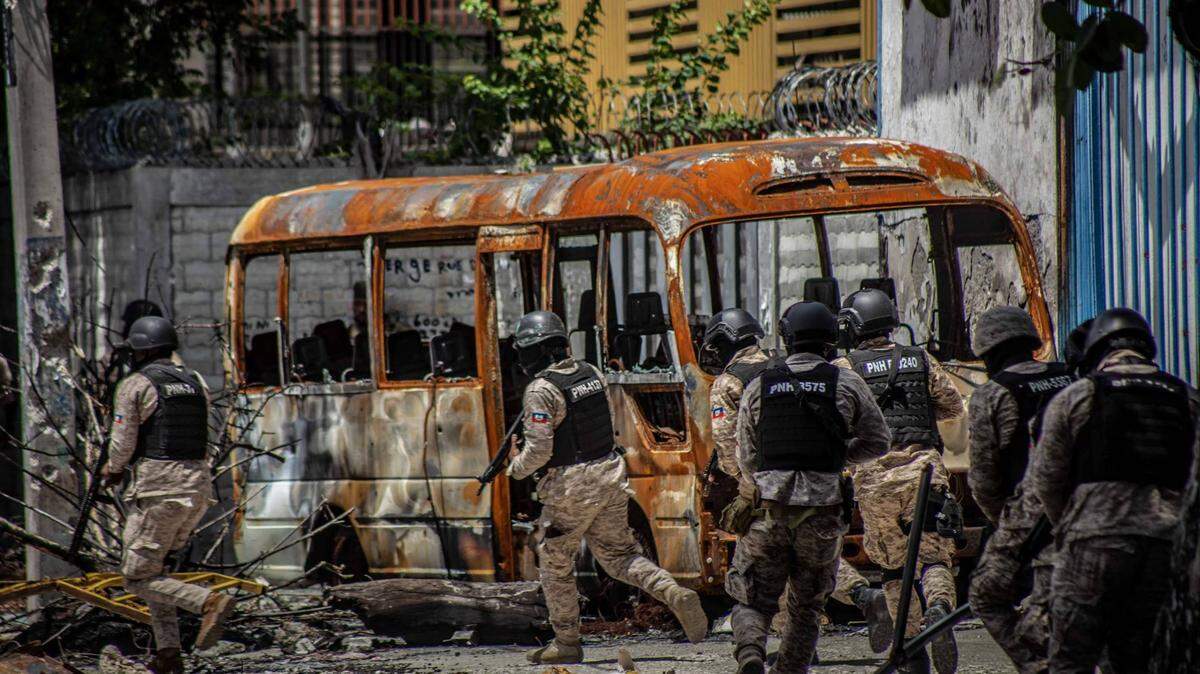
As Haiti endures a devastating crisis marked by escalating violence and lawlessness, urgent international intervention is required to address the growing chaos. With President Joe Biden preparing to leave office and Donald Trump poised to take power, the need for decisive action is clear.
Haitians are enduring unprecedented levels of brutality. This year alone, criminal gangs have killed at least 5,000 people and carried out horrifying massacres. Women and girls are being raped, children are forced into armed gangs and elderly citizens are being targeted, shot and burned.
Bullets are being fired at commercial airlines, prompting American carriers like American Airlines, Spirit and JetBlue to suspend operations. Aid workers are abandoning the country and violence has become rampant, with warlords terrorizing communities.
The current authorized United Nations mission, led by Kenya and largely financed by the U.S., has failed to contain the gangs responsible for the carnage. Since the Kenyan force arrived in June, the situation has worsened. The mission’s 416 personnel have struggled to hold territory or make any meaningful progress against the violence. Gang control continues to expand, leaving hospitals and schools closed, food scarcity increasing and over 700,000 people displaced.
A recent report from Human Rights Watch underscores the urgent need for a new, stronger and official U.N. mission, one that is better equipped to restore security while respecting human rights. The current force, underfunded and understaffed, cannot meet Haiti’s immense challenges. A larger, better-resourced force, with dedicated funding, is essential to help stabilize the country.
The report stresses that restoring security must take priority over other concerns like elections, which can come later. Previous failed U.N. interventions should be carefully considered to avoid repeating past mistakes. A new mission must include military-grade assets, such as helicopters, drones and tanks, along with personnel trained in military operations. The message to the gangs should be clear: “Enough is enough.”
The international community, especially the U.S. with the incoming Trump administration, has a critical role to play in advocating for a more robust mission — without resorting to American boots on the ground.
It remains uncertain whether a Trump administration would support such a mission or turn a blind eye. However, Haiti’s crisis is too close to home for the U.S. to ignore. Located less than two hours from Florida, the country’s instability directly impacts South Florida, home to one of the largest Haitian communities in the U.S.
Trump’s nominee for secretary of state, Sen. Marco Rubio, a Miami native, understands Haiti’s history. Rubio has previously argued that the U.S. should not intervene in Haiti, but let’s hope such a strict isolationist stance changes. Undoubtedly, addressing migration and security at the U.S. border will require helping stabilize Haiti and the broader region.
Despite its support for the Kenya-led mission, the Biden administration has fallen short in effectively addressing the crisis. The U.S. failed to prevent arms trafficking and did not take the lead in Haiti’s security efforts. Instead, the administration delegated responsibility to the Caribbean community and Kenya, with little success. By the time Washington intervened with sanctions, along with the ousting of a prime minister, the situation had already spiraled.
The international community must once again unite to provide tangible assistance to Haiti. Any new mission must collaborate with local communities, civil society organizations and government authorities.
A new wrinkle has emerged: Both China and Russia oppose a new U.N. peacekeeping mission for Haiti, claiming to represent the interests of those harmed by past interventions. While this stance is rooted in concern for Haitians, neither country has contributed to the struggling Kenya-led mission. Haiti’s suffering should not be a pawn in geopolitical games.
A transformation of the current Kenya-led multinational security support mission into an official U.N. peacekeeping mission is essential. Before leaving office, the Biden administration is supporting this initiative. We can only hope it succeeds. Failing to act swiftly will only worsen the crisis in Haiti and have dire consequences for the country and the U.S., especially South Florida.
Click here to send the letter.
BEHIND THE STORY
MOREWhat's an editorial?
Editorials are opinion pieces that reflect the views of the Miami Herald Editorial Board, a group of opinion journalists that operates separately from the Miami Herald newsroom. Miami Herald Editorial Board members are: opinion editor Amy Driscoll and editorial writers Isadora Rangel and Mary Anna Mancuso. Read more by clicking the arrow in the upper right.
What's the difference between an op-ed and a column?
How does the Miami Herald Editorial Board decide what to write about?
The Editorial Board, made up of experienced opinion journalists, primarily addresses local and state issues that affect South Florida residents. Each board member has an area of focus, such as education, COVID or local government policy. Board members meet daily and bring up an array of topics for discussion. Once a topic is fully discussed, board members will further report the issue, interviewing stakeholders and others involved and affected, so that the board can present the most informed opinion possible. We strive to provide our community with thought leadership that advocates for policies and priorities that strengthen our communities. Our editorials promote social justice, fairness in economic, educational and social opportunities and an end to systemic racism and inequality. The Editorial Board is separate from the reporters and editors of the Miami Herald newsroom.
How can I contribute to the Miami Herald Opinion section?
The Editorial Board accepts op-ed submissions of 650-700 words from community members who want to argue a specific viewpoint or idea that is relevant to our area. You can email an op-ed submission to oped@miamiherald.com. We also accept 150-word letters to the editor from readers who want to offer their points of view on current issues. For more information on how to submit a letter, go here.
This story was originally published December 12, 2024 at 10:00 AM with the headline "Haiti desperately needs a new, bigger UN mission — and American leadership | Opinion."