
With pardon promise, Trump tries to rewrite Jan. 6 history but he cannot erase it | Opinion
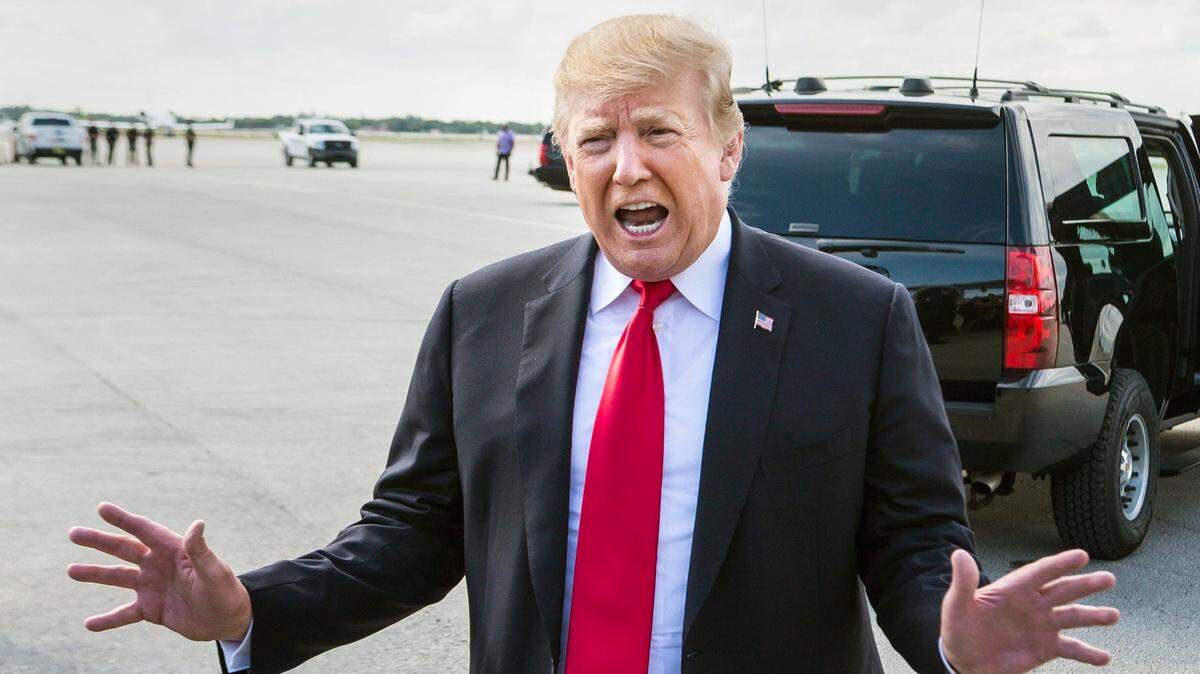
Just days after a former Proud Boy from Miami was sentenced to a year in prison for his role in the Jan. 6, 2021, riot at the U.S. Capitol, President-elect Donald Trump vowed to pardon people involved in the attack meant to overturn his 2020 defeat.
Trump for years has recast the people convicted of crimes related to Jan. 6 as “hostages” of a perverse system. Now that he’s going back to the White House, count on Trump and his allies to use their federal power to try to rewrite the history of Jan. 6 — not as an unprecedented attack against American democracy, but as a peaceful protest that’s been twisted by the media and Democrats. In fact, it’s those who tried to shed light on what happened that day, such as the members of the Jan. 6 House committee who “should go to jail,” Trump told NBC News over the weekend.
Trump said he could issue pardons as early as his “first day” back in office.
“They’ve been in there for years, and they’re in a filthy, disgusting place that shouldn’t even be allowed to be open,” Trump said of the people convicted during an interview with “Meet the Press” moderator Kristen Welker.
So far, 1,251 people have been convicted or pleaded guilty to crimes related to Jan. 6. The president-elect said there might be some exceptions to his pardons for rioters who were “radical, crazy.” Whatever those vague parameters might be, we would hope they cover people like Miami’s former Proud Boys leader Enrique Tarrio, sentenced to 22 years for seditious conspiracy.
Federal prosecutors argued Tarrio played a central role in organizing the attacks by establishing a chain of command within the Proud Boys, recruiting members willing to use violence that day and setting a time and place for the attacks. Tarrio even privately claimed credit for the riot, telling other leaders within the Proud Boys, “Make no mistake . . . we did this.”
Last week, another ex-Miami Proud Boy, Gabriel Garcia, got a one-year sentence for participating in aggressive confrontations with police and helping other rioters storm the Capitol. He was captured on video taunting then-U.S. House Speaker Nancy Pelosi to “come out and play,” the Herald reported. Garcia is a past member of the Miami-Dade Republican Executive Committee.
Whereas the Proud Boys — a right-wing extremist group, according to the Anti-Defamation League — and company might get the red carpet treatment from the White House, will Trump also honor the 140 law enforcement officers assaulted on Jan. 6?
Some of the same members of Congress who hid from attackers that day are retelling Jan. 6 as a walk in the park. That appears to be working to some extent. The mistrust in the media, the courts and Congress has pushed many people toward misinformation that purports to reveal a hidden fact about Jan. 6 that proves it was a liberal exaggeration.
In the end, the American electorate — sick of inflation and exorbitant housing costs — was not willing to punish Trump for the Jan. 6 uprising. Voters overlooked his role in inciting the rioters in exchange for the promises he made on the campaign trail.
But it is not an exaggeration that more than 900 people pleaded guilty to crimes connected to the riot — and Trump did not rule out pardoning them during his NBC News interview. Or that violence took place that day. Proud Boy Dominic Pezzola of New York, for example, ripped a shield from an officer’s hand and smashed it through a Capitol window, allowing other rioters to storm the building. He was sentenced to 10 years in federal prison. Or that the attackers came within feet of then-Vice President Mike Pence, shouting “hang Mike Pence,” before he made it to a secure location.
People should not be allowed to evade responsibility for Jan. 6. And no one should be allowed to distort the truth of what happened that day without being held accountable — not even the president.
Click here to send the letter.
BEHIND THE STORY
MOREWhat's an editorial?
Editorials are opinion pieces that reflect the views of the Miami Herald Editorial Board, a group of opinion journalists that operates separately from the Miami Herald newsroom. Miami Herald Editorial Board members are: opinion editor Amy Driscoll and editorial writers Isadora Rangel and Mary Anna Mancuso. Read more by clicking the arrow in the upper right.
What's the difference between an op-ed and a column?
How does the Miami Herald Editorial Board decide what to write about?
The Editorial Board, made up of experienced opinion journalists, primarily addresses local and state issues that affect South Florida residents. Each board member has an area of focus, such as education, COVID or local government policy. Board members meet daily and bring up an array of topics for discussion. Once a topic is fully discussed, board members will further report the issue, interviewing stakeholders and others involved and affected, so that the board can present the most informed opinion possible. We strive to provide our community with thought leadership that advocates for policies and priorities that strengthen our communities. Our editorials promote social justice, fairness in economic, educational and social opportunities and an end to systemic racism and inequality. The Editorial Board is separate from the reporters and editors of the Miami Herald newsroom.
How can I contribute to the Miami Herald Opinion section?
The Editorial Board accepts op-ed submissions of 650-700 words from community members who want to argue a specific viewpoint or idea that is relevant to our area. You can email an op-ed submission to oped@miamiherald.com. We also accept 150-word letters to the editor from readers who want to offer their points of view on current issues. For more information on how to submit a letter, go here.
This story was originally published December 10, 2024 at 10:57 AM.