
It’s Art Basel time in Miami — sex on an elephant and a remarkable second act | Opinion
Art Basel and Miami Art Week always usher in a dose of outrageousness. Whether it’s a banana duct-taped to the wall as expensive art, the theft of a silver Pablo Picasso plate from a booth or an artist who spent 104 hours naked with two pigs in a gallery window, we’ve come to expect a week-long wild ride.
This year, so far, hasn’t disappointed. Before the art fairs even officially kicked off, The Great Elephant Migration — a public art installation of 100 life-size elephants set on the sand of Miami Beach at 36th Street — was the site of an incident scandalous enough to warrant Page Six coverage.
Apparently, a couple decided to make novel use of the striking pachyderm display after hours. A security guard caught the two people having sex atop one of the enormous elephants.
The creatures, sculpted of an invasive weed by artisans in India, are supposed to inspire conversations about animals and conservation. The display was organized by the Real Elephant Collective.
“Tuesday night, a security guard heard strange noises and went over with his flashlight to investigate,” a spokesperson for the installation told the Herald.
“Apparently, the security guard saw a couple having sex on top of one of the larger elephants. We do not know how they got up there.”
The guard shooed the couple off the elephant. No one was arrested.
But this was public art with a serious message. What happened was funny — and oh so Miami — but the elephants are works of art. Sales are supposed to raise money for environmental organizations. Miami, this is why we can’t have nice things.
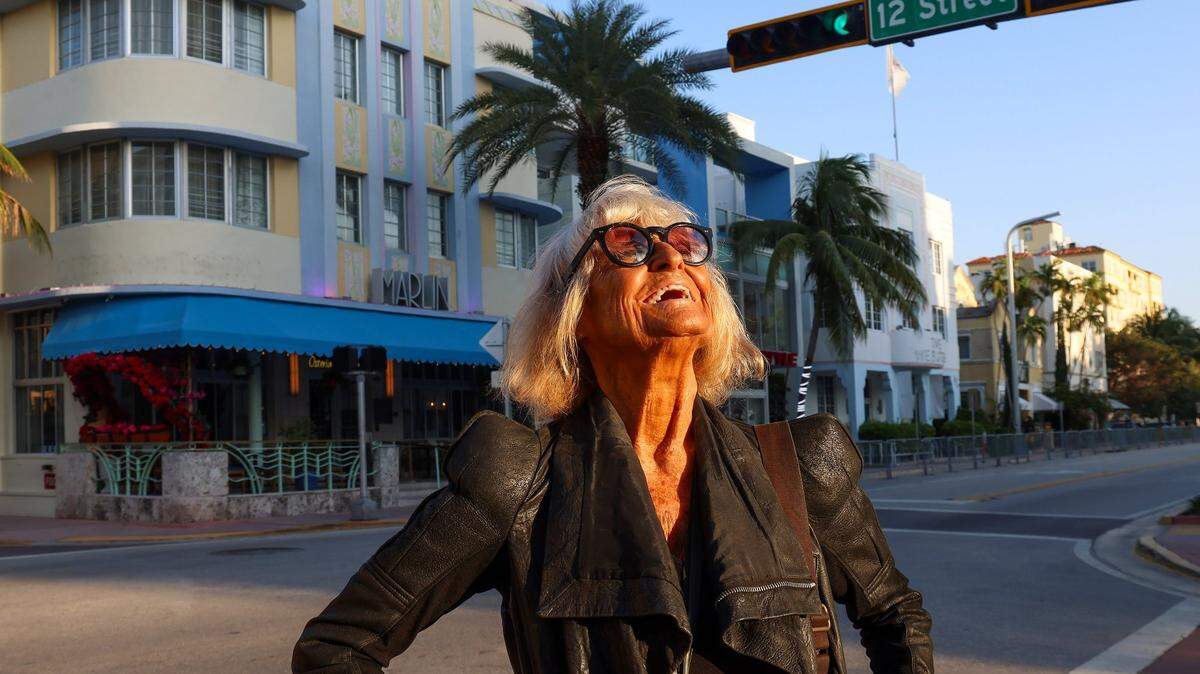
And yet amid the antics, there is also a wonderful deluge of art and creativity and unexpected pleasures produced by the presence of Art Basel and Miami Art Week. The much-deserved focus on Barbara Hulanicki is one of those.
Hulanicki, now 87, helped redesign the 1930s- and ‘40s-era South Beach Art Deco hotels whose revival and renaissance have spurred so much of the Miami Beach we see today — a place that attracted Art Basel starting in 2002. Call it a full-circle moment.
She’s a Miami Beach resident and a designer known for her revolutionary impact on the fashion scene as co-owner of London’s Biba in the 1960s and 1970s. And now she’s experiencing a well-deserved revival of her own.
We often credit the late preservationist Barbara Capitman for rescuing so many landmark Art Deco hotels from bulldozers, but who then fixed them up in pastel colors? Enter Hulanicki.
Hulanicki is credited with transforming the faded hotels into vibrant, trend-setting spaces in the 1980s. Her innovative designs set the stage for the reinvention of South Beach, attracting the fashion and art world to our shores.
Despite her significant contributions to the Miami Beach landscape, Hulanicki’s influence had remained largely unrecognized in her adoptive hometown. That’s changing, thanks to the city of Miami Beach, Commissioner Kristen Rosen Gonzalez and the arrival of Miami Art week and Art Basel.
Hulanicki has been commissioned to design colorful paint jobs for landmark city-owned Art Deco buildings, a perfect pairing of artist and canvas.
Five have been approved so far, including the massive Anchor Shops and parking garage on Collins Avenue. The city also passed a plan to pay up to 50% of the cost for private buildings in the historic district to be repainted with Hulanicki’s consultation.
The first to be redone, the Colony Theater on Lincoln Road Mall, which Hulanicki will dress up in vertical stripes that highlight the building’s fluted details, should start soon, Rosen Gonzalez told Miami Herald reporter Andres Viglucci, who wrote an extensive profile of Hulanicki.
The endeavor to restore the vibrant color palette originally created by the late designer Leonard Horowitz highlights Hulanicki’s commitment to preserving and enhancing architectural heritage.
As the art world descends on Miami once again, Hulanicki continues to shape the visual landscape of Miami Beach with her timeless style and innovative approach, honoring our past and preserving it for our future.

Click here to send the letter.
BEHIND THE STORY
MOREWhat's an editorial?
Editorials are opinion pieces that reflect the views of the Miami Herald Editorial Board, a group of opinion journalists that operates separately from the Miami Herald newsroom. Miami Herald Editorial Board members are: opinion editor Amy Driscoll and editorial writers Isadora Rangel and Mary Anna Mancuso. Read more by clicking the arrow in the upper right.
What's the difference between an op-ed and a column?
How does the Miami Herald Editorial Board decide what to write about?
The Editorial Board, made up of experienced opinion journalists, primarily addresses local and state issues that affect South Florida residents. Each board member has an area of focus, such as education, COVID or local government policy. Board members meet daily and bring up an array of topics for discussion. Once a topic is fully discussed, board members will further report the issue, interviewing stakeholders and others involved and affected, so that the board can present the most informed opinion possible. We strive to provide our community with thought leadership that advocates for policies and priorities that strengthen our communities. Our editorials promote social justice, fairness in economic, educational and social opportunities and an end to systemic racism and inequality. The Editorial Board is separate from the reporters and editors of the Miami Herald newsroom.
How can I contribute to the Miami Herald Opinion section?
The Editorial Board accepts op-ed submissions of 650-700 words from community members who want to argue a specific viewpoint or idea that is relevant to our area. You can email an op-ed submission to oped@miamiherald.com. We also accept 150-word letters to the editor from readers who want to offer their points of view on current issues. For more information on how to submit a letter, go here.