
Florida Citizens’ insurance claim closures need closer look | Opinion
Property insurance, which has to be one of the sorest subjects in Florida, is back in the news and, as always, it seems, not in a good way.
The “property insurer of last resort” in Florida — known as Citizens Property Insurance — is receiving new scrutiny after an analysis by a Palm Beach Gardens-based ratings agency found that Citizens had a lower rate of payouts last year than any other insurer in the state, with slightly more than half of claims being closed without payment.
As the Miami Herald/Tampa Bay Times Tallahassee bureau recently reported, about 17,000 claims, or 50.4%, were closed without payment by Citizens. That compares to about 46% by the Florida subsidiaries of State Farm and Allstate, which had the highest rate of closing claims without payment among private insurers in the state.
Claims can be closed without payment because they are denied but also for a variety of other reasons, such as failure to meet the deductible or the claim was withdrawn or there were duplicate claims.
What’s the takeaway here? For Citizens “to be at the very top of the range is unforgivable,” Martin D. Weiss, the founder of Weiss Ratings, told the Herald. His company pulled the data for the analysis from Citizens’ annual reports.
To be fair, there has been some pushback since the release of the analysis. Mark Friedlander, spokesman for the Insurance Information Institute, told WPBF, the West Palm Beach-area ABC affiliate, that Citizens’ size — more than 1.2 million policies as of September, though there are predictions that will drop by year’s end — means it’s always going to have more claims in Florida than other insurers and many of those are likely to be flood-related and therefore denied, because Citizens doesn’t cover flooding.
Citizens spokesperson Michael Peltier said the same thing in the Herald/Times story, noting that about 30% of all homeowners’ claims filed after Hurricane Helene were closed out due to flooding.
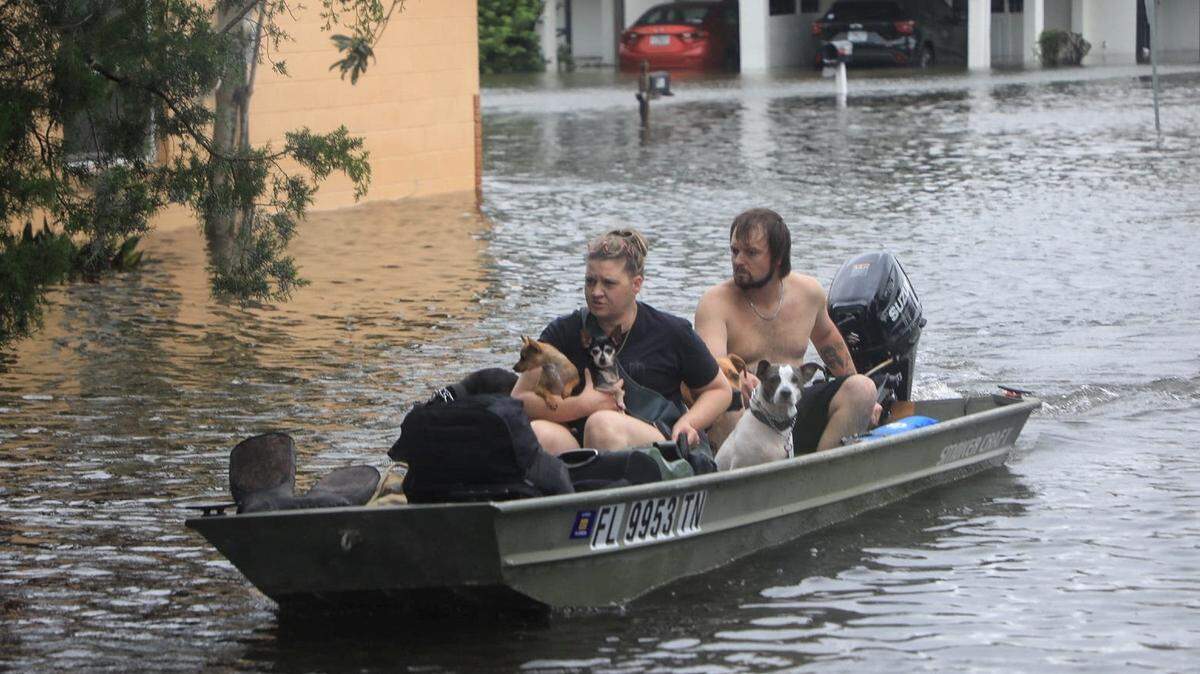
That’s certainly a point worth considering but it’s unlikely to assuage residents upset by the increasing burden of insurance that covers less. That includes flood insurance, with storms in the past year driving flood waters even into traditionally low-risk places. Who can forget Hurricane Helene’s destructive path all the way into North Carolina in September and the images of flood-ravaged towns? And that storm was followed just two weeks later by Hurricane Milton, plowing from the Sarasota area across to the other side of the state.
The new analysis of Citizens’ claims isn’t the only reason there’s more focus on the state-run insurance company. As reported by the news outlet NOTUS in October, Citizens also closed without payment 77% of claims from Hurricane Debby in August, a figure that dropped to closer to 73% now, Peltier says. Of that figure, he said 44.2% were denied. The remainder were withdrawn, duplicate or invalid claims, or didn’t meet the deductible threshold, or were no longer insured by Citizens.
Again, flooding may have been responsible for some or even a good portion of those closures. And again, that’s not going to offer a lot of comfort to worried residents.
Peltier offered another explanation. Some closures of claims without payment could be happening because a claim is less than a homeowner’s deductible, which can be many tens of thousands of dollars, depending on the house and policy.
None of this is happening in a vacuum, of course. Florida’s long struggle with property insurance, and now perhaps flood insurance, has contributed to the affordability crisis in the state. The inability to predict how much you’ll have to fork out for insurance each year is the kind of uncertainty that makes it hard for homeowners to budget and makes some wonder if they can afford to stay.
The report about Citizens also comes as the company’s insurance rates have gone up, over and over — and there’s a request to raise rates by 14% next year — coupled with an on-going state effort to shed policies from Citizens.
Citizens’ rate of closing of claims without payment may be perfectly explainable in the end, but enough questions have been raised about the state-run company to warrant a hard look at when it pays out and when it doesn’t, followed by a fully transparent report to Floridians.
This editorial has been updated and clarified with new information.
Click here to send the letter.
BEHIND THE STORY
MOREWhat's an editorial?
Editorials are opinion pieces that reflect the views of the Miami Herald Editorial Board, a group of opinion journalists that operates separately from the Miami Herald newsroom. Miami Herald Editorial Board members are: opinion editor Amy Driscoll and editorial writers Isadora Rangel and Mary Anna Mancuso. Read more by clicking the arrow in the upper right.
What's the difference between an op-ed and a column?
How does the Miami Herald Editorial Board decide what to write about?
The Editorial Board, made up of experienced opinion journalists, primarily addresses local and state issues that affect South Florida residents. Each board member has an area of focus, such as education, COVID or local government policy. Board members meet daily and bring up an array of topics for discussion. Once a topic is fully discussed, board members will further report the issue, interviewing stakeholders and others involved and affected, so that the board can present the most informed opinion possible. We strive to provide our community with thought leadership that advocates for policies and priorities that strengthen our communities. Our editorials promote social justice, fairness in economic, educational and social opportunities and an end to systemic racism and inequality. The Editorial Board is separate from the reporters and editors of the Miami Herald newsroom.
How can I contribute to the Miami Herald Opinion section?
The Editorial Board accepts op-ed submissions of 650-700 words from community members who want to argue a specific viewpoint or idea that is relevant to our area. You can email an op-ed submission to oped@miamiherald.com. We also accept 150-word letters to the editor from readers who want to offer their points of view on current issues. For more information on how to submit a letter, go here.
This story was originally published November 22, 2024 at 10:49 AM.