
Mad at Puerto Rico joke, where were Florida Republicans when Trump attacked Haitians? | Opinion
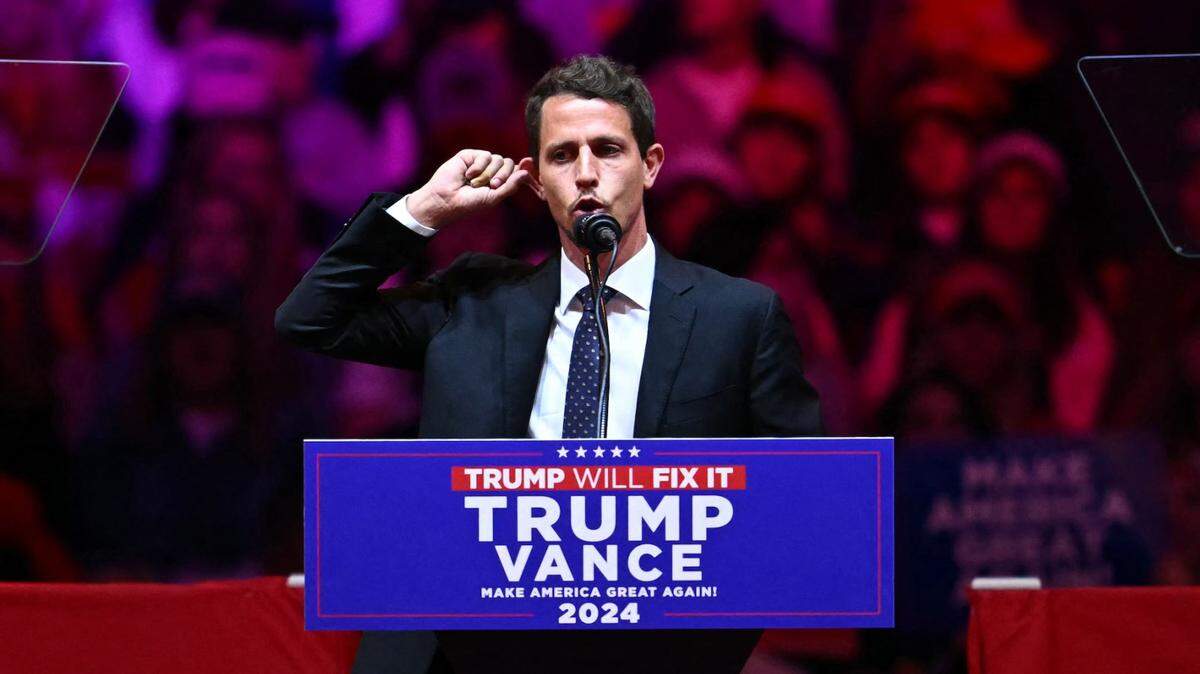
Florida Republican officials were offended by a comedian’s racist and distasteful “joke” about Puerto Rico at Donald Trump’s rally in New York City on Sunday.
Miami’s U.S. Rep. Maria Elvira Salazar said she was “disgusted” by Tony Hinchcliffe’s words, calling Puerto Rico a “floating island of garbage.” U.S. Rep. Carlos Gimenez, a former Miami-Dade County mayor, said it was “completely classless.” Florida U.S. Sen. Rick Scott said the joke “bombed.”
It’s a little too late for their outrage when those same Republicans continued to support and defend Trump as he accused immigrants of “poisoning the blood of our country,” among many other insults aimed at minority groups.
Even more to the point here in South Florida, where were those officials when the former president repeated a baseless and repeatedly debunked claim on the debate stage that Haitians were eating people’s pets in Springfield, Ohio?
Scott even gave credence to that vicious conspiracy theory. When asked about the “Haitians in Springfield, Ohio” during an interview with right-wing news outlet Breitbart News in September, Scott said, “Isn’t that scary for the people that live there?” He added that “We got a wonderful Haitian community in Florida,” but those tepid words aren’t enough from Florida’s senator.
Now, the outrage over comedian Hinchcliffe’s words — he also made the unoriginal and stereotyping joke that Latinos “love making babies” — feels opportunistic and selective. This is the moment Salazar chooses to write on X that “This rhetoric does not reflect GOP values” — after Trump spent months on the 2024 presidential campaign accusing immigrants of invading the country, spreading conspiracy theories and using pejoratives for opponents, such as “slow,” “extremely low IQ person” and “stupid,” words he’s used to describe Vice President Kamala Harris. That’s not only childish name-calling; it also reeks of racism and sexism.
Had Trump — and not a surrogate — called Puerto Rico a “floating island of garbage,” would his allies in Florida been as forceful in their rebuke, or would they do what they have done for this entire campaign: rationalize and justify Trump’s unjustifiable words? Would they have spoken up if there wasn’t the possibility that such comments and their repercussion might sway an election happening in a matter of days?
Puerto Ricans, born on an American territory, are U.S. citizens and allowed to vote in presidential elections if they move to the mainland U.S. With 5.8 million Puerto Ricans living in the country as of 2021, according to Pew Research, they represent a large share of the Latino electorate in swing states like Pennsylvania. In Florida, they are the second-largest bloc of Hispanic voters after Cuban-Americans.
The GOP has gone to great lengths to court Hispanic voters, seeing results in Democratic bastions in South Florida and, particularly, in Central Florida, where a lot of Puerto Ricans live. Haitians, meanwhile, have historically leaned more Democratic. Many are in the country on Temporary Protected Status and cannot vote, so they don’t rank as high on the GOP’s electoral priority list.
Given this political reality, it’s no wonder then that even the Trump campaign denounced Hinchcliffe’s words about Puerto Rico, saying they do not “reflect the views of President Trump or the campaign.”
Trump’s true colors were seen in his comments about his hate-filled Sunday rally: “It was like a lovefest... It was my honor to be involved.” That’s the same Trump who, according to a former Department of Homeland Security official, once said Puerto Rico was “dirty” and wondered whether the American territory could be swapped for Greenland.
Puerto Ricans should not forget the images of then-President Trump tossing paper towel rolls to a crowd while visiting the island ravaged by Hurricane Maria in 2017.
We’ll buy Florida Republicans’ outrage when it’s across the board. Let’s hope that, from now on, they are as prompt to defend every group that is attacked by Trump and his sycophants.
Click here to send the letter.
BEHIND THE STORY
MOREWhat's an editorial?
Editorials are opinion pieces that reflect the views of the Miami Herald Editorial Board, a group of opinion journalists that operates separately from the Miami Herald newsroom. Miami Herald Editorial Board members are: opinion editor Amy Driscoll and editorial writers Isadora Rangel and Mary Anna Mancuso. Read more by clicking the arrow in the upper right.
What's the difference between an op-ed and a column?
How does the Miami Herald Editorial Board decide what to write about?
The Editorial Board, made up of experienced opinion journalists, primarily addresses local and state issues that affect South Florida residents. Each board member has an area of focus, such as education, COVID or local government policy. Board members meet daily and bring up an array of topics for discussion. Once a topic is fully discussed, board members will further report the issue, interviewing stakeholders and others involved and affected, so that the board can present the most informed opinion possible. We strive to provide our community with thought leadership that advocates for policies and priorities that strengthen our communities. Our editorials promote social justice, fairness in economic, educational and social opportunities and an end to systemic racism and inequality. The Editorial Board is separate from the reporters and editors of the Miami Herald newsroom.
How can I contribute to the Miami Herald Opinion section?
The Editorial Board accepts op-ed submissions of 650-700 words from community members who want to argue a specific viewpoint or idea that is relevant to our area. You can email an op-ed submission to oped@miamiherald.com. We also accept 150-word letters to the editor from readers who want to offer their points of view on current issues. For more information on how to submit a letter, go here.