
Another assassination attempt. We can’t let political violence steer elections | Opinion
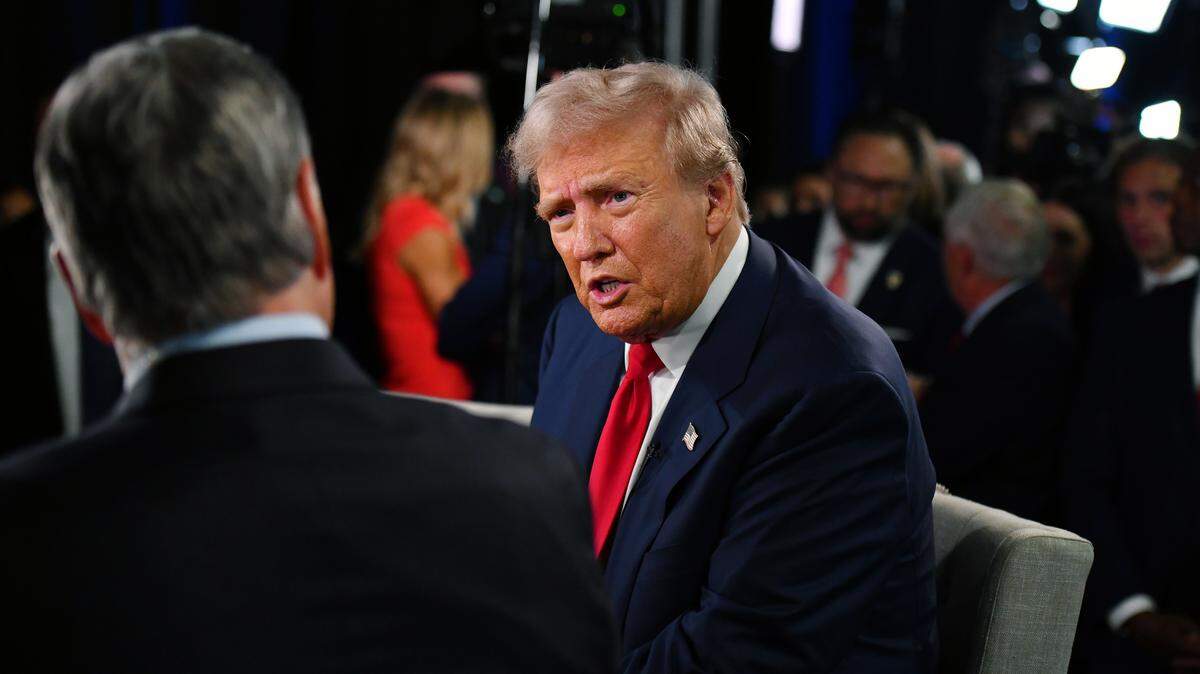
Violence has no place in politics in America and yet here we are again, dealing with another apparent attempt on Donald Trump’s life. The FBI said Sunday it happened as the former president played golf at Trump International Golf Course in West Palm Beach.
An alert U.S. Secret Service agent spotted the suspect along a fence behind a treeline surrounding the golf course. The suspect, identified as 58-year-old Ryan Routh of North Carolina, had an AK-style weapon with a scope, as Trump played two holes away, authorities said. Agents opened fire and a witness took a snapshot of the suspect’s vehicle. He was arrested in Martin County headed north on Interstate 95.
Fortunately, Trump was not hurt in his second assassination attempt in just two months. We were also glad those currently in the White House —President Joe Biden and Vice President Kamala Harris — weighed in, saying they were “relieved to know that he is safe.” Harris, Trump’s Democratic rival for the presidency, reiterated on social media that she is “glad he is safe. Violence has no place in America.”
Those are important statements in this moment because they underline the idea that, for a democracy to work, all of us — even bitter political rivals — can and will come together to combat political violence. That has never been more critical than in this highly contentious election, where democracy truly may be at stake. We cannot let those who would commit such violence influence our elections by dividing us further.
So far the suspect has been charged with gun crimes, though additional charges are expected along with a possible grand jury indictment. It’s critical that prosecutors get this case right. Protecting our democratic process is critical.
In the attempt on his life at a Pennsylvania rally on July 13, a bloodied Trump pumped his fist in the air and urged the crowd to fight. It’s likely that this latest incident will turn up the heat in the presidential election even more and, in doing so, push us further apart. We have to be aware of that and fight against it.
Florida Gov. Ron DeSantis’ announcement that the state will conduct its own investigation into the golf course episode is just more of the same. By conducting a separate investigation and saying that “there’s a need to make sure that the truth about all this comes out in a way, you know, that’s credible,” DeSantis is injecting a note of more distrust in the federal government.
Is Sunday’s incident a result of the combative rhetoric employed by the former president, as many Democrats say? Certainly, the general deterioration of civility in politics has continued to widen the divide we feel in the U.S. today. We cannot forget Trump’s anger-laced promises and threats — that blood will be spilled if he loses, urging his followers to “take back” their country, the incessant claims of a stolen election in 2020 that incited the Jan. 6 Capitol insurrection, and his recent threat that he will deport every undocumented immigrant.
This Trump dynamic raises critical questions about the consequences of such rhetoric — as does Trump’s framing of himself as a martyr, trying to consolidate support while simultaneously inviting potential threats.
This is not something that Americans can or should accept as inevitable. Political violence undermines democracy, and we can’t allow ourselves to become numb to it. An AK-47 in the bushes near a presidential candidate should chill us to the bone. Violence, or its threat, cannot become a force in American politics.
For a democracy to thrive, it requires a commitment to civil discourse, where diverse opinions can be expressed without fear of violence.
Yet, as Trump continues to wield his rhetoric like a weapon, the danger of further escalation looms.
Click here to send the letter.
BEHIND THE STORY
MOREWhat's an editorial?
Editorials are opinion pieces that reflect the views of the Miami Herald Editorial Board, a group of opinion journalists that operates separately from the Miami Herald newsroom. Miami Herald Editorial Board members are: opinion editor Amy Driscoll and editorial writers Isadora Rangel and Mary Anna Mancuso. Read more by clicking the arrow in the upper right.
What's the difference between an op-ed and a column?
How does the Miami Herald Editorial Board decide what to write about?
The Editorial Board, made up of experienced opinion journalists, primarily addresses local and state issues that affect South Florida residents. Each board member has an area of focus, such as education, COVID or local government policy. Board members meet daily and bring up an array of topics for discussion. Once a topic is fully discussed, board members will further report the issue, interviewing stakeholders and others involved and affected, so that the board can present the most informed opinion possible. We strive to provide our community with thought leadership that advocates for policies and priorities that strengthen our communities. Our editorials promote social justice, fairness in economic, educational and social opportunities and an end to systemic racism and inequality. The Editorial Board is separate from the reporters and editors of the Miami Herald newsroom.
How can I contribute to the Miami Herald Opinion section?
The Editorial Board accepts op-ed submissions of 650-700 words from community members who want to argue a specific viewpoint or idea that is relevant to our area. You can email an op-ed submission to oped@miamiherald.com. We also accept 150-word letters to the editor from readers who want to offer their points of view on current issues. For more information on how to submit a letter, go here.
This story was originally published September 15, 2024 at 8:28 PM.