
At Democratic Convention, these women showed why voters must end Florida’s abortion ban | Opinion
Imagine if Florida lawmakers had paid attention to the women who have suffered because of anti-abortion policies.
Their stories were readily available with a Google search, but the Republicans who enacted the state’s extreme six-week ban ignored them. Voters now have a chance to listen before they vote on a proposed Florida constitutional Amendment 4 on the November ballot that — if approved by at least 60% of the electorate — will legalize abortion up to viability, usually at 24 weeks, and overturn the state ban.
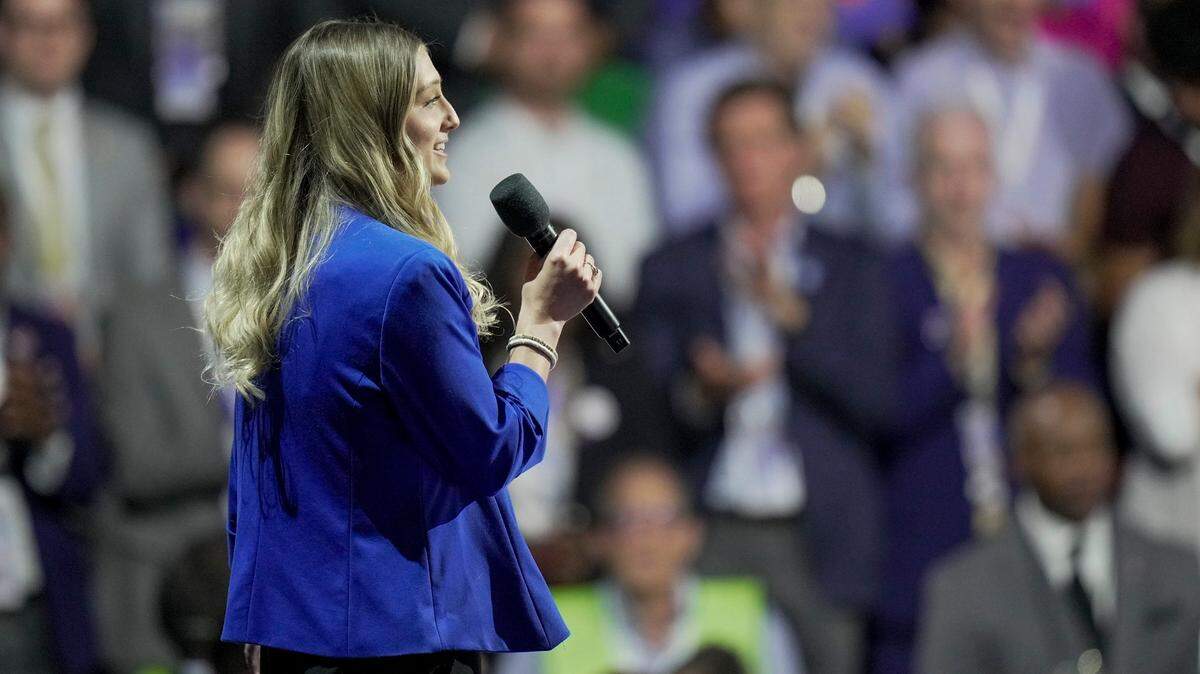
At the Democratic National Convention in Chicago, three women gave emotional speeches on Monday about the consequences of taking reproductive rights away. Amanda Zurawski and her husband, Kaitlyn Joshua, and Hadley Duvall stood together on stage, taking turns to tell their stories. It was a powerful moment.
Zurawski, who sued the state of Texas over its near-total abortion ban, had to wait three days before she could terminate her non-viable pregnancy — and that was only after she developed sepsis, a life-threatening infection. Texas’ ban makes exceptions to save the patient’s life but the language in the law is so vague that doctors fear facing felony charges.
Florida’s ban also has such exceptions but they come with burdensome requirements.
An abortion after six weeks is only allowed in most cases if “Two physicians certify in writing that, in reasonable medical judgment, the termination of the pregnancy is necessary to save the pregnant woman’s life or avert... physical impairment.”
The law also bans doctors from using telehealth to perform an abortion (say, via medication) and bans medication from being delivered by mail, imposing another hurdle for women in rural or disadvantaged areas.
These so-called exceptions have left doctors fearful that the state will second guess their medical judgment. The results are clear in the plight of women like a Lakeland mother who was denied an abortion under Florida’s previous 15-week ban and forced to give birth to a baby with a fatal abnormality, putting her own life at risk. She luckily survived to tell her story of holding her son, who had no kidneys, in her arms as he died moments after being born.
Women should be trusted to make decisions on whether to proceed with a non-viable pregnancy. But, thanks to draconian laws, they are often not.
At the DNC, Joshua said she was turned away by two Louisiana emergency rooms while having a miscarriage. Because of the state’s strict abortion ban and vague exceptions to protect patients’ lives, Joshua said, “No one would confirm I was miscarrying” even though she was bleeding and in pain.
“No woman should experience what I endured but too many have,” Joshua said. “They write to me saying what happened to you happened to me.”
Duvall of Kentucky became pregnant at 12 as a result of being raped by her stepfather about a decade ago. She was not directly impacted by her state’s abortion ban, which doesn’t make exceptions for rape and incest and went into effect after the U.S. Supreme Court overturned Roe v. Wade in 2022.
Yet she has become one of the most prominent voices for abortion rights and was featured in ads in Democratic Kentucky Gov. Andy Beshear’s successful reelection campaign last year.
Florida’s ban makes exceptions for rape, incest and victims of human trafficking, requiring women to show a police report or other evidence that they were victims of a crime.
Republican presidential nominee Donald Trump has boasted about appointing three conservative Supreme Court justices who helped overturn Roe v. Wade. He said in June that it has been “a beautiful thing to watch” states pass a patchwork of laws on abortion now that it is no longer a right protected at the federal level.
“[Donald Trump] calls it a beautiful thing,” Duvall told the DNC crowd. “What is so beautiful about a child having to carry her parents’ child?”
Unless Florida voters take action, the stories heard at the Democratic National Convention will be just a prelude to the risks that women face when they no longer have choice in the Sunshine State.
Click here to send the letter.
BEHIND THE STORY
MOREWhat's an editorial?
Editorials are opinion pieces that reflect the views of the Miami Herald Editorial Board, a group of opinion journalists that operates separately from the Miami Herald newsroom. Miami Herald Editorial Board members are: opinion editor Amy Driscoll and editorial writers Isadora Rangel and Mary Anna Mancuso. Read more by clicking the arrow in the upper right.
What's the difference between an op-ed and a column?
How does the Miami Herald Editorial Board decide what to write about?
The Editorial Board, made up of experienced opinion journalists, primarily addresses local and state issues that affect South Florida residents. Each board member has an area of focus, such as education, COVID or local government policy. Board members meet daily and bring up an array of topics for discussion. Once a topic is fully discussed, board members will further report the issue, interviewing stakeholders and others involved and affected, so that the board can present the most informed opinion possible. We strive to provide our community with thought leadership that advocates for policies and priorities that strengthen our communities. Our editorials promote social justice, fairness in economic, educational and social opportunities and an end to systemic racism and inequality. The Editorial Board is separate from the reporters and editors of the Miami Herald newsroom.
How can I contribute to the Miami Herald Opinion section?
The Editorial Board accepts op-ed submissions of 650-700 words from community members who want to argue a specific viewpoint or idea that is relevant to our area. You can email an op-ed submission to oped@miamiherald.com. We also accept 150-word letters to the editor from readers who want to offer their points of view on current issues. For more information on how to submit a letter, go here.
This story was originally published August 20, 2024 at 6:36 PM.