
As the dream of Venezuelan democracy fades away, Maduro must prove he didn’t steal election | Opinion
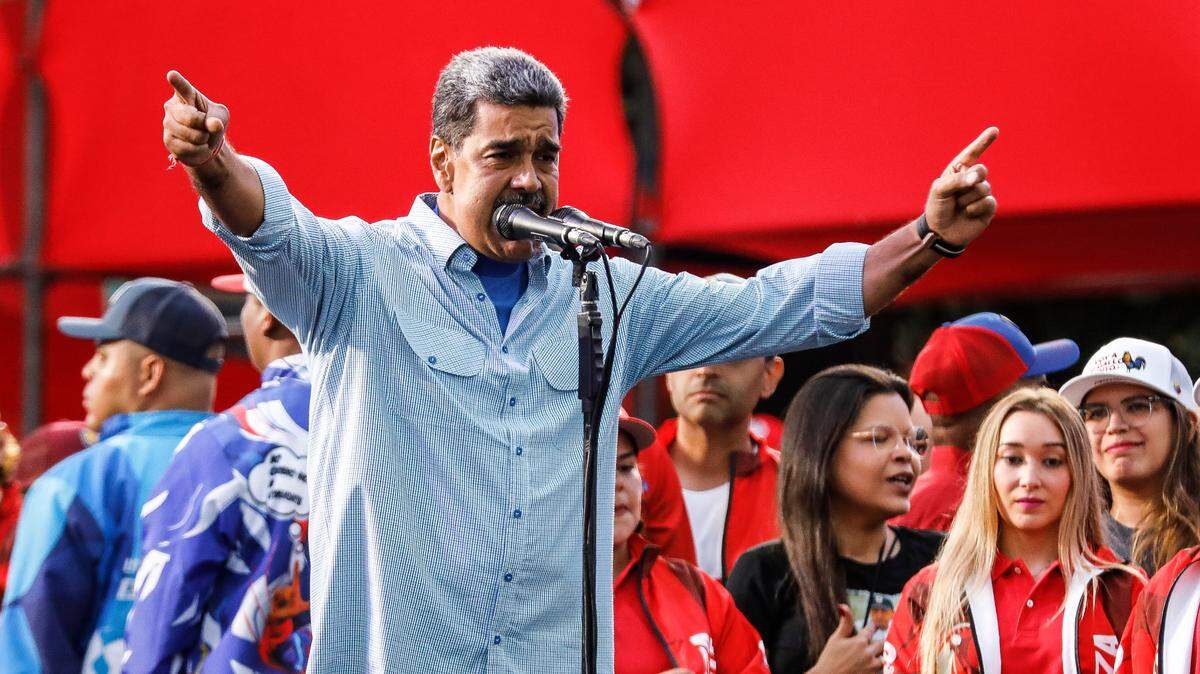
The hopes of thousands of Venezuelans in South Florida that Nicolás Maduro’s oppressive regime could finally end were dashed after Sunday’s presidential elections — at least for now.
The U.S. and its allies in Latin America know that Maduro’s announced victory smells like a dictator’s dirty old trick. On Monday, the country’s opposition leader Maria Corina Machado said her team had gathered final vote counts to prove Maduro overwhelmingly lost, the Herald reported.
The question is whether the international community can exert enough pressure on the South American country to come forward with information to prove its elections were fair and free of fraud, which they don’t seem to be. And, if they weren’t, can the U.S. force out a regime that has survived Republican and Democratic White House administrations?
It’s now up to the Biden Administration, who some criticize for giving Venezuela too many concessions leading up to the election, to lead the charge. The U.S. cannot do it alone.
A U.S. National Security Council spokesman on Monday called on Maduro to provide “the full, detailed tabulation of votes” to prove that he defeated opposition candidate Edmundo González Urrutia 51.2% to 44.2%, as announced by the Maduro-controled National Electorate Council. The Venezuela opposition demanded the government hand over scanned printouts of all voting records instead of just the numbers shown on the government’s website.
But pressure should also come from within Latin America and Maduro’s regional allies. It says a lot that among the countries that congratulated Maduro are Russia, China, Iran and Cuba, where democracy and fair elections are non existent. Others so far have been hesitant. On Monday, Maduro expelled diplomats from Latin American countries that questioned his reelection.
Brazil, whose leftist president is among Maduro’s biggest allies, hasn’t recognized the Sunday results but has yet to take a stronger stance. The country’s top foreign affairs advisor said on Monday that he is cautious about the results and that Venezuela must show how it reached them. Brazilian media on Monday reported that diplomats from Brazil, Colombia and Mexico — all countries that have been aligned with Maduro — met to discuss demanding that the regime provide ballot reports to the Carter Center, one of the few election monitoring groups allowed in Venezuela.
That’s progress but if Maduro refuses to turn over any more information, then what?
The U.S. will find itself in a conundrum. Up until now, the Biden Administration has tried to cajole the South American country to allow democratic changes by lifting some oil sanctions and releasing prisoners.
If the Sunday election turns out to be stolen, what will the course of action be — more harsh sanctions like the ones the Trump Administration imposed but that failed to spur regime change? Another Maduro term — and, possibly, a new round of sanctions — could fuel another wave of migration at the Southern Border as desperate Venezuelans escape poverty and lose any remaining hope that their country could return to free democratic rule.
In an election year, that’s a calculation that President Joe Biden and Vice President Kamala Harris, the expected Democratic presidential nominee, will have to make.
Anyone who has watched Maduro deploy dirty electoral tricks to stay in power isn’t surprised by Sunday’s election. Leading up to the Sunday, polls showed González Urrutia leading by wide margins and exit polling found he won twice as many votes as Maduro.
As Chile’s leftist president, Gabriel Boric, said: “Maduro’s regime must understand that the results are hard to believe,” Reuters reported.
The presidential elections should have signaled a new era for Venezuela — and South Florida’s diaspora. It didn’t. Again, the dream of a Venezuelan democracy might slip through our fingers.
Click here to send the letter.
BEHIND THE STORY
MOREWhat's an editorial?
Editorials are opinion pieces that reflect the views of the Miami Herald Editorial Board, a group of opinion journalists that operates separately from the Miami Herald newsroom. Miami Herald Editorial Board members are: opinion editor Amy Driscoll and editorial writers Isadora Rangel and Mary Anna Mancuso. Read more by clicking the arrow in the upper right.
What's the difference between an op-ed and a column?
How does the Miami Herald Editorial Board decide what to write about?
The Editorial Board, made up of experienced opinion journalists, primarily addresses local and state issues that affect South Florida residents. Each board member has an area of focus, such as education, COVID or local government policy. Board members meet daily and bring up an array of topics for discussion. Once a topic is fully discussed, board members will further report the issue, interviewing stakeholders and others involved and affected, so that the board can present the most informed opinion possible. We strive to provide our community with thought leadership that advocates for policies and priorities that strengthen our communities. Our editorials promote social justice, fairness in economic, educational and social opportunities and an end to systemic racism and inequality. The Editorial Board is separate from the reporters and editors of the Miami Herald newsroom.
How can I contribute to the Miami Herald Opinion section?
The Editorial Board accepts op-ed submissions of 650-700 words from community members who want to argue a specific viewpoint or idea that is relevant to our area. You can email an op-ed submission to oped@miamiherald.com. We also accept 150-word letters to the editor from readers who want to offer their points of view on current issues. For more information on how to submit a letter, go here.