
If Congress doesn’t bail out FEMA, don’t expect a bail out if a hurricane hits Florida | Opinion
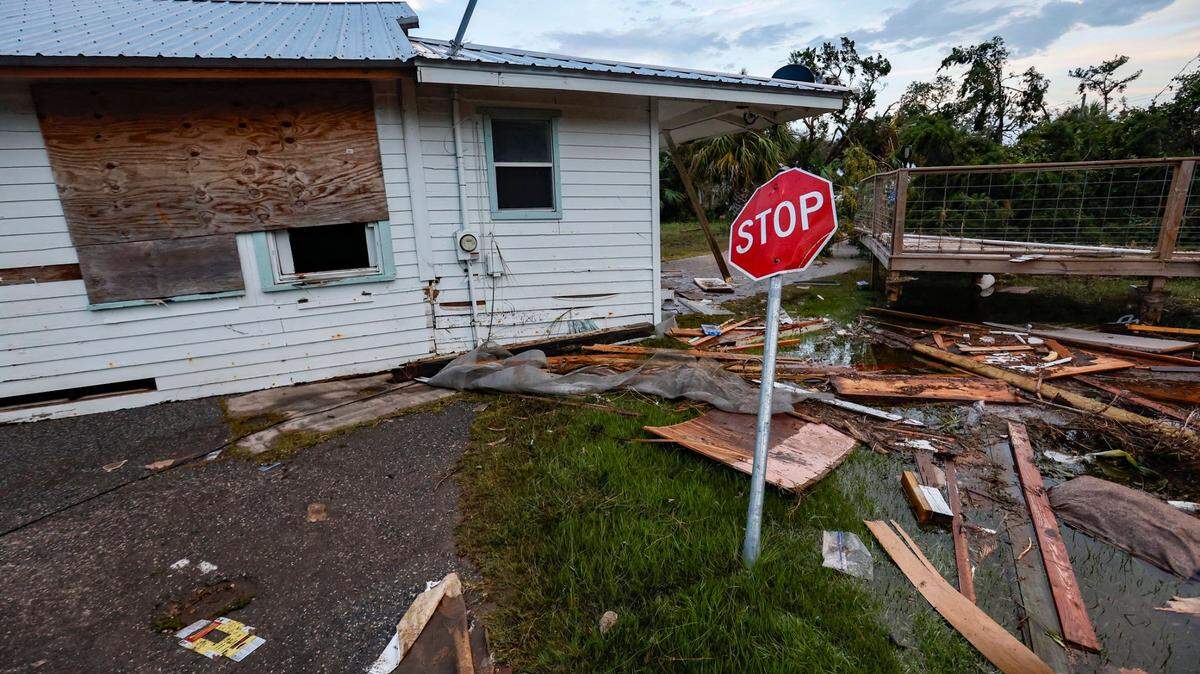
Are you hurricane ready? Here’s your to-do list:
Hurricane insurance and flood insurance (if you’re in the zone) are paid. Check.
Shutters working or storm windows installed. Check, check.
Flashlights, candles, disaster supplies, all ready. Check, check, check.
Emergency exit kit with important papers and cash ready to go in a special water-proof envelope. Check.
Emergency evacuation routes charted to get to a safe place. Check.
And, if all else fails, we can always count on FEMA — if we get that whopper of a storm this hurricane season — to help bail us out.
Actually, we can’t.
The Federal Emergency Management Agency’s Disaster Relief Fund is once again running out of money. By August — in the peak of our hurricane season — the FEMA fund will be in the red by $1.3 billion and grow in just one month to a $6.8 billion shortfall by September.
It has become a scramble for FEMA the past two decades to keep up with ever-more disasters that are growing stronger and wilder with the effects of climate change. Stretched to cover emergency responses nationwide, FEMA is doing its best to help communities recover from mega forest fires, rising rivers that flood towns in places that never flooded before, ever-stronger hurricanes and explosive tornadoes, among other disasters.
For many, FEMA is a lifesaver. But the federal agency needs more money to do its job, and only Congress can fix the money problem that keeps cropping up.
Last August, disasters in Hawaii and Florida vied for FEMA’s attention. The federal agency was forced to stop recovery efforts from previous disasters in other states to pivot to help Floridians after Hurricane Idalia hit the Big Bend region and to help Hawaiians after devastating wildfires in Maui. At the time, FEMA’s emergency funding had run out. That was the ninth time since 2001.
Maybe 10 times will be the charm this year and Congress can finally get FEMA enough funding to run the full fiscal year and stop playing politics with the numbers?
At a recent press conference at the National Hurricane Center, FEMA Deputy Administrator Erik Hooks said if the agency is close to running out of money, it will prioritize “life-saving, life-sustaining work” until more funding is available. That would leave important programs like individual financial aid for small businesses and homeowners or reimbursements for governments cleaning up storm debris on the congressional chopping block.
Rep. Jared Moskowitz, a Broward County Democrat who served as the director of the Florida Division of Emergency Management under a GOP governor from 2019 to 2021, knows all about FEMA’s critical role in recovery and response efforts during hurricanes, pandemics and other disasters. And he knows that disasters are equal-opportunity oppressors:
“These are nonpartisan disasters that hit. They don’t hit Democrats or Republicans, they hit Americans, they hit an entire community,” he told the Miami Herald. “We cannot start trying to balance the budget off their disaster. If we want to balance the budget we need to do it holistically.”
Yes, we do. On this issue, at least, the Florida congressional delegation is united. GOP Sens. Marco Rubio and Rick Scott are joining forces with Moskowitz to file bills in both houses of Congress addressing the shortfall once lawmakers meet in September. (Better late than never.)
For now, Floridians need to be ready to protect their homes and lives from what is expected to be the busiest storm season ever. The National Oceanic and Atmospheric Administration’s forecast for the hurricane season that started June 1 and ends Nov. 30 predicts 17 to 25 named storms, with eight to 13 becoming hurricanes and four to seven reaching Category 3 or higher in the killer categories.
And Congress needs to do its part: Give FEMA the money it needs to be ready for any disaster. Floridians expect no less.
Click here to send the letter.
BEHIND THE STORY
MOREWhat's an editorial?
Editorials are opinion pieces that reflect the views of the Miami Herald Editorial Board, a group of opinion journalists that operates separately from the Miami Herald newsroom. Miami Herald Editorial Board members are: opinion editor Amy Driscoll and editorial writers Isadora Rangel and Mary Anna Mancuso. Read more by clicking the arrow in the upper right.
What's the difference between an op-ed and a column?
How does the Miami Herald Editorial Board decide what to write about?
The Editorial Board, made up of experienced opinion journalists, primarily addresses local and state issues that affect South Florida residents. Each board member has an area of focus, such as education, COVID or local government policy. Board members meet daily and bring up an array of topics for discussion. Once a topic is fully discussed, board members will further report the issue, interviewing stakeholders and others involved and affected, so that the board can present the most informed opinion possible. We strive to provide our community with thought leadership that advocates for policies and priorities that strengthen our communities. Our editorials promote social justice, fairness in economic, educational and social opportunities and an end to systemic racism and inequality. The Editorial Board is separate from the reporters and editors of the Miami Herald newsroom.
How can I contribute to the Miami Herald Opinion section?
The Editorial Board accepts op-ed submissions of 650-700 words from community members who want to argue a specific viewpoint or idea that is relevant to our area. You can email an op-ed submission to oped@miamiherald.com. We also accept 150-word letters to the editor from readers who want to offer their points of view on current issues. For more information on how to submit a letter, go here.