
Miami’s top prosecutor must show that ‘winning at all costs’ isn’t an accepted philosophy | Opinion
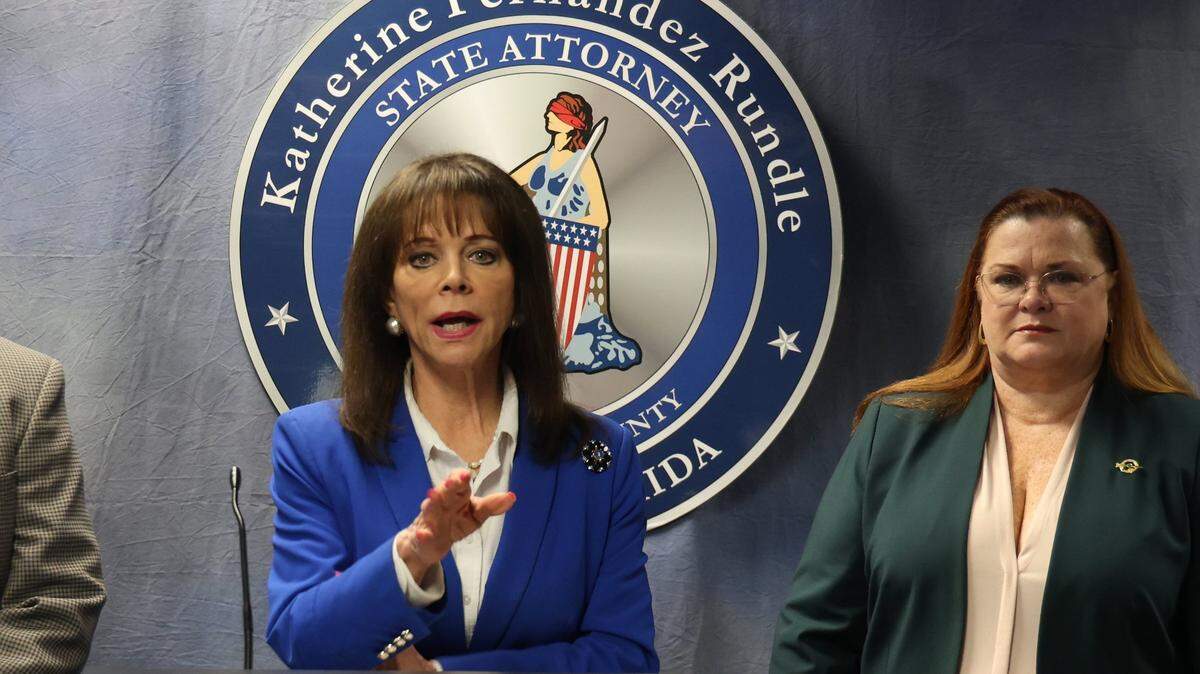
A judge described a “philosophy of winning at all costs” when she threw two Miami-Dade County prosecutors off a capital murder case involving a Miami gangster this year.
Was “winning at all costs” a personal philosophy of rogue prosecutors, like Michael Von Zamft, who abruptly resigned after he was removed from the re-sentencing case of Corey Smith, the Liberty City gang leader convicted in 2004 of four murders?
Or was that philosophy permitted, or even promoted, within the Miami-Dade State Attorney’s Office?
These are important questions because a new investigation by Miami Herald reporters indicates the reliance of State Attorney Katherine Fernandez Rundle’s office on a jail informant might have crossed ethical and legal lines.
Very few people will scoff at the state doing whatever it takes to lock up bad guys. But prosecutors’ use of information gathered by William “Little Bill” Brown, a confessed mass shooter, could undermine at least two murder convictions, the Herald reported.
Brown got a sweet plea deal in exchange for providing information, obtaining confessions and gathering details on the defense strategy of accused criminals, according to the Herald. Brown got 25 years for two murders, including one involving a middle-schooler, and — unbeknownst to victims’ families — got a pass after he confessed to his involvement in four other murders.
While it is legal to build a criminal case off the testimony of an inmate, law enforcement cannot ask them to prompt a confession from another inmate. Encouraging an informant to seek out information from other inmates about their cases could violate due process rights and the constitutional protection against self-incrimination, eight legal experts told the Herald.
The records Herald reporters reviewed showed the state essentially deputized Brown as its informal agent, tapping his connections to get information about cases of which he had no first-hand knowledge.
It’s unclear how common the use of inmates like Brown has been, or how many other cases were built on information he provided to law enforcement.
The Herald’s reporting, at the very least, should prompt Fernandez Rundle to do her own investigation and share it with the public.
In an email to the Herald Editorial Board, Fernandez Rundle vowed to review “some of the allegations that have been recently raised” and that they are “extremely disconcerting.”
“Rest assured that I will implement any necessary changes,” she wrote.
Fernandez Rundle has been in office for 31 years and is one of Miami-Dade’s most high-profile elected Democrats. Without an opponent, she won reelection automatically in April.
Days before her reelection, the Florida Association of Criminal Defense Lawyers requested an independent ethics review of her office, accusing it of abuse of authority and fostering a “toxic culture.” The request happened after Miami-Dade Circuit Court Judge Andrea Ricker Wolfson dismissed Von Zamft and fellow prosecutor Stephen Mitchell from Smith’s case in March.
Wolfson wrote in an order that “there was a serious issue regarding possible witness testimony manipulation” by the prosecution. In a 2022 recorded jail call between Von Zamft and a co-defendant-turned-state -witness, Latravis Gallashaw, Von Zamft talked about making another witness “unavailable.” Although Wolfson did not believe Von Zamft meant he wanted to eliminate the witness, she found “reasonable minds may reach a different conclusion” given that Gallashaw is a convicted murderer in a case that involves witness elimination.
Herald reporters reviewed another phone call in which Von Zamft and Mitchell wanted to ask Brown to meet up with another inmate who was trying to communicate with Smith ahead of his resentencing trial. That inmate knew information about Smith’s defense strategy and Brown promised to “pick his brain” about it.
Fernandez Rundle needs to prove to the public that prosecutors are not encouraged to cross ethical lines.
“I am working with my Leadership Team to review these allegations and ensure that we have appropriate training, safeguards, and protocols in place to uphold our core values,” she told the Editorial Board.
If the practices described in the Herald’s reporting and in Wolfson’s order are more than outliers, the results would be the opposite of justice. Fernandez Rundle must live up to her word.
Click here to send the letter.
BEHIND THE STORY
MOREWhat's an editorial?
Editorials are opinion pieces that reflect the views of the Miami Herald Editorial Board, a group of opinion journalists that operates separately from the Miami Herald newsroom. Miami Herald Editorial Board members are: opinion editor Amy Driscoll and editorial writers Isadora Rangel and Mary Anna Mancuso. Read more by clicking the arrow in the upper right.
What's the difference between an op-ed and a column?
How does the Miami Herald Editorial Board decide what to write about?
The Editorial Board, made up of experienced opinion journalists, primarily addresses local and state issues that affect South Florida residents. Each board member has an area of focus, such as education, COVID or local government policy. Board members meet daily and bring up an array of topics for discussion. Once a topic is fully discussed, board members will further report the issue, interviewing stakeholders and others involved and affected, so that the board can present the most informed opinion possible. We strive to provide our community with thought leadership that advocates for policies and priorities that strengthen our communities. Our editorials promote social justice, fairness in economic, educational and social opportunities and an end to systemic racism and inequality. The Editorial Board is separate from the reporters and editors of the Miami Herald newsroom.
How can I contribute to the Miami Herald Opinion section?
The Editorial Board accepts op-ed submissions of 650-700 words from community members who want to argue a specific viewpoint or idea that is relevant to our area. You can email an op-ed submission to oped@miamiherald.com. We also accept 150-word letters to the editor from readers who want to offer their points of view on current issues. For more information on how to submit a letter, go here.