
Trump wants to influence who runs elections in Miami Dade. What else could go wrong? | Opinion
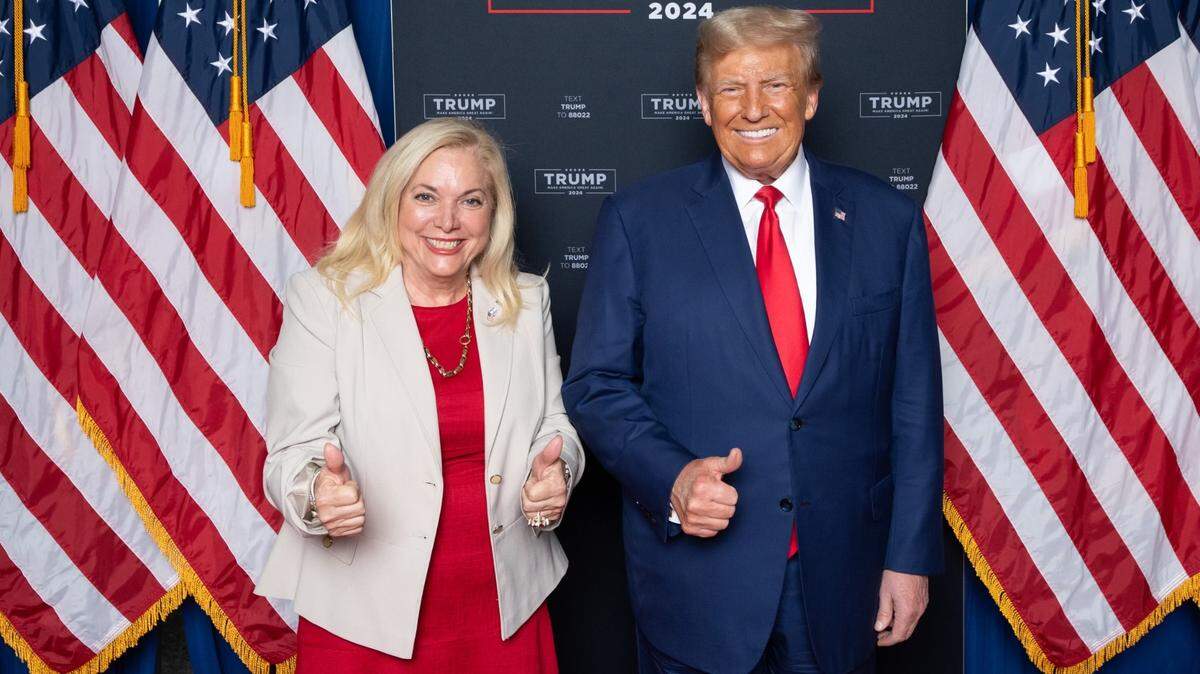
The spreader of election lies and inciter of riots now wants to influence who will be the chief of elections in the most voter-rich county in Florida.
The irony is no doubt lost on Miami-Dade Republicans who wear a Donald Trump endorsement as a badge of honor. The latest to receive his backing is state Rep. Alina Garcia, a Republican running to be the county’s next supervisor of elections. Last week, Trump — who faces four criminal cases — endorsed a Miami-Dade sheriff’s candidate as well.
“Alina Garcia has done an incredible job,” Trump wrote on his Truth Social site Tuesday night. “Now, Alina is running to be Miami-Dade’s Supervisor of Elections and protect Voters’ Rights. Alina has my Complete and Total Endorsement.”
Garcia posted a screenshot of Trump’s post on her account on X, formerly Twitter, and said in a statement she was “humbled” by the endorsement, the Herald reported on Wednesday. Garcia is running against lawyer Megan Pearl in the GOP primary. Two Democrats have filed to run as well.
A Trump endorsement may go a long way with some voters in South Florida, where he’s grown more popular since 2016. But it comes with a price: It’s a connection to the former president who not only denied he lost in 2020 but tried to subvert the results, even though judge after judge has ruled there was no evidence of widespread voter fraud. Trump faces two criminal cases over his efforts to overturn his loss and several of his allies have been indicted in Arizona over an alleged fake-electors scheme.
Most importantly, Trump has a history of pressuring election officials.
After the 2020 election, he called Georgia’s secretary of state to ask him to change the results in the state he narrowly lost to Joe Biden by invoking false claims of fraud — telling him, “I just want to find 11,780 votes.” His lies led his supporters to storm the U.S. Capitol on Jan. 6.
Brad Raffensperger, a Republican, balked at doing Trump’s bidding and later said he felt threatened by the then-president’s request. But if Raffensperger had been a Trump-endorsed elected official, would he have acquiesced? It’s impossible to know. We can only imagine that’s the outcome the former president would have hoped for. It’s no wonder he endorsed election deniers running for election offices in battleground states in 2022.
Trump never challenged the results in Florida, which he won in 2020 by larger margins than in 2016 despite losing Miami-Dade County. Trump is favored to carry the Sunshine State again in 2024, according to polls. So, in the near future, he might have no interest in meddling with our elections.
It’s anyone’s guess whether he will win Miami-Dade, where Republicans have invested significant resources, especially to court Hispanic voters. If he loses this prime electoral jewel of a county, could Trump turn on the office of the supervisor of elections? It’s possible. And the 2024 election is certainly not the only one that the county’s new election supervisor, whomever it is, will have to handle.
To be extremely clear, Garcia herself has not given any indication she would use the office to Trump’s advantage, if elected. Based on her comments to the Herald, she doesn’t appear to be an election denier, though she’s been unnecessarily evasive when asked about the topic at times.
She said in February that elections are overwhelmingly “fair” but “people don’t always feel that they’re fair.” On Wednesday, she said: “In reference to the 2020 elections, I can only speak to how the elections were conducted in Florida and in Miami-Dade County, which were fair, transparent and the results reported timely.”
For the record, Biden won and Trump lost in 2020.
Trump understands how valuable his support is, and any candidate running with a MAGA stamp of approval must know that Trump’s support comes with strings attached. It’s now up to Garcia to prove that an endorsement is just an endorsement and not an indication of shared undemocratic values.

Click here to send the letter.
BEHIND THE STORY
MOREWhat's an editorial?
Editorials are opinion pieces that reflect the views of the Miami Herald Editorial Board, a group of opinion journalists that operates separately from the Miami Herald newsroom. Miami Herald Editorial Board members are: opinion editor Amy Driscoll and editorial writers Isadora Rangel and Mary Anna Mancuso. Read more by clicking the arrow in the upper right.
What's the difference between an op-ed and a column?
How does the Miami Herald Editorial Board decide what to write about?
The Editorial Board, made up of experienced opinion journalists, primarily addresses local and state issues that affect South Florida residents. Each board member has an area of focus, such as education, COVID or local government policy. Board members meet daily and bring up an array of topics for discussion. Once a topic is fully discussed, board members will further report the issue, interviewing stakeholders and others involved and affected, so that the board can present the most informed opinion possible. We strive to provide our community with thought leadership that advocates for policies and priorities that strengthen our communities. Our editorials promote social justice, fairness in economic, educational and social opportunities and an end to systemic racism and inequality. The Editorial Board is separate from the reporters and editors of the Miami Herald newsroom.
How can I contribute to the Miami Herald Opinion section?
The Editorial Board accepts op-ed submissions of 650-700 words from community members who want to argue a specific viewpoint or idea that is relevant to our area. You can email an op-ed submission to oped@miamiherald.com. We also accept 150-word letters to the editor from readers who want to offer their points of view on current issues. For more information on how to submit a letter, go here.