
As DeSantis warns of ‘invasion’ from desperate Haitians, taxpayers write another check | Opinion
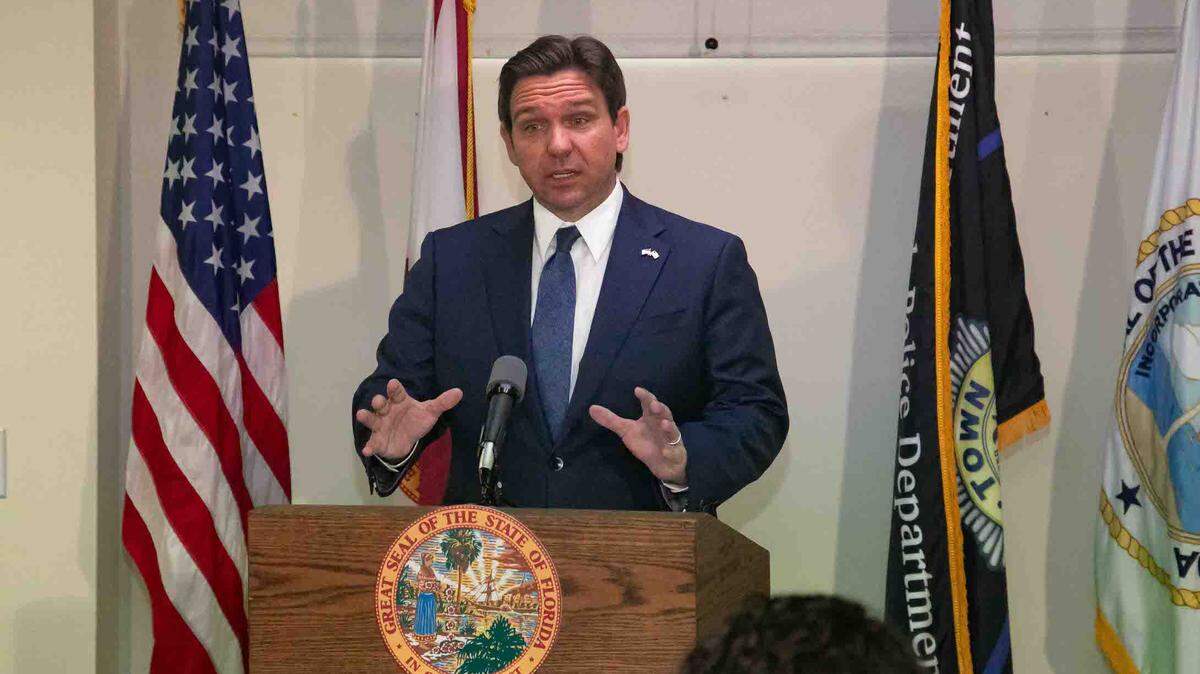
When announcing his plan to send hundreds of law enforcement officers and soldiers to stop Haitians from trying to reach Florida, Gov. Ron DeSantis warned darkly of “the possibility of invasion.”
So far, a mass wave of migration hasn’t materialized, though federal officials are monitoring whether that will happen if what’s left of the Haitian state collapses, with gangs already controlling most of the country’s capital.
DeSantis, of course, wouldn’t waste the chance for performative politics. Describing desperate Haitians fleeing violence and hunger as invaders from whom Florida must defend itself in the same way it would from a hostile military invasion is dehumanizing to his own constituents of Haitian descent in South Florida. Their vote is obviously not a priority for the governor who appears to be be trying to stay relevant for a possible 2028 presidential run.
“When a state faces the possibility of invasion, it has the right and duty to defend its territory and people,” DeSantis said in a statement.
This isn’t new rhetoric. When the governor announced he would send the Florida State Guard to the Texas border in February, he also referred to the record border crossings as an “invasion,” a term that Donald Trump has helped normalize in Republican politics and that other politicians and pundits happily parrot.
The misery in Haiti runs deep. According to the Associated Press, the U.N. food agency says 4 million people face “acute food insecurity.” A million are one step away from famine. Florida may have the “right to defend itself,” but that shouldn’t be our only response. How about some compassion for those living in terror right now?
DeSantis’ decision to deploy 250 state officers to Florida’s southern coast could be viewed as prudent, given that Monroe County law enforcement officials were overwhelmed by the large number of boats that arrived from Haiti and Cuba in the Keys between 2022 and 2023. But such a surge has yet to materialize this time and the federal government says it is preparing in case that happens, as the Herald reported. We are left to wonder how much this preemptive move will cost Florida.
DeSantis has freely spent tax dollars — and with little scrutiny pushback from legislators — on things like an election fraud police, reviving the World War II-era Florida State Guard, then expanding it, buying planes and boats and training the civilian force in military tactics.
It’s easy to spend money on shiny things when the dollars aren’t yours, as DeSantis did during his failed presidential run by burning through donor cash to pay for private planes instead of flying commercial as some other candidates did.
Lawmakers, too, have been happy to finance the governor’s policy endeavors while providing him with a veil of secrecy thanks to a law that restricted public access to his taxpayer-funded travel records.
The DeSantis administration also has routinely stonewalled public record requests and claimed “executive privilege” to keep records secret. A watchdog group had to sue the state to obtain records related to the taxpayer-funded flight of Venezuelan migrants from Texas to Martha’s Vineyard, Massachusetts. A judge ordered Florida to release the information but DeSantis’ administration has fought fiercely to reverse that ruling. Another government watchdog organization sued the governor’s office this month claiming it delayed providing public information in violation of state law.
How much will the governor spend on his latest move to send hundreds of officers to stop desperate Haitians from coming ashore? And is this decision born out of necessity — or expediency?

Click here to send the letter.
BEHIND THE STORY
MOREWhat's an editorial?
Editorials are opinion pieces that reflect the views of the Miami Herald Editorial Board, a group of opinion journalists that operates separately from the Miami Herald newsroom. Miami Herald Editorial Board members are: opinion editor Amy Driscoll and editorial writers Isadora Rangel and Mary Anna Mancuso. Read more by clicking the arrow in the upper right.
What's the difference between an op-ed and a column?
How does the Miami Herald Editorial Board decide what to write about?
The Editorial Board, made up of experienced opinion journalists, primarily addresses local and state issues that affect South Florida residents. Each board member has an area of focus, such as education, COVID or local government policy. Board members meet daily and bring up an array of topics for discussion. Once a topic is fully discussed, board members will further report the issue, interviewing stakeholders and others involved and affected, so that the board can present the most informed opinion possible. We strive to provide our community with thought leadership that advocates for policies and priorities that strengthen our communities. Our editorials promote social justice, fairness in economic, educational and social opportunities and an end to systemic racism and inequality. The Editorial Board is separate from the reporters and editors of the Miami Herald newsroom.
How can I contribute to the Miami Herald Opinion section?
The Editorial Board accepts op-ed submissions of 650-700 words from community members who want to argue a specific viewpoint or idea that is relevant to our area. You can email an op-ed submission to oped@miamiherald.com. We also accept 150-word letters to the editor from readers who want to offer their points of view on current issues. For more information on how to submit a letter, go here.