
Miami Beach’s opposition to train project affects the rest of us, too | Opinion
Traffic in Miami-Dade County is more than just a headache. It’s a quality of life issue, damaging our daily existence in ways both big and small.
We make calculations: It is worth it to drive an hour in each direction to meet someone for coffee or attend an event? If the doctor’s waiting room is backed up, will you have to drive home in rush hour traffic, doubling your drive time?
So when Miami Beach city commission members unanimously voted last month to oppose the Metromover extension to the Beach — one that has been in the planning stages for many years — they were making a statement that affects all of us, not just Miami Beach.
Traffic congestion affects pretty much every sector of our county. The Palmetto, Interstate 95, Biscayne Boulevard, Brickell, Kendall, Miami Beach — you name it, it has a traffic problem.
There’s a job recruitment and retention issue, too. Where can workers reasonably afford to live but not wind up sitting in the car for 45 minutes or more, to drive eight or 10 or 15 miles to get to the office? Rush hour seems to stretch through large portions of the day now.
Add a high-profile event like spring break or Art Basel or the Ultra music festival or the Miami International Boat Show and driving the streets can feel like a Mad Max movie.
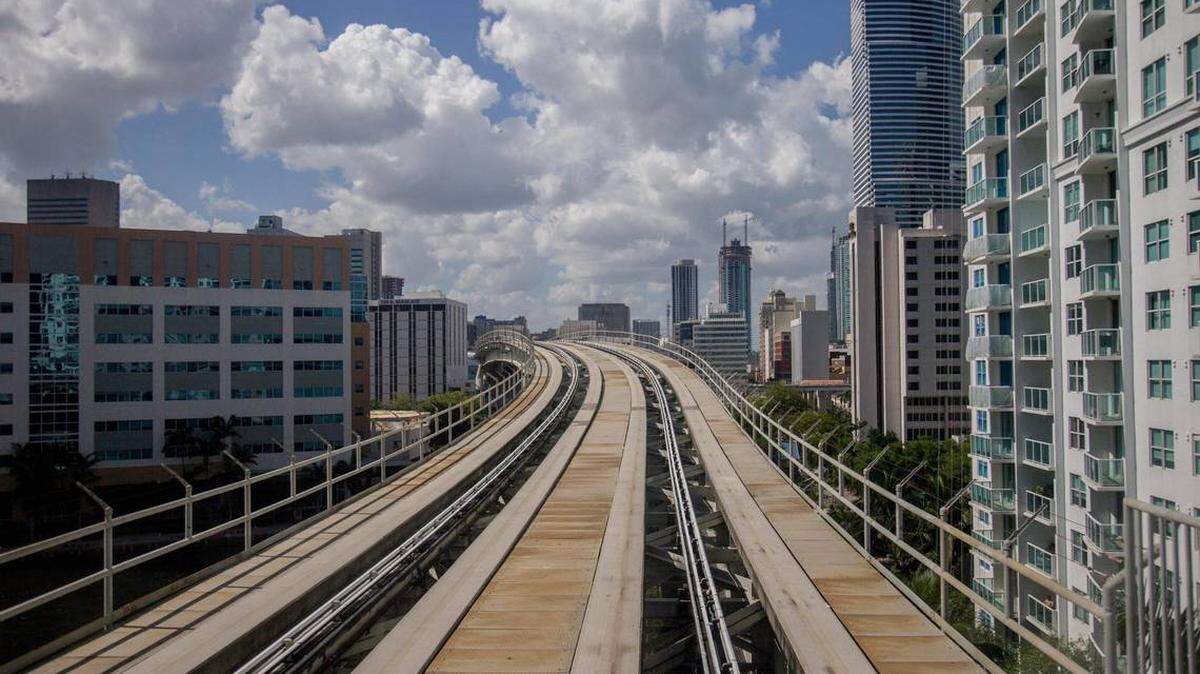
Communities, of course, need a say in their future. (The Legislature in Tallahassee is becoming notorious for disrespecting home rule.) The project doesn’t require Miami Beach approval. But some Beach residents have been raising their voices in opposition to the “Baylink” train extension, especially in the last couple of years, and commission members apparently are listening. It would run along the MacArthur Causeway and connect two existing stations in downtown Miami to two new stations along Fifth Street in South Beach.
A group of vocal residents have offered an array of objections, varying by neighborhood. Some of them: Metromover, which is free, would bring more crime and homelessness. It would run to the wrong location; it should take people from the mainland to Mid Beach where more employers are, not South Beach. There are worries from officials that the county could control zoning around new Metromover stations, not the city, and concerns have been raised from Fisher Island about possible shortcomings in required environmental studies.
They say all of this while also acknowledging that traffic has become increasingly crippling.
Also, there are Miami Beach residents who do want the Metromover extension. They need to be included in the conversation, too.
City leaders have pursued a number of steps to try to address gridlock, things like signal timing and more police officers to direct traffic and alerting residents of traffic backups. There are other ideas, too: the possibility of ferry service between the Beach and downtown Miami, an idea for faster bus service on the Julia Tuttle.
None of that is likely to help anywhere near enough. The Florida Department of Transportation said last fall that the MacArthur Causeway, 41st Street and parts of the Julia Tuttle Causeway are at a level of service that is “failing.”
The extension of Metromover could become the first mass transit connecting the Beach to the mainland. In a tourist town, you’d think that would be considered a great idea.
Miami-Dade Mayor Daniella Levine Cava said after the Miami Beach vote in February that the county will provide “updated information.” More discussions clearly are needed, and not just with the naysayers.
There’s a point here that is larger than any one city’s wishes. For any of us to thrive — in Miami Beach or Kendall or Westchester or Aventura — we need to reduce traffic congestion. If we want to be a world class city or county, we can’t just keep widening roads. We’ve been talking about a train to the Beach for years. It’s time for action.
The Beach has worries about the ramifications of the Metromover extension that should be considered. But we can’t let that knock us off the path toward more mass transit — soon.

Click here to send the letter.
BEHIND THE STORY
MOREWhat's an editorial?
Editorials are opinion pieces that reflect the views of the Miami Herald Editorial Board, a group of opinion journalists that operates separately from the Miami Herald newsroom. Miami Herald Editorial Board members are: opinion editor Amy Driscoll and editorial writers Isadora Rangel and Mary Anna Mancuso. Read more by clicking the arrow in the upper right.
What's the difference between an op-ed and a column?
How does the Miami Herald Editorial Board decide what to write about?
The Editorial Board, made up of experienced opinion journalists, primarily addresses local and state issues that affect South Florida residents. Each board member has an area of focus, such as education, COVID or local government policy. Board members meet daily and bring up an array of topics for discussion. Once a topic is fully discussed, board members will further report the issue, interviewing stakeholders and others involved and affected, so that the board can present the most informed opinion possible. We strive to provide our community with thought leadership that advocates for policies and priorities that strengthen our communities. Our editorials promote social justice, fairness in economic, educational and social opportunities and an end to systemic racism and inequality. The Editorial Board is separate from the reporters and editors of the Miami Herald newsroom.
How can I contribute to the Miami Herald Opinion section?
The Editorial Board accepts op-ed submissions of 650-700 words from community members who want to argue a specific viewpoint or idea that is relevant to our area. You can email an op-ed submission to oped@miamiherald.com. We also accept 150-word letters to the editor from readers who want to offer their points of view on current issues. For more information on how to submit a letter, go here.
This story was originally published March 25, 2024 at 2:03 PM.