
A better cone of uncertainty — or more confusion as a hurricane approaches? | Opinion
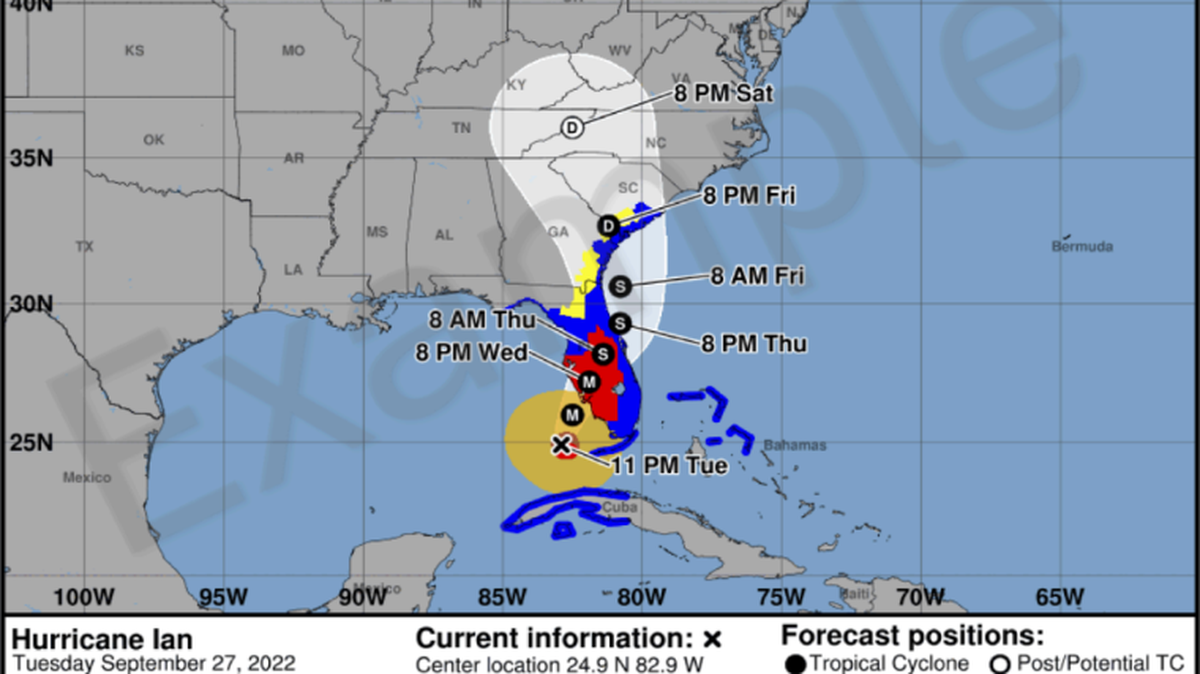
As the 2024 Atlantic hurricane season approaches, forecasters at the National Hurricane Center are unveiling an experimental new version of one of their most important communication tools — the dreaded cone of uncertainty.
The old cone — which has been around for 22 years now — will still be published, complete with the usual projected path of a storm along with colorful outlines of coasts to show where storm watches and warnings are in place. But starting on Aug. 15, the hurricane center will now also publish a second map with colorful layers to show inland spots that might see trouble.
The new version also will offer a look at something else that’s very important: the wind field of the storm. Tropical storm force winds will be in gold, hurricane force will be brown. The wind field indicates how far out from the storm’s center the damaging winds stretch. That is the kind of information residents need to know when they are gauging how much preparation is needed to keep their property and themselves safe.
Sound like an improvement for the June 1-Nov. 30 hurricane season? Maybe.
Emergency managers have a difficult balance to strike — give people enough time to evacuate or prepare if necessary but don’t alarm them unnecessarily.
Will adding colorful layers of data to the cone graphic improve public safety messaging? Or will it inadvertently generate more questions during the critical window before a storm’s arrival?
This month, the NHC wrote that “recommendations from social science research suggest that the addition of inland watches and warnings to the cone graphic will help communicate wind risk during tropical cyclone events while not over complicating the current version of the graphic with too many data layers.”
By depicting threats beyond the coastline like watches, warnings and wind speeds, the multi-colored format aims to provide “a broader picture of impacts.”
On the surface, giving residents more information about potential hazards sounds good. As storms increasingly threaten lives well inland, clearly outlining all risks means Floridians can make better decisions on preparedness.
But this is Florida. We aren’t always known for our good sense.
The NHC says the change was spurred by criticism that it fails to reflect the risks posed to coastal communities that may be out of the cone one day but in it the next — or close enough to the eye of a storm to still see severe damage.
For residents in the direct path of an intensifying hurricane, sifting through various watches, warnings and wind speeds depicted on an overloaded map could cause heightened stress, not reduced uncertainty.
We hope the NHC has tested the comprehension of its new cone with average Floridians, the ones who may need to base crucial survival decisions on the maps. Think about the Florida Keys, where evacuations are particularly fraught because there is essentially a two-lane road to get out.
But then, also, remember Hurricane Ian in 2022, when relatively minor shifts in the hurricane center’s predictions of its path led to an on-and-off feeling of safety for some counties, accompanied in some cases by a slowdown in response. Maybe this new version is exactly what we need.
Does a simpler solution exist? Rather than continue modifying the core forecast tool, more supplemental advisories and plain talk could clarify all hazards more clearly. As a Category 4 barrels down, clear communication could trump flashy innovations.
Overall, though, the NHC is trying this experiment to better protect lives and respond to new needs for more and better information to assess danger. Even if it has to be adjusted over time, more information is probably better.
Will Florida be able to make it work? We’ll all find out together.
Click here to send the letter.
BEHIND THE STORY
MOREWhat's an editorial?
Editorials are opinion pieces that reflect the views of the Miami Herald Editorial Board, a group of opinion journalists that operates separately from the Miami Herald newsroom. Miami Herald Editorial Board members are: opinion editor Amy Driscoll and editorial writers Isadora Rangel and Mary Anna Mancuso. Read more by clicking the arrow in the upper right.
What's the difference between an op-ed and a column?
How does the Miami Herald Editorial Board decide what to write about?
The Editorial Board, made up of experienced opinion journalists, primarily addresses local and state issues that affect South Florida residents. Each board member has an area of focus, such as education, COVID or local government policy. Board members meet daily and bring up an array of topics for discussion. Once a topic is fully discussed, board members will further report the issue, interviewing stakeholders and others involved and affected, so that the board can present the most informed opinion possible. We strive to provide our community with thought leadership that advocates for policies and priorities that strengthen our communities. Our editorials promote social justice, fairness in economic, educational and social opportunities and an end to systemic racism and inequality. The Editorial Board is separate from the reporters and editors of the Miami Herald newsroom.
How can I contribute to the Miami Herald Opinion section?
The Editorial Board accepts op-ed submissions of 650-700 words from community members who want to argue a specific viewpoint or idea that is relevant to our area. You can email an op-ed submission to oped@miamiherald.com. We also accept 150-word letters to the editor from readers who want to offer their points of view on current issues. For more information on how to submit a letter, go here.