
How can Miami Beach reduce spring break troubles? $100 parking spots might just do it | Opinion
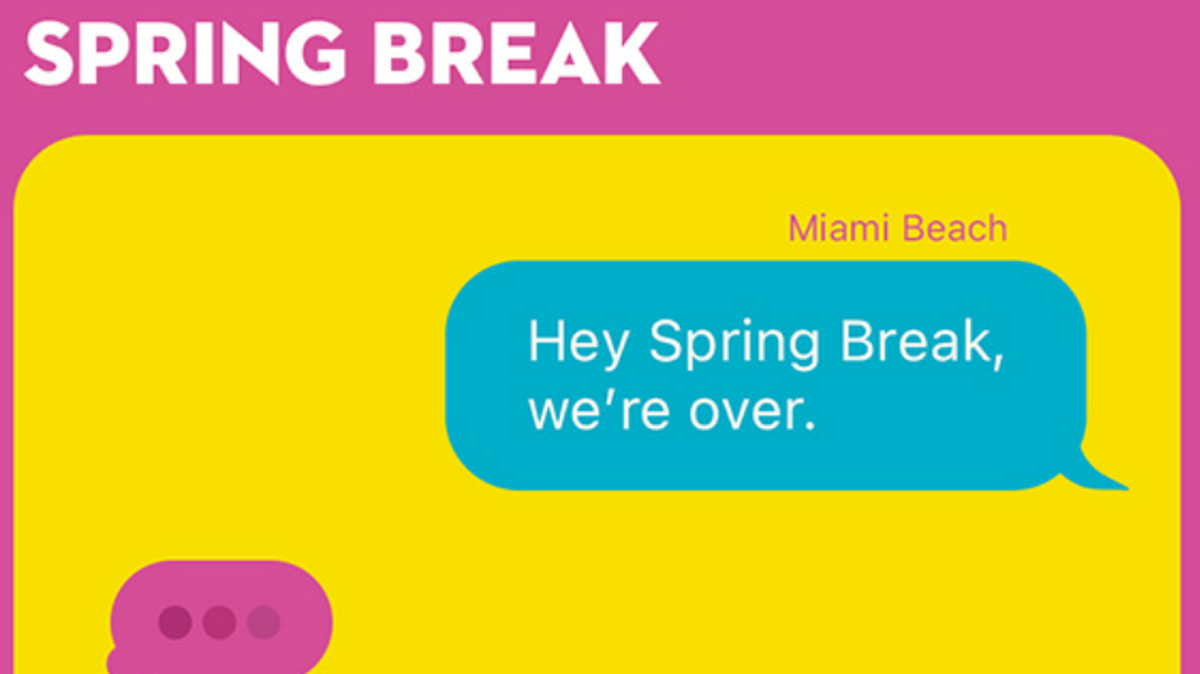
Declaring that “enough is enough” and vowing to mean it this time, Miami Beach’s new mayor, Steven Meiner, held a news conference Thursday to make it crystal clear to visitors — and, specifically, college students — that Miami Beach is “breaking up with them.”
The centerpiece of a new messaging campaign designed to discourage the annual onslaught of spring break chaos features an imaginary text-message conversation in which the city says: “Hey, Spring Break, we’re over.”
As the mayor put it, “Come here, enjoy, but don’t come here looking for trouble. We’ve had enough.”
Unprecedented steps
This year, as in others, city officials are taking steps to try to keep the slew of spring breakers under control. The city says the measures this time are unprecedented and more targeted.
For far too long, at too high a cost in reputation and city finances, Miami Beach has struggled to deal with the mayhem that descends upon its streets, especially Ocean Drive, during the month of March, city leaders have said.
Rowdy crowds, public drunkenness and disorderly conduct, gunplay and even murder — the scenes playing out on South Beach since the early 2000’s have become all too common, especially on the second and third weeks of March.
The Editorial Board has written for years about the mostly failed attempts by several different Miami Beach mayors, police chiefs and city managers to control the flow of visitors, something Fort Lauderdale eventually was able to do.
One of the measures that might actually make a dent this time around, even for locals who can cause their share of trouble: exorbitant parking and towing fees.
$100 parking spaces
That means a flat $100 parking rate — ouch — at city garages and lots in South Beach from March 7-10 and again from March 14-17. And vehicles will not be allowed into those garages and lots after 6 p.m., which means it won’t be easy to drive, park and party till dawn in the city. Residents are exempt.
The high-ticket parking is meant to act as a deterrent, and the city might be on to something here. An economic tactic might work better than an Alanis Morissette concert, last year’s unsuccessful attempt to calm the crowds.
Secondly, if you park on the street to avoid the parking charge and get towed, a doubled towing rate of $516 for nonresidents will apply. Double ouch.
And then there’s also the plan to close sidewalk cafes on Ocean Drive during those same two weekends in March. And security checkpoints and bag checks to enter the beach via Ocean Drive, where the entrances will close at 6 p.m. during spring break.
The hope is that the combination of measures will stop the kind of violence that marred 2023’s festivities, when there were two deadly shootings, hundreds of arrests and the city manager declared a state of emergency and curfew.
We know this is a tightrope for officials on Miami Beach, a world-renowned tourist attraction. They insist that Miami Beach is still welcoming to visitors while also announcing steps that are likely to make visitors’ experiences in the city unpleasant.
Police Chief Wayne Jones said people can expect more police in South Beach “than you’ve ever seen before,” the Miami Herald reported.
We realize police have a difficult job in such a pressured situation but when officers “crack down,” they must ensure that civil rights are not violated. The spotlight will be on the department.
“We’ve had enough”
Meiner, a former commissioner elected mayor in November, said the city has had enough, and rightfully so. No city should have to endure the lawlessness and disruption that Miami Beach faces each spring when its residents are held hostage by the crowds that paralyze sections of the city.
This year, perhaps, that may finally change. Like the rest of Miami, we’ll be watching to see.
Click here to send the letter.
BEHIND THE STORY
MOREWhat's an editorial?
Editorials are opinion pieces that reflect the views of the Miami Herald Editorial Board, a group of opinion journalists that operates separately from the Miami Herald newsroom. Miami Herald Editorial Board members are: opinion editor Amy Driscoll and editorial writers Isadora Rangel and Mary Anna Mancuso. Read more by clicking the arrow in the upper right.
What's the difference between an op-ed and a column?
How does the Miami Herald Editorial Board decide what to write about?
The Editorial Board, made up of experienced opinion journalists, primarily addresses local and state issues that affect South Florida residents. Each board member has an area of focus, such as education, COVID or local government policy. Board members meet daily and bring up an array of topics for discussion. Once a topic is fully discussed, board members will further report the issue, interviewing stakeholders and others involved and affected, so that the board can present the most informed opinion possible. We strive to provide our community with thought leadership that advocates for policies and priorities that strengthen our communities. Our editorials promote social justice, fairness in economic, educational and social opportunities and an end to systemic racism and inequality. The Editorial Board is separate from the reporters and editors of the Miami Herald newsroom.
How can I contribute to the Miami Herald Opinion section?
The Editorial Board accepts op-ed submissions of 650-700 words from community members who want to argue a specific viewpoint or idea that is relevant to our area. You can email an op-ed submission to oped@miamiherald.com. We also accept 150-word letters to the editor from readers who want to offer their points of view on current issues. For more information on how to submit a letter, go here.
This story was originally published February 16, 2024 at 5:19 PM.