
Florida anti-free speech bill targets ‘liberal media’ but guess who’s really mad at it? | Opinion
There are no lessons learned in the Florida Legislature.
Last year, lawmakers, prodded by their hostility toward the “liberal media,” tried to pass a bill to make it easier to sue for defamation. Back then, it was conservative media owners who feared this “let’s own the libs” measure had adverse effects.
Corporate media — a term of choice for Gov. Ron DeSantis, who supported the legislation — have resources to fight expensive lawsuits. Small local radio stations and online publications — and your local Rush Limbaughs who might get too loose with facts — do not.
The measure is back this year in a different version. A strange coalition of liberal-leaning groups like the American Civil Liberties Union and libertarian Americans for Prosperity, founded by the billionaire Koch brothers, is fighting against it. Even the Better Business Bureau — the apolitical nonprofit known for rating businesses and publishing customer complaints — opposes it.
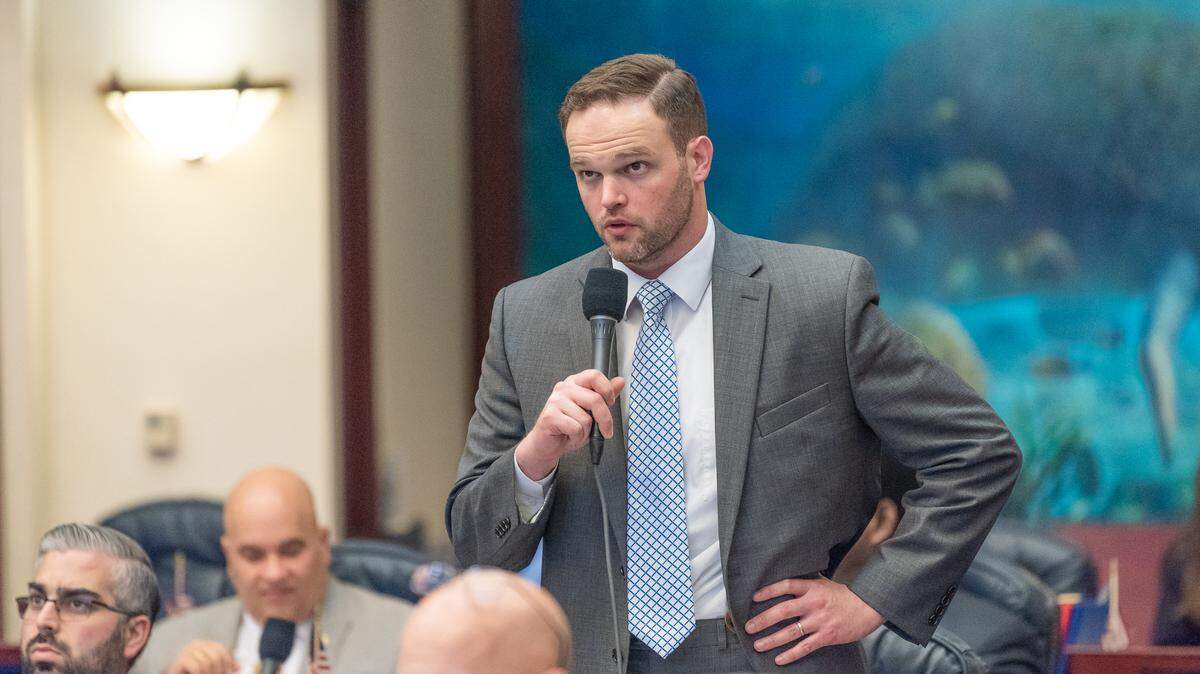
House Bill 757 is an affront to free speech and probably unconstitutional, a mechanism for public figures to silence negative coverage with the threat of litigation. Sponsor Rep. Alex Andrade, R-Pensacola, says he wants to hold people accountable for publishing false information. But his bill clearly goes much further.
In a nutshell, HB 757 would lower the bar for filing defamation lawsuits. That bar was set in the landmark 1964 U.S. Supreme Court ruling in New York Times v. Sullivan. To win a libel case, a public figure must prove “actual malice” — that the statement about them was made “with knowledge that it was false or with reckless disregard for the truth.”
This standard was meant to protect public debate even if someone publishes information that contains errors.
Andrade’s bill would automatically assume malice if a statement about a public figure is proven false — no matter how small the error — and it came from one anonymous source. Could this force journalists to decide between revealing their anonymous sources, and potentially endangering them, or facing legal ramifications?
Perhaps the strongest rebuke to the legislation came from a grilling Andrade got by a known conservative radio host on Monday. As Trey Radel, a former GOP congressman, said, the impact on anonymous sources would create “a chilling effect out there for the next person who wants to expose the (Department of Justice, FBI and IRS),” the USA Today Network reported.
The bill also would force publishers of information into a “veracity hearing,” where they would have to prove their statements are truthful.
Those hearings would happen within 60 days of a motion being filed, giving defendants little time to prepare and forcing them to spend larger amounts of money to defend themselves, which could force smaller news operations or individuals who post something on social media into bankruptcy, Bobby Block, executive director of the First Amendment Foundation, told the Herald Editorial Board.
As The Better Business Bureau wrote in a Feb. 13 letter to legislative leaders, an unscrupulous business unhappy with its ratings could force BBBs to “rush to court in remote jurisdictions without sufficient time for investigation and discovery.”
HB 757 allowed public figures to go “court shopping” by allowing libel suits based on materials posted online to be filed in any court in the state — in other words, jurisdictions that are more friendly to a public figure’s case. After facing backlash, Andrade proposed an amendment to prohibit lawsuits from being filed “in a venue that does not possess a reasonable connection” to the case.
Andrade contends it’s already against the law to sue people for simply exercising their free-speech rights. But his critics point out that by lowering defamation standards, the legislation weakens such protections against baseless lawsuits. The Better Business Bureau wrote that the veracity hearings might allow plaintiffs to “escape the burden of establishing” a good faith basis for their claim.
What is the purpose of this legislation then, other than to allow public figures to quash information they don’t like?
Editor’s note: This editorial has been updated to reflect an amendment to HB 757.
Click here to send the letter.
BEHIND THE STORY
MOREWhat's an editorial?
Editorials are opinion pieces that reflect the views of the Miami Herald Editorial Board, a group of opinion journalists that operates separately from the Miami Herald newsroom. Miami Herald Editorial Board members are: opinion editor Amy Driscoll and editorial writers Isadora Rangel and Mary Anna Mancuso. Read more by clicking the arrow in the upper right.
What's the difference between an op-ed and a column?
How does the Miami Herald Editorial Board decide what to write about?
The Editorial Board, made up of experienced opinion journalists, primarily addresses local and state issues that affect South Florida residents. Each board member has an area of focus, such as education, COVID or local government policy. Board members meet daily and bring up an array of topics for discussion. Once a topic is fully discussed, board members will further report the issue, interviewing stakeholders and others involved and affected, so that the board can present the most informed opinion possible. We strive to provide our community with thought leadership that advocates for policies and priorities that strengthen our communities. Our editorials promote social justice, fairness in economic, educational and social opportunities and an end to systemic racism and inequality. The Editorial Board is separate from the reporters and editors of the Miami Herald newsroom.
How can I contribute to the Miami Herald Opinion section?
The Editorial Board accepts op-ed submissions of 650-700 words from community members who want to argue a specific viewpoint or idea that is relevant to our area. You can email an op-ed submission to oped@miamiherald.com. We also accept 150-word letters to the editor from readers who want to offer their points of view on current issues. For more information on how to submit a letter, go here.
This story was originally published February 16, 2024 at 3:24 PM.