
International help for Haiti must be near. If not, it’s time for Plan B | Opinion
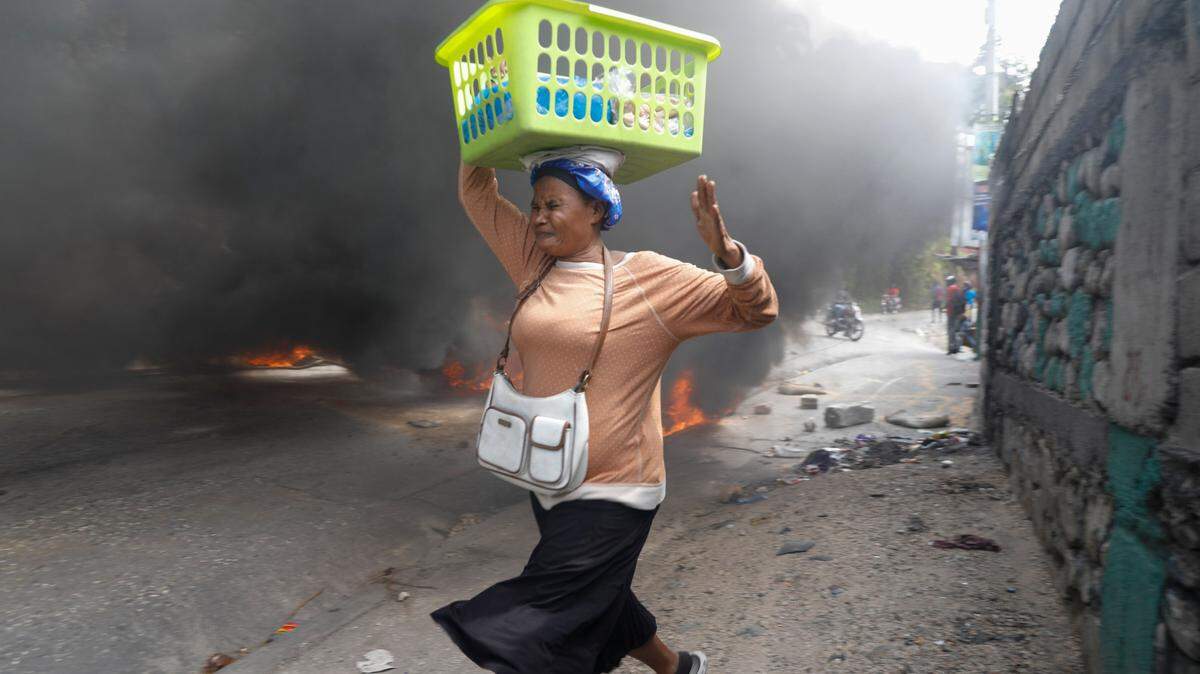
This week, the United States will ask some of the world’s largest economies to aid Haiti. We hope there is an encouraging response.
The request to be posed on the sidelines of a ministerial meeting of the powerful G20 nations comes as some Republican members of Congress continue to block a request to fund the deployment of Kenyan armed police officers to the Caribbean country, and as the fate of the mission still remains up in the air.
Last week, in a sign of hopeful progress, the United States, Haiti, and Kenya met in Washington, D.C., to plan the deployment of the Multinational Security Support mission to Haiti as the situation continues to rapidly deteriorate amid an increase in murders, kidnappings and rapes by violent gangs.
G20 nations, any help is welcomed. Time is of the essence.
Haiti crisis
With food and fuel shortages worsening living conditions, the international community had hoped Kenya would lead an armed intervention to restore order. However, Kenya’s high court has blocked the deployment.
For now, Haiti has no clear path forward to end the chaos brought by armed gangs. That chaos, already brewing under President Jovenel Moïse, was worsened by his assassination in 2021. The ongoing investigation into Moïse’s death took on a new twist this week: His widow, Martine Moïse, wounded in the plot that killed her husband, has been indicted.
As the Biden administration awaits congressional funding and a legal decision in Kenya, it’s time for the U.S. and the United Nations, maybe with an assist from G20 nations, can craft a Plan B to rescue the Haitian people from the grip of gangs, which have become the country’s de-facto government.
Move to Plan B
It could be time to move on without Kenya’s solution, which some Haitians oppose. They want a Haitian solution to Haiti’s problems, which seems unlikely given the country’s under-gunned police forces.
Last year, the international community stepped in, recognized the crisis, and committed to sending a non-U.N. security force. If only it had been that simple. After Canada declined to help, Kenya stepped up, but a judge on its Nairobi High Court has blocked sending 1,000 of the East African nation’s police officers to Haiti.
Days after the U.N. Security Council approved the mission, Hamas attacked Israel. Attention shifted to that section of the world. Sending troops to Haiti and financing the mission appears to have fallen to the back burner, unfortunately.
Months later, the deployment of any help to Haiti remains up in the air. Now add a resurgence in protests against Prime Minister Ariel Henry by both Haitians rightfully angry about the lack of security and economic opportunities and those seeking to take advantage of the despair.
As Haiti’s neighbor and ally, the U.S. must show leadership and do more. But what? Let’s hope this upcoming conference offers clarity.
While the Biden administration has said U.S. military intervention is out of the question, some form of international security presence is urgently needed. No government can function adequately or address a humanitarian crisis under lawlessness.
Restore order
The goal is not to create a long-term occupation but to create a window of stability so aid delivery, economic revitalization, and political reconciliation can begin and democratic elections can happen.
We in South Florida have watched as the Haitian people have suffered greatly over the years from disasters, both natural and human-made. A safe, prosperous Haiti benefits the U.S. in stemming the tide of refugees to South Florida. The situation will only worsen if the international community fails to act with urgency.
Haiti’s people deserve peace, stability, and hope for the future.
The U.S. and U.N. — all Haiti has standing between chaos — must do everything possible to deliver help. Let’s hope the G20 nations can offer a solution before their meeting in November. By then, it could be too late for some Haitians.
Click here to send the letter.
BEHIND THE STORY
MOREWhat's an editorial?
Editorials are opinion pieces that reflect the views of the Miami Herald Editorial Board, a group of opinion journalists that operates separately from the Miami Herald newsroom. Miami Herald Editorial Board members are: opinion editor Amy Driscoll and editorial writers Isadora Rangel and Mary Anna Mancuso. Read more by clicking the arrow in the upper right.
What's the difference between an op-ed and a column?
How does the Miami Herald Editorial Board decide what to write about?
The Editorial Board, made up of experienced opinion journalists, primarily addresses local and state issues that affect South Florida residents. Each board member has an area of focus, such as education, COVID or local government policy. Board members meet daily and bring up an array of topics for discussion. Once a topic is fully discussed, board members will further report the issue, interviewing stakeholders and others involved and affected, so that the board can present the most informed opinion possible. We strive to provide our community with thought leadership that advocates for policies and priorities that strengthen our communities. Our editorials promote social justice, fairness in economic, educational and social opportunities and an end to systemic racism and inequality. The Editorial Board is separate from the reporters and editors of the Miami Herald newsroom.
How can I contribute to the Miami Herald Opinion section?
The Editorial Board accepts op-ed submissions of 650-700 words from community members who want to argue a specific viewpoint or idea that is relevant to our area. You can email an op-ed submission to oped@miamiherald.com. We also accept 150-word letters to the editor from readers who want to offer their points of view on current issues. For more information on how to submit a letter, go here.
This story was originally published February 21, 2024 at 9:13 AM.