
Racism came home to roost at Florida Capitol. GOP shocked it’s their bill’s fault | Opinion
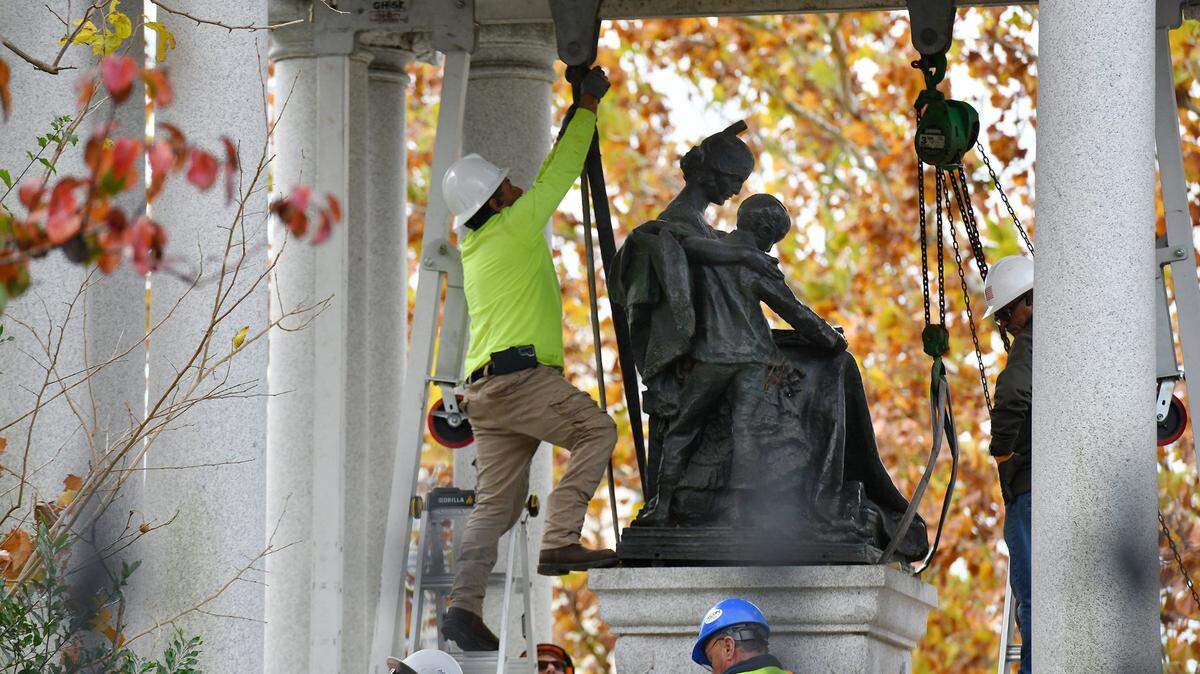
Florida lawmakers got a taste of the bigotry their legislation has helped to legitimize in the past two years of warring against so-called “woke” culture.
The latest effort, a bill to prohibit local governments from removing historic monuments, appears to have floundered after a heated Senate committee hearing on Tuesday. The bill would prevent local elected officials from ordering Confederate statues taken down, threatening those officials with fines of up to $1,000 and potential civil lawsuits.
It took one comment from a supporter of the bill to crack the facade that Senate Bill 1122 is merely about preserving history. While some lawmakers might believe that’s what they are doing, they cannot ignore the message they are sending to racists and white supremacists.
The message is that the Legislature will protect the wishes of people who want to celebrate a Confederacy that fought to preserve slavery at the expense of Black Floridians who see it a symbol of hatred.
During public comments, a bill supporter said the movement to remove Confederate monuments “is part of the cultural war being waged against white society.” The comment, from a member of the audience, made not only Democrats uncomfortable — they walked out of the committee room in protest before a vote — but also Republicans. Another speaker said that if Native Americans found out they had “standing” to take down Spanish statues in places like St. Augustine, there wouldn’t be any left in the state.
“The comments that I heard today... they were bigoted, they were racist,” Republican Sen. Jennifer Bradley said. “And you are the reason I’m vacillating on whether or not to even vote yes. Because it looks like I endorse your hatred, and I do not.”
Nevertheless, Bradley still voted “yes” on the bill, as did every other Republican on the Senate Committee on Community Affairs, including Chair Alexis Calatayud, of Miami, who was taken aback by the “white culture” comment, telling the audience member that other bill supporters don’t agree with his position.
After the committee hearing, however, Republican Senate President Kathleen Passidomo put the bill’s fate into question.
“There are problems with the bill,” Passidomo said. “More than that, there are problems with the perceptions among our caucus, on all sides... I’m not going to bring a bill to the floor that is so abhorrent to everybody.”
We give Passidomo credit for reading the room, but her actions are more important than her words. Sure, there are problems — a lot of them — with the bill, beginning with its conception. This is not the type of legislation that can be fixed with an amendment. It should be allowed to languish and die.
People have different feelings about taking down Confederate monuments, and certainly some who want to preserve them aren’t white nationalists. There’s a valid debate on how far communities should go in taking down monuments of historic figures who held slaves or abhorrent racist views.
The problem with this bill is that it takes away local governments’ authority to make those decisions based on the wishes of their communities. In December, the mayor of Jacksonville, a city that’s 30% Black, ordered the removal of a Confederate statue from a park. Just months before that, the city was the site of a mass shooting where three Black people were killed because of their race.
Despite tragedies like this (or the 2015 Charleston Black church shooting by a white supremacist who posed for photos with the Confederate flag), Florida lawmakers insist on pushing legislation like SB 1122 or the “Stop WOKE Act,” which limited classroom instruction on racism. Meanwhile, Gov. Ron DeSantis has refused to properly denounce neo-Nazi marches that happened in Central Florida over the past two years.
That might not be their intention but the Florida Legislature and DeSantis have emboldened racists. This is what critics have been warning against all along. Now that racism reared its ugly head publicly — and in their faces — perhaps Republicans will understand what they have unleashed.
Click here to send the letter.
BEHIND THE STORY
MOREWhat's an editorial?
Editorials are opinion pieces that reflect the views of the Miami Herald Editorial Board, a group of opinion journalists that operates separately from the Miami Herald newsroom. Miami Herald Editorial Board members are: opinion editor Amy Driscoll and editorial writers Isadora Rangel and Mary Anna Mancuso. Read more by clicking the arrow in the upper right.
What's the difference between an op-ed and a column?
How does the Miami Herald Editorial Board decide what to write about?
The Editorial Board, made up of experienced opinion journalists, primarily addresses local and state issues that affect South Florida residents. Each board member has an area of focus, such as education, COVID or local government policy. Board members meet daily and bring up an array of topics for discussion. Once a topic is fully discussed, board members will further report the issue, interviewing stakeholders and others involved and affected, so that the board can present the most informed opinion possible. We strive to provide our community with thought leadership that advocates for policies and priorities that strengthen our communities. Our editorials promote social justice, fairness in economic, educational and social opportunities and an end to systemic racism and inequality. The Editorial Board is separate from the reporters and editors of the Miami Herald newsroom.
How can I contribute to the Miami Herald Opinion section?
The Editorial Board accepts op-ed submissions of 650-700 words from community members who want to argue a specific viewpoint or idea that is relevant to our area. You can email an op-ed submission to oped@miamiherald.com. We also accept 150-word letters to the editor from readers who want to offer their points of view on current issues. For more information on how to submit a letter, go here.
This story was originally published February 9, 2024 at 5:25 PM.