
Cuban government officials insist capitalism exists on the island. Now, that’s rich | Opinion
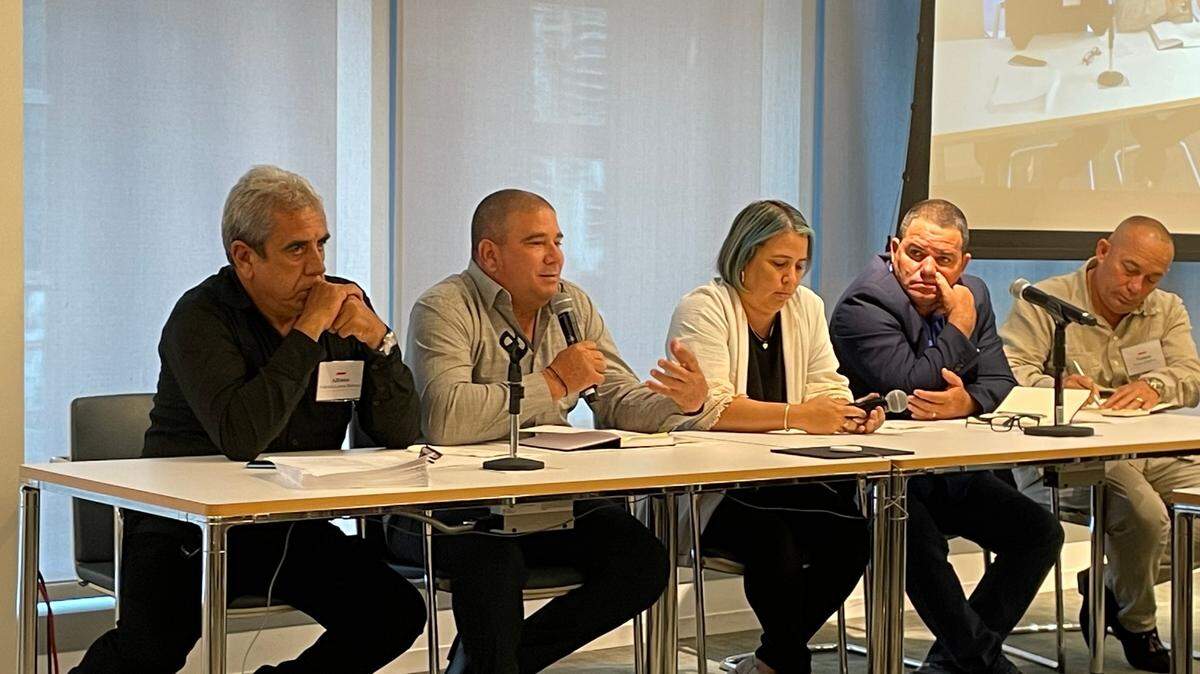
Well, well, well. If it isn’t Fidel Castro spinning in his grave.
The communist government of Cuba, which has railed against U.S. capitalism for decades, finds itself in the strange position of actually having to defend the existence of private business on the island. How rich.
The unusual pushback from Cuba comes after a congressional hearing last week titled, “The Myth of the New Cuban Entrepreneurs: An Analysis of the Biden Administration’s Cuba Policy” led by Miami Republican U.S. Rep. María Elvira Salazar, a staunch anti-communist.
The hearing proved to be a showcase for Salazar, chairwoman of the House Foreign Affairs Subcommittee on the Western Hemisphere. She called out Cuba’s claim that a private sector exists on the island. The last time real private business owners existed in Cuba was Dec. 31, 1958 — the last day of Fulgencio Batista’s regime in Cuba, before Castro’s takeover the following day as his revolution succeeded.
The congresswoman shares the view of many Cuban exiles in Miami that much of this supposed free enterprise is baloney. They know that everything on the island, including toilet paper, is under government control. Only the elites in power could hope to operate a private business.
The boastful claims of flashes of capitalism on the island from Cuba officials — including allowing a hand-picked group of Cuban entrepreneurs to meet with the Miami Herald editorial board last year — are hollow, Salazar believes. She considers these efforts “a new scheme from the regime which is desperate for millions of dollars to violate the American market” — not to mention also circumventing the U.S. embargo on the island.
We tend to agree with Salazar here, but we do see that Cuba is experimenting like never before to feed its population.
Salazar’s claim angered Cuban officials. Cuba’s vice minister for the economy, Johana Odriozola, offered a rare interview to CNN en Español, according to Miami Herald Cuba Reporter Nora Gamez Torres.
“Nobody in their right mind can talk about something that really exists being a myth,” Odriozola said in the interview. “We are not talking about something small; we are talking about more than 10,000 micro, small and medium-sized companies.”
But who would have thought we’d see the day Cuban officials took to American airwaves passionately advocating for the virtues of market economics and entrepreneurship — in Cuba?
Desperate times truly do call for desperate measures in Cuba these days, where the economy is once again sputtering.
It’s mind-boggling to hear Odriozola touting the supposed independence of small and medium enterprises as if the communist party hasn’t had its tentacles wrapped tightly around every aspect of the Cuban economy for the past 60 years.
Spare us the crocodile tears about defending the poor Cuban entrepreneurs from “misinformation” from the U.S. Please.
Since the small- and medium-sized private enterprises were first authorized in 2021, Cuba has said they are an integral part of the island’s centralized socialist economy. But recently, they announced additional cash transfer restrictions and tax hikes on these businesses and their employees.
These entrepreneurs mainly deal in food delivery, which Miami exiles finance. Exiles in Miami can purchase food from these entrepreneurs, not controlled by the government on the island, and have it delivered by vans to relatives on the island. All the financial transactions happen outside the island.
The entrepreneurs themselves told the Board, during the interview in Miami last year, that they feared the Cuban government, at any minute, could take their businesses away and put them under government control. Yep.
The Cuban government doth protest too much. They have painted themselves into a propaganda corner by allowing some minimal private business while still clinging to a socialist system.
Now they’re forced to perform all sorts of ideological gymnastics to defend the very capitalist practices they’ve railed against for so long.
¿Viva el capitalismo? Hardly.

Click here to send the letter.
BEHIND THE STORY
MOREWhat's an editorial?
Editorials are opinion pieces that reflect the views of the Miami Herald Editorial Board, a group of opinion journalists that operates separately from the Miami Herald newsroom. Miami Herald Editorial Board members are: opinion editor Amy Driscoll and editorial writers Isadora Rangel and Mary Anna Mancuso. Read more by clicking the arrow in the upper right.
What's the difference between an op-ed and a column?
How does the Miami Herald Editorial Board decide what to write about?
The Editorial Board, made up of experienced opinion journalists, primarily addresses local and state issues that affect South Florida residents. Each board member has an area of focus, such as education, COVID or local government policy. Board members meet daily and bring up an array of topics for discussion. Once a topic is fully discussed, board members will further report the issue, interviewing stakeholders and others involved and affected, so that the board can present the most informed opinion possible. We strive to provide our community with thought leadership that advocates for policies and priorities that strengthen our communities. Our editorials promote social justice, fairness in economic, educational and social opportunities and an end to systemic racism and inequality. The Editorial Board is separate from the reporters and editors of the Miami Herald newsroom.
How can I contribute to the Miami Herald Opinion section?
The Editorial Board accepts op-ed submissions of 650-700 words from community members who want to argue a specific viewpoint or idea that is relevant to our area. You can email an op-ed submission to oped@miamiherald.com. We also accept 150-word letters to the editor from readers who want to offer their points of view on current issues. For more information on how to submit a letter, go here.
This story was originally published January 26, 2024 at 9:52 AM.