
In Donald Trump’s GOP, it serves Haley and DeSantis well to deny America’s racist past | Opinion
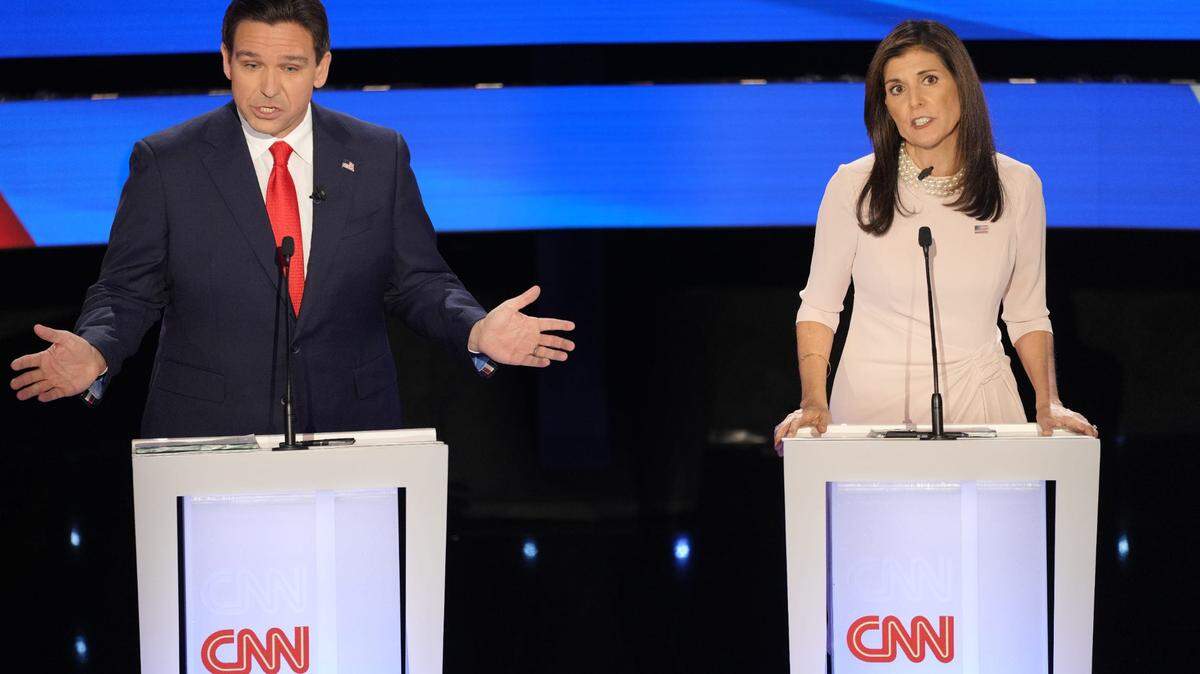
One day after the holiday honoring the civil rights leader who fought to end legalized racism, Republican presidential candidate Nikki Haley told Fox News that America has “never been a racist country.”
People may disagree whether the country is racist as a whole in 2024. But Haley’s statement on the heels of Martin Luther King Jr. Day defies historic facts. The enslavement of Africans, the U.S. Constitution’s 1787 three-fifths compromise, which declared five slaves the equivalent of three people in population counts, and Jim Crow laws that segregated Black people are reminders that, for much of American history, racism was institutionalized. One can recognize these facts from our past and still claim to be blind to its impacts today.
Here’s what Haley said Tuesday: “We’re not a racist country … we’ve never been a racist country. Our goal is to make sure that today is better than yesterday. Are we perfect? No. But our goal is to always make sure we try and be more perfect every day that we can.”
Haley and race
Haley’s words don’t seem like a slip of the tongue — though her spokesperson tried to justify them later by saying that “America has always had racism, but America has never been a racist country.” Haley is the former South Carolina governor who rightfully removed the Confederate flag from the state Capitol after a white supremacist massacred nine Black church congregants in 2015. Now that she’s running for president, though, Haley has a hard time acknowledging simple facts, such as that slavery was at the center of the Civil War.
In Donald Trump’s party, it’s unpatriotic to question the narrative of a colorblind America and that white people are victims. That is why Gov. Ron DeSantis turned Florida into a laboratory for racial resentment — as well as animosity toward LGBTQ, in particular trans, people — in the name of his presidential ambitions. He’s banned teachers from talking about race in a manner that could be interpreted as making white students feel guilty. The point of history and discussing racism shouldn’t be to blame people for their ancestors’ actions — but some facts may make us uncomfortable and prompt us question our place in the world.
Trump’s GOP
Asked to respond to Haley’s comment, DeSantis said during a CNN town hall on Wednesday that “the U.S. is not a racist country.” When pressed, DeSantis acknowledged that an 1857 U.S. Supreme Court ruling that denied citizenship to African Americans was “wrong” and “we’ve had challenges with how we’ve dealt with race as a society.” Awkward words, yes, but at least they’re better than his defense of Florida’s Black history curriculum that says slaves benefited from skills they learned in bondage.
The percentage of Americans who believe discrimination causes the economic disparities Black people face has grown over the decades, according to the General Social Survey, a biennial national poll. However, more than 50% of Republicans believe Black people “don’t have the motivation or will power to pull themselves up out of poverty.” Republicans are also more likely to view anti-white discrimination as a bigger problem than anti-Black racism, a Yahoo News/YouGov poll showed last year.
Republican politicians like to exploit white grievance while also weaponizing the words of Martin Luther King Jr., whose legacy the country observed on Monday. When DeSantis proposed to allow parents to sue schools for teaching the critical race theory in public schools in 2021, he invoked the “I Have a Dream” speech, in which King said he hoped his children would “not be judged by the color of their skin, but by the content of their character.” Critical race theory is an academic theory that explores how racism is embedded in American institutions and usually isn’t taught in K-12.
We can recognize the racism in the country’s past while also acknowledging the progress we have made. Denying the dark parts of history or minimizing them is not a display of love for country but of willful denial and, in the case of Haley and DeSantis, political expedience.

Click here to send the letter.
BEHIND THE STORY
MOREWhat's an editorial?
Editorials are opinion pieces that reflect the views of the Miami Herald Editorial Board, a group of opinion journalists that operates separately from the Miami Herald newsroom. Miami Herald Editorial Board members are: opinion editor Amy Driscoll and editorial writers Isadora Rangel and Mary Anna Mancuso. Read more by clicking the arrow in the upper right.
What's the difference between an op-ed and a column?
How does the Miami Herald Editorial Board decide what to write about?
The Editorial Board, made up of experienced opinion journalists, primarily addresses local and state issues that affect South Florida residents. Each board member has an area of focus, such as education, COVID or local government policy. Board members meet daily and bring up an array of topics for discussion. Once a topic is fully discussed, board members will further report the issue, interviewing stakeholders and others involved and affected, so that the board can present the most informed opinion possible. We strive to provide our community with thought leadership that advocates for policies and priorities that strengthen our communities. Our editorials promote social justice, fairness in economic, educational and social opportunities and an end to systemic racism and inequality. The Editorial Board is separate from the reporters and editors of the Miami Herald newsroom.
How can I contribute to the Miami Herald Opinion section?
The Editorial Board accepts op-ed submissions of 650-700 words from community members who want to argue a specific viewpoint or idea that is relevant to our area. You can email an op-ed submission to oped@miamiherald.com. We also accept 150-word letters to the editor from readers who want to offer their points of view on current issues. For more information on how to submit a letter, go here.
This story was originally published January 17, 2024 at 5:46 PM.