
Florida is pulling out all stops to block voters from deciding on abortion | Opinion
The group working to ensure abortion access in Florida has nearly reached the number of signatures it needs under state law to put a proposed constitutional amendment on the 2024 ballot. As of last week, Floridians Protecting Freedom had almost 864,000 of the required 891,523 validated signatures.
This is important news. The voters of Florida must have the chance to speak on this issue, rather than allowing the Florida Legislature, which passed an extreme, six-week abortion ban in May, to force its decision on the rest of us.
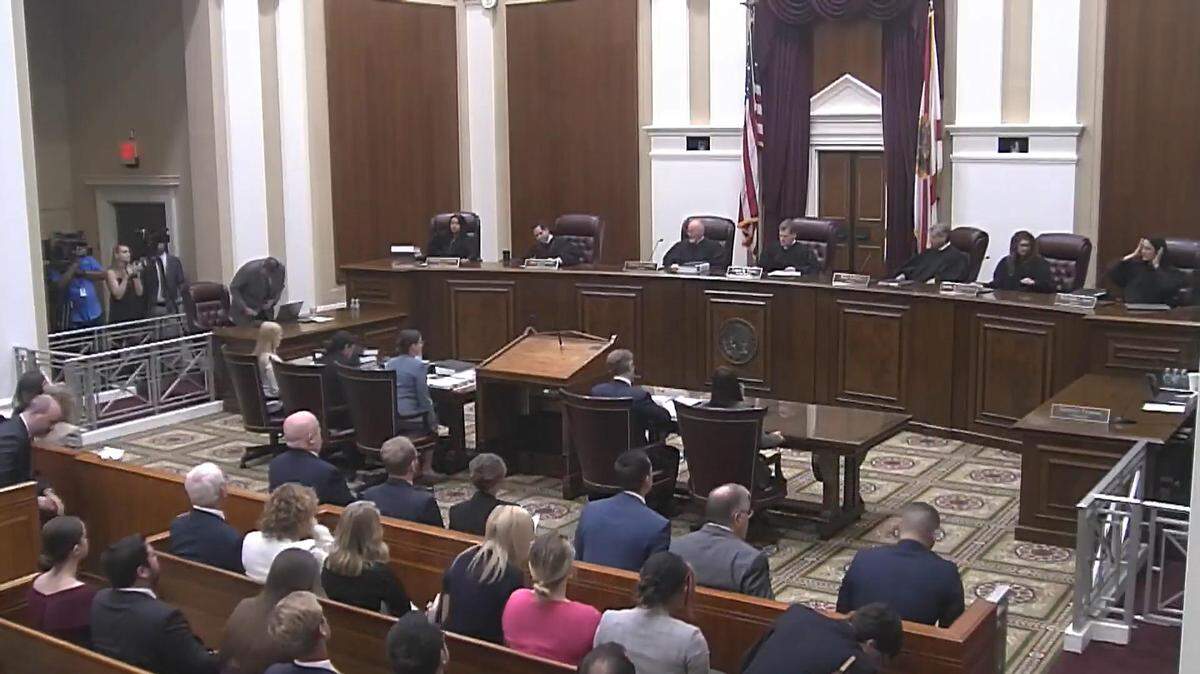
The ballot measure is not a done deal yet. The state is trying to block voters from having their say. Attorney General Ashley Moody has filed a court challenge regarding the wording of the summary that would appear on the ballot.
Getting the signatures is a crucial step. The abortion-rights group has until Feb. 1 to submit all the signatures and meet other requirements, including that the signatures come from at least half of Florida’s congressional districts. The group has said it’s on track to submit 1.4 million signatures for validation by the state. That should be more than enough — almost half a million more than required — even allowing for some signatures to be tossed out as invalid.
It’s a milestone in the fight to let voters decide in a state where Republicans have mostly succeeded in locking down control of government. But it’s something else, too. The large number of signatures gathered, 1.4 million, is an indication of just how far the Florida Legislature has strayed from what many people in this state actually want — not that the Republican Legislature pays much heed to that anymore.
In recent years, legislators and Gov. Ron DeSantis took it upon themselves to change Florida abortion laws, first by passing a 15-week restriction in 2022 and then, emboldened by the federal court’s decision on Roe v. Wade, a six-week law in 2023. All of that’s in limbo right now, pending a court challenge. The six-week law is contingent on the state Supreme Court ruling in favor of the 15-week law.
But there’s another significant hurdle looming: the state itself.
Abortion referendum
Moody’s brief, filed with the state Supreme Court, argues, essentially, that Floridians will be confused by the wording of the ballot summary. The amendment would prohibit any state law that delays or bans abortion before viability or when necessary to protect the health of the patient. It would protect abortion access in Florida until viability, estimated at around 24 weeks
The ballot summary reads in part that “no law shall prohibit, penalize, delay, or restrict abortion before viability or when necessary to protect the patient’s health, as determined by the patient’s healthcare provider.” Moody, though, is arguing that the word “viability” could have more than one meaning.
The Florida Supreme Court decides whether the wording of a proposed constitutional amendment is clear and is limited to a single subject, standards the amendment must meet to get on the ballot. DeSantis has appointed five of the seven Supreme Court justices, shaping the court into an increasingly conservative body.
If polls are an indication, it’s pretty clear how the majority of Floridians feel. A November poll by the University of North Florida’s Public Opinion Research Lab indicates voters favor the abortion rights amendment — and the survey included a lot of Republicans. The poll found that 62% of those asked supported the amendment to enshrine abortion rights in the state constitution. That’s a critical level of support: The threshold for passage of a constitutional amendment in Florida is 60%. More than half of Republicans surveyed — 53% — said they’d vote for the measure.
Another, earlier poll, leading up to the 2023 legislative session and also conducted by the University of North Florida, showed 75% of voters either somewhat opposed or strongly opposed the six-week ban. And back in 2012, Floridians went to the polls to reject an amendment that said Florida’s constitution could not be interpreted to offer more abortion rights than the U.S. Constitution.
There’s no confusion in Florida, no matter what Moody — “the people’s lawyer” — says. Abortion has been part of the American discussion since the 1970s. Ending a pregnancy is a medical issue for a woman and her doctor. Floridians aren’t unclear what it means to specify that right in the state constitution. Moody and the state need to let the people speak.
Click here to send the letter.
BEHIND THE STORY
MOREWhat's an editorial?
Editorials are opinion pieces that reflect the views of the Miami Herald Editorial Board, a group of opinion journalists that operates separately from the Miami Herald newsroom. Miami Herald Editorial Board members are: opinion editor Amy Driscoll and editorial writers Isadora Rangel and Mary Anna Mancuso. Read more by clicking the arrow in the upper right.
What's the difference between an op-ed and a column?
How does the Miami Herald Editorial Board decide what to write about?
The Editorial Board, made up of experienced opinion journalists, primarily addresses local and state issues that affect South Florida residents. Each board member has an area of focus, such as education, COVID or local government policy. Board members meet daily and bring up an array of topics for discussion. Once a topic is fully discussed, board members will further report the issue, interviewing stakeholders and others involved and affected, so that the board can present the most informed opinion possible. We strive to provide our community with thought leadership that advocates for policies and priorities that strengthen our communities. Our editorials promote social justice, fairness in economic, educational and social opportunities and an end to systemic racism and inequality. The Editorial Board is separate from the reporters and editors of the Miami Herald newsroom.
How can I contribute to the Miami Herald Opinion section?
The Editorial Board accepts op-ed submissions of 650-700 words from community members who want to argue a specific viewpoint or idea that is relevant to our area. You can email an op-ed submission to oped@miamiherald.com. We also accept 150-word letters to the editor from readers who want to offer their points of view on current issues. For more information on how to submit a letter, go here.
This story was originally published January 2, 2024 at 11:55 AM.