
Florida, we need to talk about sea rise and property values | Opinion
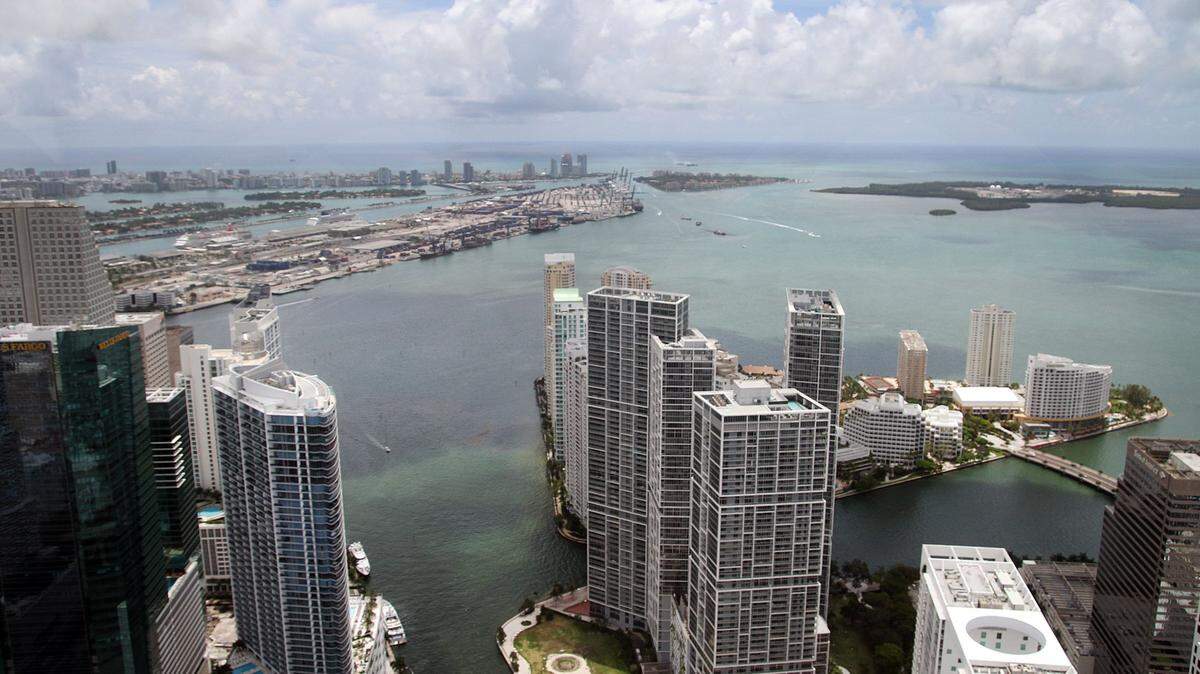
Floridians clearly like rolling the dice. We live on a peninsula that sticks out directly into the path of hurricanes, but we keep building on the coasts like crazy. We’re the lightning capital of the U.S., yet we also have more golf courses than pretty much any other state. We drive on Interstate 95, for heaven’s sake.
So it can’t be any surprise that we continue to brush off the idea that sea rise and flooding might actually affect us — and the housing market — sometime soon. You want real risk, we say? Try crossing the street in Miami.
But, of course, refusing to face the growing climate threat isn’t the smartest strategy. A new study published recently in the journal Nature Communications drives that home. It suggests we may see a reshaping of the state’s population based on which spots will require a retreat from rising waters and which spots — the ones on high ground — will be able to handle more people and housing.
Around the corner
And some of those effects, according to the Miami Herald story on the topic, could start happening quite soon: Frequently flooded locations could see resident flight as early as 2028 in Miami-Dade County. In Broward, it could start happening in 2032.
That’s not decades away. It’s pretty much tomorrow.
As the story points out, the bazillion-dollar question is what will happen to Florida’s real estate market. In Miami, as is the long tradition in Florida, growth — particularly real estate growth — is a basic underpinning of our economic expectations. But under this re-shaping, the places where growth could occur might see a large shift. Would coastal and waterfront properties stop being so desirable? What about places that are further west but still on low-lying ground? That could have profound effects. Being able to predict where property values might drop, or even just stop rising, is key in a place where so much of the economy relies on the real estate boom.
One somewhat reassuring note: Both Miami-Dade and Broward are predicted to continuing growing overall through this century, according to the study, which is based on current flooding models as projected into the future. That’s great — as long as you’re not the one left holding the property that drops in value when you’ve been banking on it going up.
This is only one study. Plus, it doesn’t factor in whether anything significant is done to slow climate change or sea rise. Local governments in South Florida have been elevating roads, installing pumps and requiring new construction to be elevated.
Individual choice
How much risk or change homeowners are willing to take on is another unknown. Some people may be OK with flooded driveways or roads periodically as long they get to stay in the beachfront home of their dreams. It’s not just governments that will have to adapt. It’ll also be individuals.
We’re already doing that. In research published in the journal Climate Risk Management and cited in the Miami Herald story, more than a third of respondents said they’d missed school or work because of flooding. And yet most of them still planned to remain in Miami-Dade or a county nearby.
Are people really willing to take on more risk? A Redfin study said would-be homebuyers who had access to flood risk scores generally chose to bid on homes with lower risk. At the same time, in Florida, we rebuild along the coastline that Hurricane Ian walloped in 2022.
Out of all of this, a complicated picture emerges. We are adapting to the risks we’re facing — so far. But if there’s a tipping point when property values in certain places actually start heading south, will that change?
It’s a conversation we need to have, in Miami-Dade, in Florida and in the country.
Click here to send the letter.
BEHIND THE STORY
MOREWhat's an editorial?
Editorials are opinion pieces that reflect the views of the Miami Herald Editorial Board, a group of opinion journalists that operates separately from the Miami Herald newsroom. Miami Herald Editorial Board members are: opinion editor Amy Driscoll and editorial writers Isadora Rangel and Mary Anna Mancuso. Read more by clicking the arrow in the upper right.
What's the difference between an op-ed and a column?
How does the Miami Herald Editorial Board decide what to write about?
The Editorial Board, made up of experienced opinion journalists, primarily addresses local and state issues that affect South Florida residents. Each board member has an area of focus, such as education, COVID or local government policy. Board members meet daily and bring up an array of topics for discussion. Once a topic is fully discussed, board members will further report the issue, interviewing stakeholders and others involved and affected, so that the board can present the most informed opinion possible. We strive to provide our community with thought leadership that advocates for policies and priorities that strengthen our communities. Our editorials promote social justice, fairness in economic, educational and social opportunities and an end to systemic racism and inequality. The Editorial Board is separate from the reporters and editors of the Miami Herald newsroom.
How can I contribute to the Miami Herald Opinion section?
The Editorial Board accepts op-ed submissions of 650-700 words from community members who want to argue a specific viewpoint or idea that is relevant to our area. You can email an op-ed submission to oped@miamiherald.com. We also accept 150-word letters to the editor from readers who want to offer their points of view on current issues. For more information on how to submit a letter, go here.
This story was originally published December 29, 2023 at 4:00 AM.