
DeSantis decries ‘weaponization’ of federal government, but ignores his record in Florida | Opinion
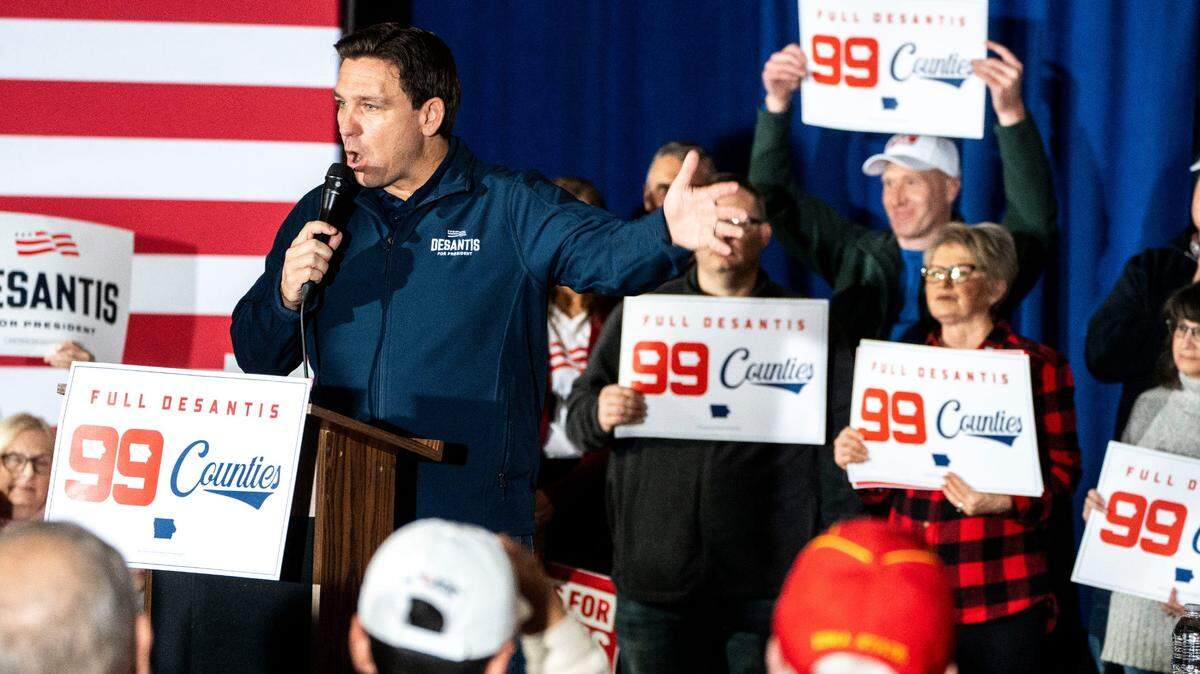
The governor who has used — and abused — the state apparatus to punish Disney over its right to free speech and try to shut down local businesses for hosting drag shows wants Americans to think he will stop the “weaponization” of the federal government.
Ron DeSantis’ shtick about “slitting throats” of “deep state” federal bureaucrats is an tired, rehearsed trope he’s repeated several times as he tries to survive as a Republican presidential candidate. Now, speaking to NBC’s “Meet the Press” on Sunday, he talked about being a “servant” to his constituents and “not a ruler.”
That’s the same DeSantis who — in the name of fighting “woke” culture — has injected divisive politics into virtually every corner of state government, who exerted big-government control over what teachers and college professors can say about race in the classroom and what private businesses can include in their diversity training. Yet he wants to persuade Republican voters he’s their last hope against an all-too-powerful state that goes after the enemies of those in power.
“This [federal] government is out of control,” DeSantis told “Meet the Press.” “We have seen the weaponization of agencies like the DOJ, the FBI and the IRS. I’m going to end that weaponization.”
Anyone’s a target
Some Republicans might have cheered when DeSantis passed laws against Disney as punishment for its opposition to the parental-rights law critics dubbed “Don’t say gay.” But those egging him on should be warned: Anyone could be DeSantis’ target tomorrow.
Before DeSantis branded Disney as “woke,” the company enjoyed the perks of having close relationships with Florida politicians. But after the company exercised its free-speech rights, DeSantis and a sycophantic Legislature stripped away its control of the Central Florida Tourism Oversight District, giving the governor’s cronies six-figure salaries to run the agency, as the Orlando Sentinel has reported.
The governor has also convinced the party of small government that it is righteous to threaten the livelihood of businesses because of an ideological war disguised as morality. His administration tried to suspend the liquor license of venues like the Wynwood restaurant R House and the Hyatt Regency Miami for hosting drag queen shows where minors were present, even when accompanied by adults. Both establishments paid fines to settle their disputes with the state. In June, a federal judge issued a preliminary injunction blocking a new law that banned minors from “adult live performances” such as drag shows.
DeSantis’ hypocrisy
While DeSantis decries the federal prosecutors who indicted Donald Trump for trying to overturn the 2020 elections under the false premise that there was widespread voter fraud, he pushed the Legislature to give him an elections crime office. Desperate to court Republicans who still believe in the Big Lie, DeSantis bragged about last year’s arrests of 20 felons who voted despite not having their civil rights restored. It turned out that many of those felons were issued voter cards by their local elections offices, and DeSantis’ appointees at the Department of State failed to flag them as ineligible to cast ballots.
For DeSantis to then say his goal is “to have a single standard of justice” is an affront to reality in Florida. People and businesses have been caught up in the double standards he has instituted in state government. They are collateral damage in the governor’s abuse of state power to advance narratives that he thought would help him become the Republican presidential nominee.
If DeSantis ever becomes president — and that’s looking less likely to happen in 2024 — expect the weaponization of government to proceed on steroids. Following the Trump playbook, DeSantis would brand it as retribution against an enemy.
In Florida, we have learned the enemy can be anyone the governor doesn’t like.
Click here to send the letter.
BEHIND THE STORY
MOREWhat's an editorial?
Editorials are opinion pieces that reflect the views of the Miami Herald Editorial Board, a group of opinion journalists that operates separately from the Miami Herald newsroom. Miami Herald Editorial Board members are: opinion editor Amy Driscoll and editorial writers Isadora Rangel and Mary Anna Mancuso. Read more by clicking the arrow in the upper right.
What's the difference between an op-ed and a column?
How does the Miami Herald Editorial Board decide what to write about?
The Editorial Board, made up of experienced opinion journalists, primarily addresses local and state issues that affect South Florida residents. Each board member has an area of focus, such as education, COVID or local government policy. Board members meet daily and bring up an array of topics for discussion. Once a topic is fully discussed, board members will further report the issue, interviewing stakeholders and others involved and affected, so that the board can present the most informed opinion possible. We strive to provide our community with thought leadership that advocates for policies and priorities that strengthen our communities. Our editorials promote social justice, fairness in economic, educational and social opportunities and an end to systemic racism and inequality. The Editorial Board is separate from the reporters and editors of the Miami Herald newsroom.
How can I contribute to the Miami Herald Opinion section?
The Editorial Board accepts op-ed submissions of 650-700 words from community members who want to argue a specific viewpoint or idea that is relevant to our area. You can email an op-ed submission to oped@miamiherald.com. We also accept 150-word letters to the editor from readers who want to offer their points of view on current issues. For more information on how to submit a letter, go here.