
Miami-Dade set a precedent for urban sprawl. Developers have come knocking | Opinion
Squeezed on a narrow peninsula between the Atlantic Ocean and the Everglades, Miami-Dade County cannot accommodate perpetual urban sprawl without encroaching on the environment or farming communities.
The County Commission is under increased pressure to allow projects beyond the Urban Development Boundary — the UDB — which separates residential and commercial areas from rural and environmentally sensitive land. This county-drawn line is what stops development from further intruding upon South Florida’s natural resources, but it’s often seen as an obstacle for developers.
Last year, the commission approved a controversial project that environmental groups and Republican U.S. Sen. Marco Rubio opposed because of its potential impacts on Biscayne Bay restoration. Nevertheless, the commission granted the developers a series of hearings that gave them time to sweeten the deal and win support from holdouts, who eventually flipped their vote. The South Dade Logistics and Technology commercial complex added almost 400 acres to the UDB.
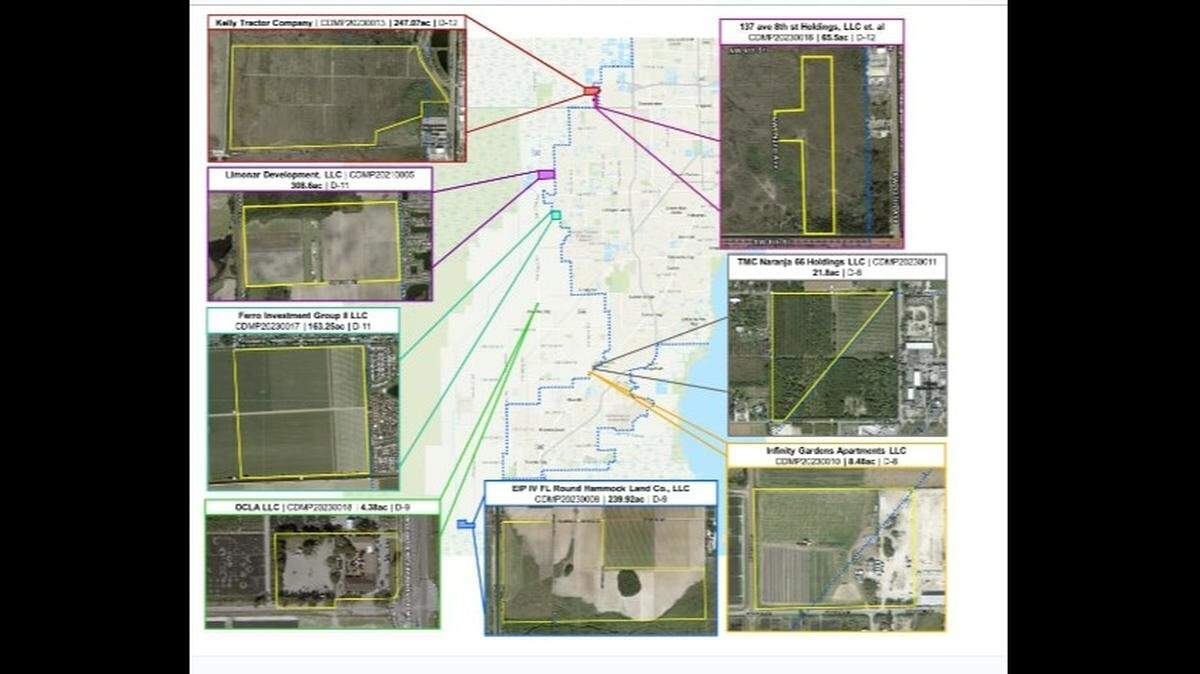
That probably signaled to other developers that Miami-Dade County is open to continuing to push the boundaries of urban sprawl. The Herald reported that there are seven applications to build projects outside the UDB.
Dec. 12 hearing
Meanwhile, commissioners are expected to hear a proposal on Dec. 12 that would loosen the rules for expanding the UDB. The resolution would lower the ratio that requires at least 1.5 jobs for each new housing unit to at least one job per unit.
Commissioner Anthony Rodriguez, its sponsor, said at a hearing last month the current requirement might work in coastal areas bustling with economic opportunities, but it is not “feasible” in heavily residential areas of Western Dade. Yet the timing of his proposal — when there are so many UDB applications in the pipeline — looks intended to make it easier to urbanize the faraway corners of the county abutting farms and wetlands.
“They are trying to clear the way for their projects, for sure,” said Laura Reynolds, director of the Hold the Line Coalition, a group of environmental organizations that has fought UDB expansions in the past. “This is just an expedited change-it-for-me kind of scenario.”
Each of those seven applications should be evaluated on their merits after going through public hearings and vetting. Some might have bigger environmental impacts than others.
There are two proposed multi-use projects near transit lines in Southwest Dade that developers say will create workforce housing near public transportation, which has been a goal of local leaders. County planning staff predicts there’s enough land inside the UDB for apartments and town homes through 2040. However, they’re also recommending a state review to consider whether the projects justify expanding the UDB because of their proximity to transit.
Another proposal, to build 1,600 residential units off Southwest 162 Avenue and Southwest 104th Street, would have a “high” adverse impact because of environmental issues and the loss of farmland, according to the Hold the Line Coalition.
Groups like Hold the Line have been loud and persistent in their opposition to expanding the UDB, but the Legislature kneecapped their ability to take their fight to court. A new law allows developers to collect attorney costs from plaintiffs who file unsuccessful legal challenges to a county’s Comprehensive Development Master Plan.
That has helped create a perfect storm for potential new urban sprawl. As Reynolds previously told the Herald, “the flood gates are opened.”
The County Commission will face a great test: Will it have the foresight to think past the shiny proposals developers are dangling in front of them or will our elected officials consider what their community might look like decades after they have left office?
Click here to send the letter.
BEHIND THE STORY
MOREWhat's an editorial?
Editorials are opinion pieces that reflect the views of the Miami Herald Editorial Board, a group of opinion journalists that operates separately from the Miami Herald newsroom. Miami Herald Editorial Board members are: opinion editor Amy Driscoll and editorial writers Isadora Rangel and Mary Anna Mancuso. Read more by clicking the arrow in the upper right.
What's the difference between an op-ed and a column?
How does the Miami Herald Editorial Board decide what to write about?
The Editorial Board, made up of experienced opinion journalists, primarily addresses local and state issues that affect South Florida residents. Each board member has an area of focus, such as education, COVID or local government policy. Board members meet daily and bring up an array of topics for discussion. Once a topic is fully discussed, board members will further report the issue, interviewing stakeholders and others involved and affected, so that the board can present the most informed opinion possible. We strive to provide our community with thought leadership that advocates for policies and priorities that strengthen our communities. Our editorials promote social justice, fairness in economic, educational and social opportunities and an end to systemic racism and inequality. The Editorial Board is separate from the reporters and editors of the Miami Herald newsroom.
How can I contribute to the Miami Herald Opinion section?
The Editorial Board accepts op-ed submissions of 650-700 words from community members who want to argue a specific viewpoint or idea that is relevant to our area. You can email an op-ed submission to oped@miamiherald.com. We also accept 150-word letters to the editor from readers who want to offer their points of view on current issues. For more information on how to submit a letter, go here.