
Florida declares war on academic freedom. Who gets the big payout? A DeSantis ally | Opinion
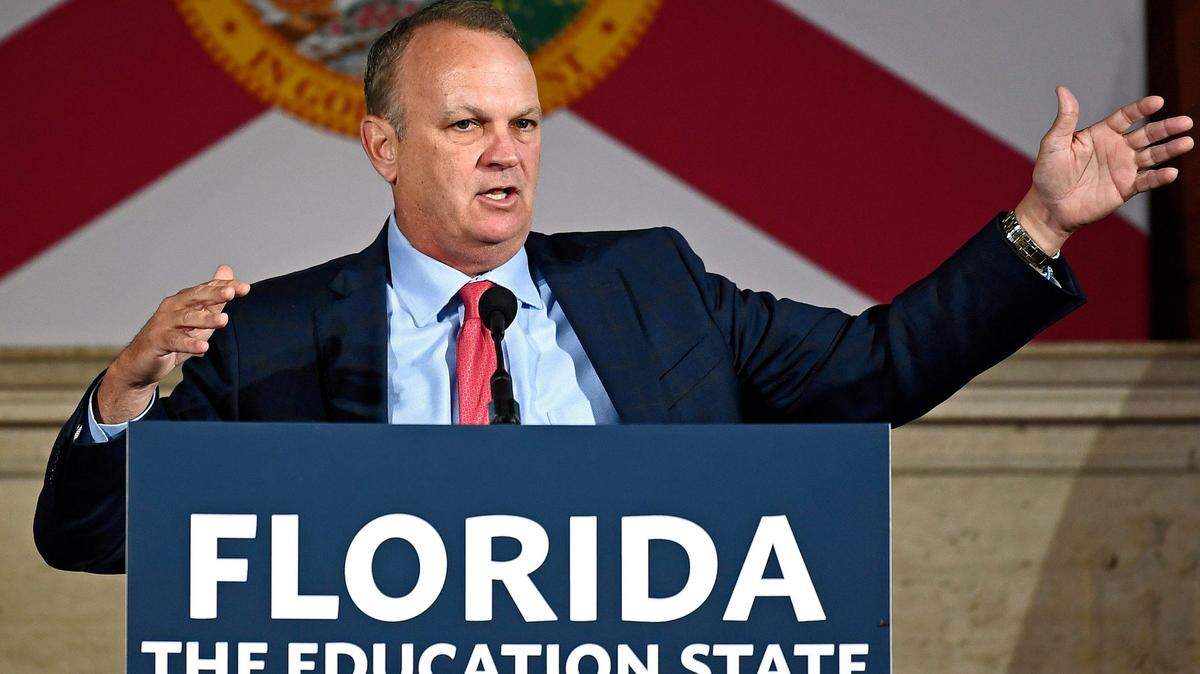
Florida’s declared war on liberal education and free thinking has paid out dividends to one of its standard bearers — up to $1.5 million a year, to be exact.
That’s how much Gov. Ron DeSantis’ conservative education experiment at New College of Florida in Sarasota might fork out on an annual basis to pay for the compensation of its new president, Richard Corcoran, a former Republican House speaker and previously DeSantis’ commissioner of education appointee.
When New College selected Corcoran as interim president in February, his base salary was already a whopping $700,000. That’s double what his predecessor made before the school’s board of the trustees, remade by DeSantis, ousted her. With a housing allowance, insurance and other benefits, Corcoran’s full compensation package reached $1 million.
That’s to run a school of roughly 700 students. For comparison, the president of University of South Florida was offered a smaller base salary, $655,000, when she was hired last March to run an institution of 50,000 students.
Flawed analysis
Last week, New College — to no one’s surprise — hired Corcoran permanently. An analysis commissioned by the school recommended his base salary fall between $487,110 and $867,777, with total compensation reaching up to $1,547,324. That range is based on executive pay at 12 universities that a consulting company said share similarities with New College.
It turns out the analysis compared apples to oranges.
The Tampa Bay Times found that all of those 12 schools are private with student bodies at least double New College’s enrollment figures in 2022. The average compensation at those schools was almost twice as much as what Florida university presidents earn on average. It was almost three times higher than the average executive pay at the country’s highest-ranked liberal arts colleges, with the exception of New College and public military academies, according to the Times.
Corcoran does have a big task ahead of him. It is arduous work to turn a taxpayer-funded institution into a partisan body. Under his leadership, the board of trustees abolished the school’s diversity, equity and inclusion (DEI) office. It also voted to eliminate a gender studies program.
If DeSantis’ cronies cannot turn the liberal students who usually attend New College more conservative, they will at least control the ideas to which they are exposed in the classroom.
“The Student Plaintiffs are adults capable of determining for themselves whether the viewpoints advanced by their various instructors . . . have merit,” New College students and faculty stated in a federal lawsuit they filed in August against Corcoran and other Florida leaders. The suit challenges a law that banned college spending on DEI and general education courses based on theories that contend “systemic racism, sexism, oppression and privilege are inherent in the institutions of the United States.”
That was one of the bills the Republican-led Legislature passed banning what teachers and professors can say in the classroom on race, gender and LGBTQ issues. That’s essentially government “dictating to faculty and students what ideas are true and false,” as the lawsuit states.
Gone too far?
It is true that DEI initiatives and the left’s fixation with gender, race and identity politics have fallen prey to excesses — and in the process alienated even some like-minded people with its virtue signaling. We believe conservatives when they complain liberals have an outsized presence in academia, but it’s ludicrous to say that Florida’s renowned university system is more preoccupied with churning out “woke” students than qualified professionals.
In their crusade against “woke,” Republicans have become self-righteous. If they complain about the ideological dominance of leftist academics, they have come up with a more extreme version of it — one that uses the power of the state to muzzle dissent and exclude different points of view.
Christopher Rufo, a conservative activist and now a New College trustee, thanks to DeSantis, wrote in a blog post that the changes at the school are meant “to restore classical liberal education and to revive the pursuit of transcendent truth.” Rufo wrote there’s a precedent at other American colleges for abolishing academic departments that “stray” from a college’s “scholarly mission in favor of ideological activism.”
Except, at New College, it is the “ideological activism” of school leaders that dictates what programs get chopped.
“Classical liberal education” is yet another lofty term to justify moving higher education away from some of its mains tenets: fostering critical thinking and intellectual exploration. The ultimate goal seems to be to control young minds.
New College is paying top dollar to accomplish that, but Florida pays the ultimate price.

BEHIND THE STORY
MOREWhat's an editorial?
Editorials are opinion pieces that reflect the views of the Miami Herald Editorial Board, a group of opinion journalists that operates separately from the Miami Herald newsroom. Miami Herald Editorial Board members are: opinion editor Amy Driscoll and editorial writers Isadora Rangel and Mary Anna Mancuso. Read more by clicking the arrow in the upper right.
What's the difference between an op-ed and a column?
How does the Miami Herald Editorial Board decide what to write about?
The Editorial Board, made up of experienced opinion journalists, primarily addresses local and state issues that affect South Florida residents. Each board member has an area of focus, such as education, COVID or local government policy. Board members meet daily and bring up an array of topics for discussion. Once a topic is fully discussed, board members will further report the issue, interviewing stakeholders and others involved and affected, so that the board can present the most informed opinion possible. We strive to provide our community with thought leadership that advocates for policies and priorities that strengthen our communities. Our editorials promote social justice, fairness in economic, educational and social opportunities and an end to systemic racism and inequality. The Editorial Board is separate from the reporters and editors of the Miami Herald newsroom.
How can I contribute to the Miami Herald Opinion section?
The Editorial Board accepts op-ed submissions of 650-700 words from community members who want to argue a specific viewpoint or idea that is relevant to our area. You can email an op-ed submission to oped@miamiherald.com. We also accept 150-word letters to the editor from readers who want to offer their points of view on current issues. For more information on how to submit a letter, go here.