
We’re No. 1! Florida is a standout when it comes to COVID quackery and book hysteria | Opinion
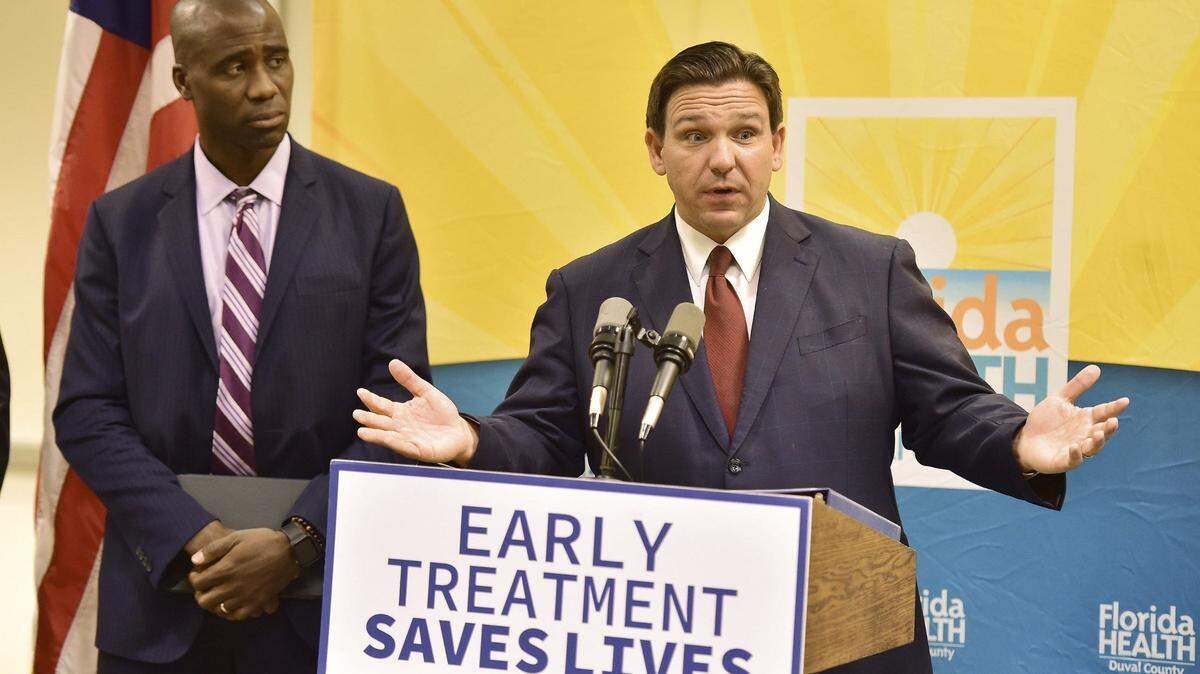
Florida’s extremism has come home to roost. The Sunshine State has the distinction of championing misinformation on COVID-19 vaccines and intolerance on book bans.
Just as Gov. Ron DeSantis’ administration recommended people under age 65 do not get the new COVID-19 vaccine boosters, the state led the country in coronavirus hospitalizations.
During the week ending Sept. 9, Florida’s hospitalization rate reached 10.65 per 100,000 residents, Politico reported. That’s a small number compared to the peak of the pandemic, but emblematic of how Floridians have paid the price for the ignorance DeSantis has labeled “freedom.”
While his hand-picked surgeon general didn’t rule out vaccinations for those most vulnerable to the virus, people ages 65 and up, he left enough room for anti-vax fears to set in. He recommended they consult with their healthcare providers, including about “potential concerns” he’s raised about the shots that have saved nearly 20 million lives worldwide, according to a study published last year.
DeSantis’ hope is that his approach to the pandemic — ignoring and ridiculing mainstream public health recommendations — will help his presidential campaign resurface in the polls. But, as Politico reported last week, the pandemic, once a driving issue among Republicans, doesn’t appear to be top of mind for voters anymore.
When blue states were shutting down businesses, mandating masks and closing schools, DeSantis could draw a clear contrasting line. But now that most of the country has moved on from strict restrictions, all DeSantis has left is his dangerous rhetoric against vaccines. If elected president, he told ABC News he wouldn’t support further federal funding for immunizations.
Florida is no beacon of freedom as the governor is selling it to the rest of the nation. We have become the poster child for what happens when ideas leave the fringes of political discourse and are instituted as public policy.
Florida also is No. 1 — and by far — in taking books off school shelves.
Of 3,362 instances of book bans in public schools in the United States, 40% took place in the Sunshine State, according to a tally by PEN America, a nonprofit that advocates for freedom of expression. Most book removals in the country were classified as “banned pending investigation,” meaning a book has been removed during review, the Herald reported.
Thanks to Florida’s expanded law known as “Don’t say gay,” any resident can object to instructional or library materials and get them removed until a school district conducts an investigation. The law also prohibits instruction on sexual orientation and gender identity and has driven groups to request banning books dealing with LGBTQ issues.
DeSantis has also signed laws to restrict how teachers speak about race and racism. His appointees, in their takeover of New College of Florida in Sarasota, voted to eliminated a major deemed too “woke,” gender studies.
This is Florida, where knowledge is restricted and free thinking is admonished. But you’re free to spew as much dangerous information to the public — the crazier and more conspiratorial, the better.
This time, it doesn’t feel good to be No. 1.
Click here to send the letter.
BEHIND THE STORY
MOREWhat's an editorial?
Editorials are opinion pieces that reflect the views of the Miami Herald Editorial Board, a group of opinion journalists that operates separately from the Miami Herald newsroom. Miami Herald Editorial Board members are: opinion editor Amy Driscoll and editorial writers Isadora Rangel and Mary Anna Mancuso. Read more by clicking the arrow in the upper right.
What's the difference between an op-ed and a column?
How does the Miami Herald Editorial Board decide what to write about?
The Editorial Board, made up of experienced opinion journalists, primarily addresses local and state issues that affect South Florida residents. Each board member has an area of focus, such as education, COVID or local government policy. Board members meet daily and bring up an array of topics for discussion. Once a topic is fully discussed, board members will further report the issue, interviewing stakeholders and others involved and affected, so that the board can present the most informed opinion possible. We strive to provide our community with thought leadership that advocates for policies and priorities that strengthen our communities. Our editorials promote social justice, fairness in economic, educational and social opportunities and an end to systemic racism and inequality. The Editorial Board is separate from the reporters and editors of the Miami Herald newsroom.
How can I contribute to the Miami Herald Opinion section?
The Editorial Board accepts op-ed submissions of 650-700 words from community members who want to argue a specific viewpoint or idea that is relevant to our area. You can email an op-ed submission to oped@miamiherald.com. We also accept 150-word letters to the editor from readers who want to offer their points of view on current issues. For more information on how to submit a letter, go here.
This story was originally published September 24, 2023 at 4:00 AM.