
DeSantis’ leaked debate memo leads us to ask: Is this guy for real? | Opinion
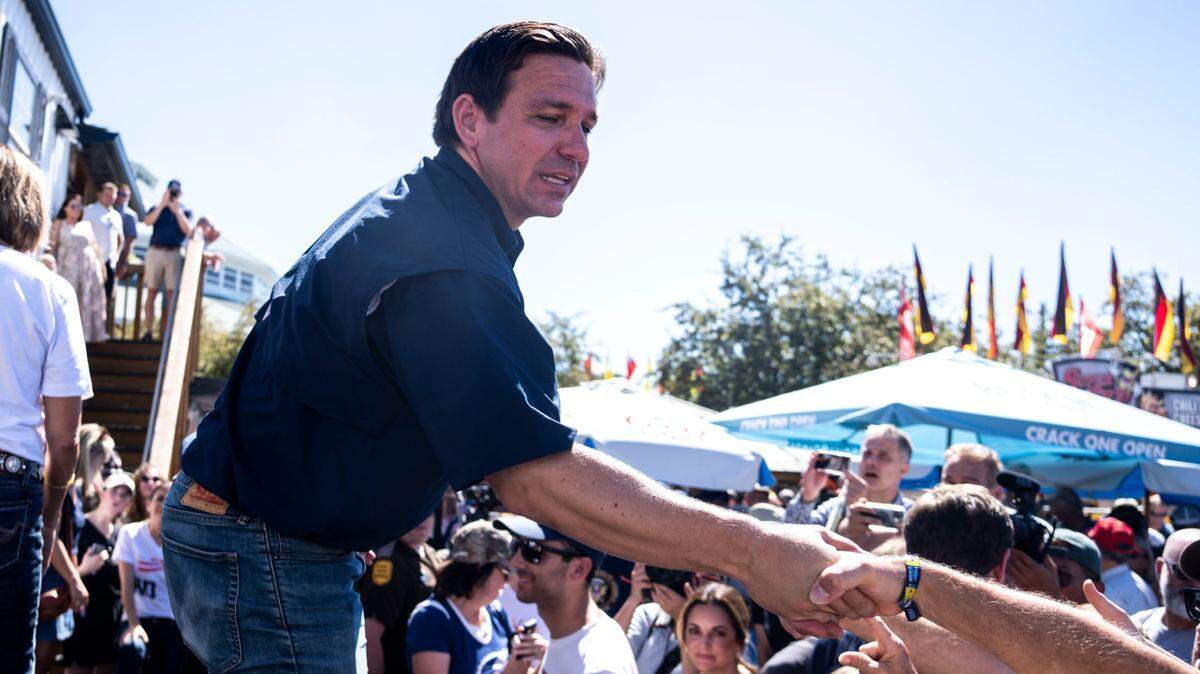
Next week’s Republican presidential primary debate just became a whole lot more interesting.
As the New York Times reported Thursday, documents posted online this week but no doubt meant to be kept under wraps revealed a detailed debate strategy for Florida Gov. Ron Desantis, complete with highly specific instructions on what to say and do: Defend Donald Trump if Chris Christie attacks him. Go after Joe Biden and the media “3-5 times.” Take “a sledgehammer” to his closest competitor, Vivek Ramaswamy, and maybe bestow a Trump-style nickname like “Fake Vivek” or “Vivek the Fake” to score that all-important soundbite.
Oof. For a candidate trying to forge a more authentic-seeming persona and overcome labels like “robotic” and “unlikable,” this is a body blow. It even tops his long-awaited and then botched candidacy announcement on Twitter (now X) when his effort to appear tech-savvy turned into a glitch-filled event that demonstrated just the opposite.
The documents were posted — and then removed, after the New York Times story was published — from the website of a consulting firm owned by Jeff Roe, chief strategist for DeSantis’ Never Back Down Super PAC. Apparently, to get around laws that forbid Super PACS from coordinating with campaigns, outside groups sometimes post information like this online, but in places where you don’t know to look unless someone tells you. It’s a way to share the information with a candidate without breaking the law.
But there’s a risk that someone else might see the posting, and that seems to be what happened here. Although all candidates get pre-debate coaching, this memo looks like the Super PAC is pulling DeSantis’ strings: He should portray Ramaswamy, a biotech entrepreneur, as a conservative in name only. He should defend Trump — if that’s what you can call it — by saying that the ex-president is “too weak” to appear on stage with everyone else so they should leave him alone. And this cringe-worthy bit: He should pull out a “personal anecdote” about his family “showing emotion.”
Also, he should carve out a place for himself as the new face of the GOP by saying that while Trump was “a breath of fresh air” who took on the elites, he has “so many distractions” (an oblique reference to the four indictments) that he won’t be able to focus sufficiently on a presidential agenda.
It’s hard to imagine how badly all of this will damage the Florida governor when he takes the stage next week in what might have been a defining moment for his campaign. The reboots and the campaign staff layoffs and the fears about his extreme positions that have recently kept donors on the fence might have faded if he’d shown himself to be in command, under control and, above all, real.
Instead, we’ll all be listening for the echoes of the words that a Super PAC all but dictated to the Florida governor. Will he call Ramaswamy “Vivek the Fake”? Will he defend Trump or summon voters’ empathy with a “personal anecdote” as directed? Unfortunately for voters, a lot of policy discussions that might actually help people pick a presidential candidate likely will be sidelined and replaced with personal attacks.
The debate memo is a revelation — and an opportunity for DeSantis. If he throws out the script and handles the pressure, he might do well. After all, this is the same guy whose campaign said as recently as July that the key to success for DeSantis was to “let Ron be Ron.”
We’re eager to see which “Ron” shows up on the debate stage.
Click here to send the letter.
BEHIND THE STORY
MOREWhat's an editorial?
Editorials are opinion pieces that reflect the views of the Miami Herald Editorial Board, a group of opinion journalists that operates separately from the Miami Herald newsroom. Miami Herald Editorial Board members are: opinion editor Amy Driscoll and editorial writers Isadora Rangel and Mary Anna Mancuso. Read more by clicking the arrow in the upper right.
What's the difference between an op-ed and a column?
How does the Miami Herald Editorial Board decide what to write about?
The Editorial Board, made up of experienced opinion journalists, primarily addresses local and state issues that affect South Florida residents. Each board member has an area of focus, such as education, COVID or local government policy. Board members meet daily and bring up an array of topics for discussion. Once a topic is fully discussed, board members will further report the issue, interviewing stakeholders and others involved and affected, so that the board can present the most informed opinion possible. We strive to provide our community with thought leadership that advocates for policies and priorities that strengthen our communities. Our editorials promote social justice, fairness in economic, educational and social opportunities and an end to systemic racism and inequality. The Editorial Board is separate from the reporters and editors of the Miami Herald newsroom.
How can I contribute to the Miami Herald Opinion section?
The Editorial Board accepts op-ed submissions of 650-700 words from community members who want to argue a specific viewpoint or idea that is relevant to our area. You can email an op-ed submission to oped@miamiherald.com. We also accept 150-word letters to the editor from readers who want to offer their points of view on current issues. For more information on how to submit a letter, go here.