
With second suspension, DeSantis alone picks who’s worthy of elected office | Opinion
A liberal governor decides that a local prosecutor, elected in a conservative community, is too pro law enforcement, that alleged crimes commited by police officers aren’t being prosecuted enough. Or that said prosecutor is too close to conservative political causes.
So the governor removes that prosecutor from office, defying the will of voters.
That governor does that once, then twice. The targets are always prosecutors who ran on a tough-on-crime platform. State attorneys who vowed to fight for criminal-justice reform are left alone.
Fox News and conservative media outlets rush to defend those ousted officials. This is undemocratic and anti-American, they say.
Now, flip the script, and you get Florida Gov. Ron DeSantis.
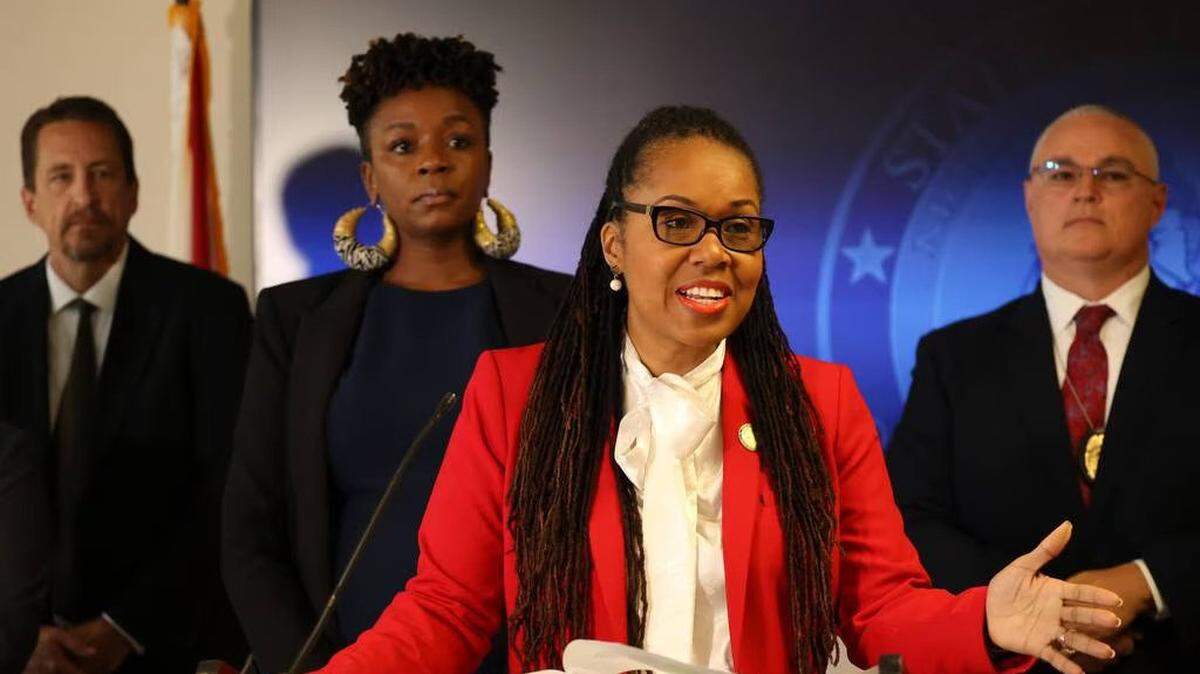
On Wednesday, he removed a second elected state attorney, Monique Worrell, the prosecutor in Orange and Osceola counties. Like Tampa’s Andrew Warren, suspended last year, Worrell is a Democrat — a progressive elected on a promise of reform and diverting people from jail. It seems she’s being removed for doing exactly what got her elected.
In an executive order, DeSantis wrote that Worrell’s office has the lowest rate of incarceration among 20 judicial circuits for a series of violent felonies, such as armed robbery and gun crimes. He accused her of not seeking mandatory minimum sentences for serious crimes and of “arbitrarily” limiting the number of counts for possession of child pornography. The suspension order included reports on incarceration rates from state agencies.
“Prosecutors do have a certain amount of discretion about what cases to bring and which cases to not,” DeSantis said. “But what this state attorney has done is abuse that discretion and effectively nullified certain laws in the state of Florida that breaches her duties that she owes to the people of Florida under our state Constitution, and provides the basis for the suspension.”
Worrell pushed back, saying at a news conference that a Department of Juvenile Justice report included in the order was “fabricated” by the agency that reports to DeSantis. She said her office has implemented jail diversion programs, and that Florida’s culture of “lock them up and throw them away” has not reduced crime.
This feud will guarantee DeSantis a lot of publicity and a platform to sound tough on crime in the GOP presidential primary. With his polling numbers down and his campaign going through a makeover, DeSantis is doing what he does best: finding a new liberal enemy he can crusade against.
Except, DeSantis is doing what no other governor has done: abuse his authority to remove elected officials for political points. Florida law gives governors broad authority to suspend people from office, but his predecessors used that power sparingly, normally reserving it for officials who have been arrested, not for ideological reasons.
DeSantis doesn’t respect democratic norms. He pushes them as far as he can. He has exploited his executive authority and concentrated power in his hands. He’s pushed hard to strip control from local communities on anything from mask mandates to how to teach students about race. He’s opened the door to allowing Tallahassee to control many aspects of life from communities north to south, conservative or liberal. And he’s tilted the scale in favor of communities and politicians who toe his line.
Even if Worrell has been a bad state attorney, we doubt DeSantis has spent as much time and resources investigating Florida’s Republican prosecutors.
Worrell’s suspension has been months in the making. In March, DeSantis’ general counsel demanded her office turn over documents related to the criminal record of Keith Moses, the suspect in a shooting spree that killed three people in Orlando, including a TV news reporter. DeSantis accused Worrell of allowing Moses to remain free after several arrests and a lengthy juvenile record. Worrell said Moses was arrested once after she was elected in 2020, on a misdemeanor possession of cannabis, but there was no evidence that proved he was carrying illegal marijuana.
What got Worrell and Warren on the governor’s radar were their very public stances on social and racial justice — as well as the support they received from groups backed by liberal billionaire investor George Soros, whom conservatives demonize. Warren was suspended after he signed a pledge to not prosecute abortion cases. He and Worrell also signed pledges to not file charges against doctors who provide gender-affirming care, now banned for minors in Florida.
One could argue they, too, have been political in exercising their elected duties, but in democracies these issues are meant to be solved at the ballot box, not by a governor who wields the power of his office hypocritically.
Click here to send the letter.
BEHIND THE STORY
MOREWhat's an editorial?
Editorials are opinion pieces that reflect the views of the Miami Herald Editorial Board, a group of opinion journalists that operates separately from the Miami Herald newsroom. Miami Herald Editorial Board members are: opinion editor Amy Driscoll and editorial writers Isadora Rangel and Mary Anna Mancuso. Read more by clicking the arrow in the upper right.
What's the difference between an op-ed and a column?
How does the Miami Herald Editorial Board decide what to write about?
The Editorial Board, made up of experienced opinion journalists, primarily addresses local and state issues that affect South Florida residents. Each board member has an area of focus, such as education, COVID or local government policy. Board members meet daily and bring up an array of topics for discussion. Once a topic is fully discussed, board members will further report the issue, interviewing stakeholders and others involved and affected, so that the board can present the most informed opinion possible. We strive to provide our community with thought leadership that advocates for policies and priorities that strengthen our communities. Our editorials promote social justice, fairness in economic, educational and social opportunities and an end to systemic racism and inequality. The Editorial Board is separate from the reporters and editors of the Miami Herald newsroom.
How can I contribute to the Miami Herald Opinion section?
The Editorial Board accepts op-ed submissions of 650-700 words from community members who want to argue a specific viewpoint or idea that is relevant to our area. You can email an op-ed submission to oped@miamiherald.com. We also accept 150-word letters to the editor from readers who want to offer their points of view on current issues. For more information on how to submit a letter, go here.
This story was originally published August 9, 2023 at 5:06 PM.