
Free Florida? Not when lawmakers use mail ballots and felon law to suppress the vote | Opinion
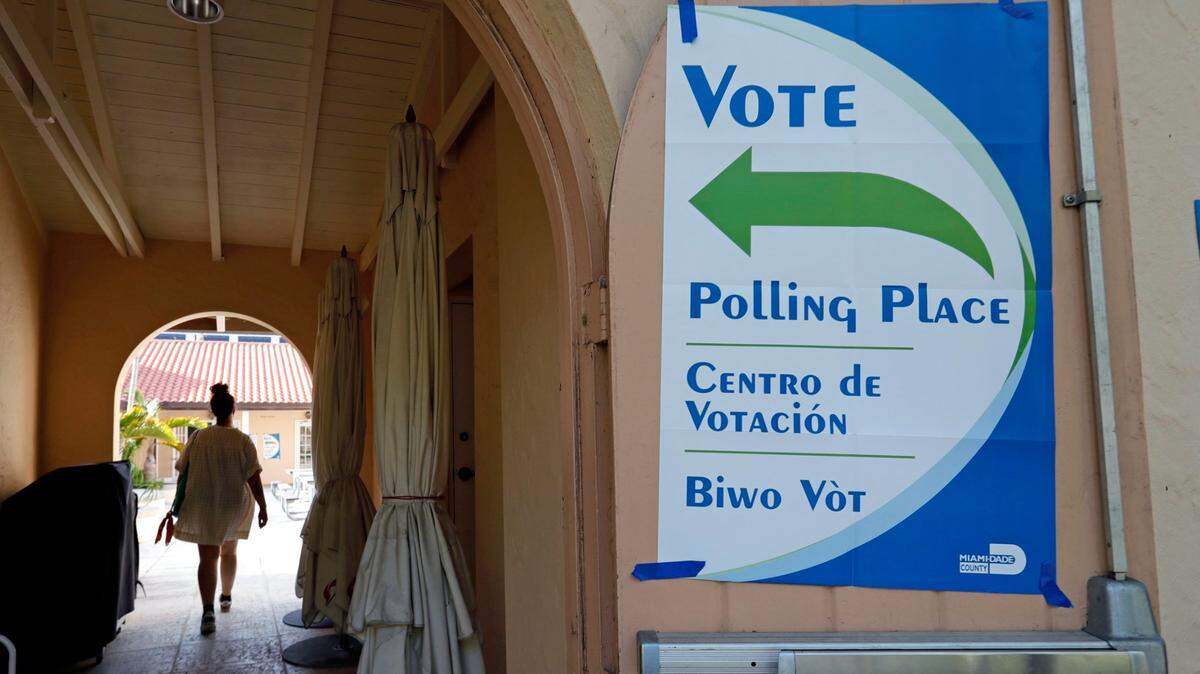
Freedom in Florida is just a lot of talk. Government-sanctioned voter suppression — freedom be damned — continues, and two recent developments illustrate just how much of that effort is aimed at discouraging Democrats from voting.
One is a federal lawsuit filed last week against Florida Gov. Ron DeSantis, Secretary of State Cord Byrd and other elected officials on grounds they failed to fully carry out the intent of Amendment 4, a state constitutional amendment passed in 2018 that was supposed to restore the voting rights of felons who have completed their sentences.
The other is a 2021 election law that added new restrictions to mail-in voting, restrictions that are being felt now. Requests for mail-in ballots used to be good for four years; now they last only two. The law also required that, at the end of last year, all existing mail ballot requests be erased. That affects millions of voters. Anyone who wants a mail ballot has to apply again.
Both legal actions are likely to impact Democrats more than Republicans. Democrats have embraced mail voting more than Republicans since 2020, so they’re more likely to have to re-register to have ballots sent to their homes. And Black Floridians make up a disproportionate share of felons and tend to register overwhelmingly as Democrats.
If they get the chance, that is.
DeSantis and Florida’s Republican-controlled Legislature have worked hard to keep that from happening.
Right to vote
The lawsuit contends, rightly, that the Legislature passed a law in 2019 as a mechanism to carry out the constitutional amendment, but wrote it in a way that is designed to “frustrate the will of Florida voters, as expressed in their overwhelming support for Amendment 4, to return the franchise to more than 1.4 million citizens in Florida.”
Florida voters originally said, essentially, that they wanted to restore rights to felons if they’d paid their debt to society — the amendment passed with 65% of the vote. But legislators, alert to any opportunity to thwart the law, added wording in the law to specify that voting rights will be restored only after a felon completes all the terms of their sentence, including probation, parole and any fines or court costs.
Many people who have been in prison aren’t aware of what they owe in terms of fines or other costs. And, as the lawsuit filed in the federal Southern District of Florida correctly alleges, the state has created no reasonable way to find out — there’s no single database or other way to look up whether you’re free and clear to register to vote.
Instead, the suit filed by the Florida Rights Restoration Coalition says, there is a “bureaucratic morass” and “a chaotic and broken system.”
If that weren’t enough to discourage felons from trying to register to vote — and it certainly is — DeSantis also created an elections police force and started turning its members loose on a handful of hapless Floridians who were apparently incorrectly provided voter registration cards by local elections offices.
Meantime, elections officials and Democrats are scrambling to reach out to voters about renewing their mail ballot requests. But how many voters will be missed or forget to renew? And most of them will be Democrats.
That, no doubt, was the goal all along. Florida’s Republican politicians may talk about freedom, but they enact laws that encourage the opposite. They ban books, target trans people, take over universities and take away women’s rights over their own bodies. Voter suppression is just one more part of their plan to exert iron-fisted control over every aspect of our lives. And that starts at the ballot box.
Click here to send the letter.
BEHIND THE STORY
MOREWhat's an editorial?
Editorials are opinion pieces that reflect the views of the Miami Herald Editorial Board, a group of opinion journalists that operates separately from the Miami Herald newsroom. Miami Herald Editorial Board members are: opinion editor Amy Driscoll and editorial writers Isadora Rangel and Mary Anna Mancuso. Read more by clicking the arrow in the upper right.
What's the difference between an op-ed and a column?
How does the Miami Herald Editorial Board decide what to write about?
The Editorial Board, made up of experienced opinion journalists, primarily addresses local and state issues that affect South Florida residents. Each board member has an area of focus, such as education, COVID or local government policy. Board members meet daily and bring up an array of topics for discussion. Once a topic is fully discussed, board members will further report the issue, interviewing stakeholders and others involved and affected, so that the board can present the most informed opinion possible. We strive to provide our community with thought leadership that advocates for policies and priorities that strengthen our communities. Our editorials promote social justice, fairness in economic, educational and social opportunities and an end to systemic racism and inequality. The Editorial Board is separate from the reporters and editors of the Miami Herald newsroom.
How can I contribute to the Miami Herald Opinion section?
The Editorial Board accepts op-ed submissions of 650-700 words from community members who want to argue a specific viewpoint or idea that is relevant to our area. You can email an op-ed submission to oped@miamiherald.com. We also accept 150-word letters to the editor from readers who want to offer their points of view on current issues. For more information on how to submit a letter, go here.
This story was originally published July 25, 2023 at 10:39 AM.