
Why does Florida warehouse disabled kids in nursing homes? For all the wrong reasons | Opinion
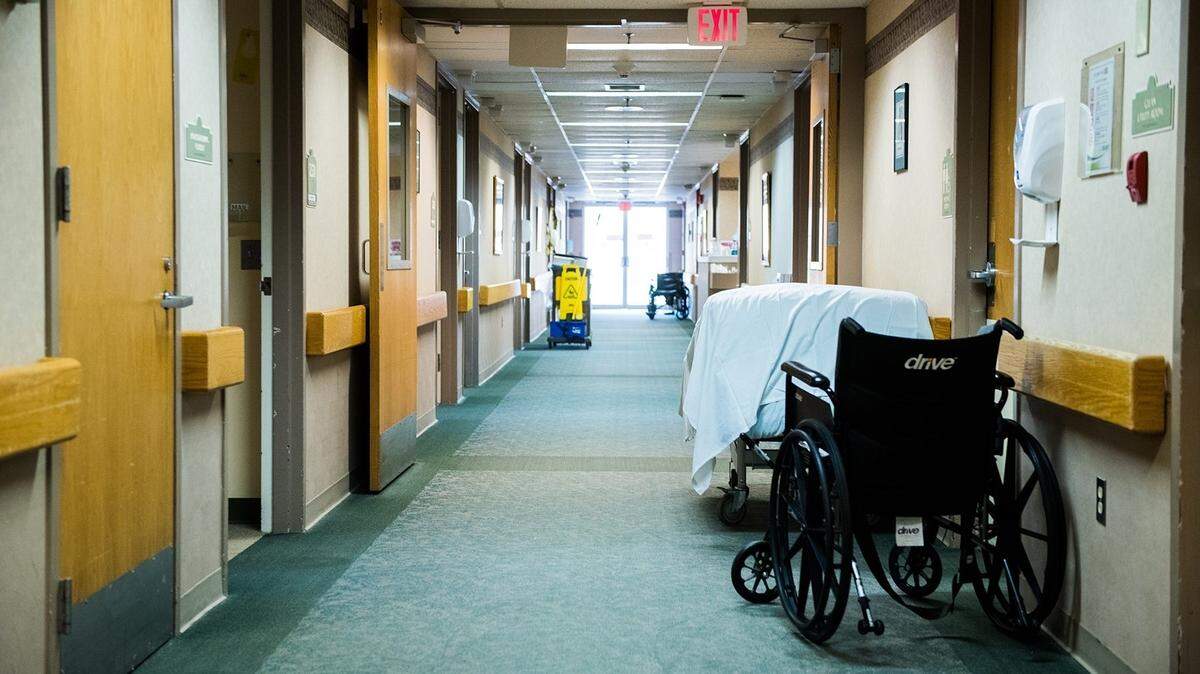
No disabled child should grow up in a nursing home. That should be obvious — but in Florida, it’s not.
For 10 long years, the state has been in court fighting litigation over its system of care for some of Florida’s most severely disabled children. About 140 of these kids — “medically fragile” children — do, in fact, live in nursing homes. Another 1,800 are at risk of the same fate. Many of the children require constant care, and parents are forced to leave them in nursing homes. Some spend their entire lives there.
Families who want to bring their children home — and would be able to do so with government-paid, at-home nursing assistance and medical equipment — find themselves caught in what one federal judge called “a maze almost impossible for parents to escape.”
The state has a bewildering system of funding and care involving managed-care providers unaccountable to the state. Few parents in this situation have been able to bring children home, even if the child would be better off there and even if the cost would be similar to what the state spends to keep the child in a nursing-home bed.
Now, as the Miami Herald reported, U.S. District Judge Donald M. Middlebrooks has issued a ruling that offers the strongest hope so far that Florida’s system might finally be reformed. He ordered last week that the state impose a series of changes that would require health administrators to provide the nursing that is “minimally necessary” for these children to go home and to keep a record of any failures to comply.
Medicaid generally pays for the care of medically complex children, and costs can run into the millions. The state’s Agency for Health Care Administration, which oversees the state Medicaid program, has appealed Middlebrooks’ ruling. In the past, AHCA has argued that the failures to provide adequate care to severely disabled children are the fault of the managed-care companies that contract with the state to provide the services.
Decade of battling
This long-running battle stems from a lawsuit that said Florida’s reliance on nursing homes in this situation is a violation of the children’s civil rights and runs counter to federal laws requiring disabled people to be housed in homes or community settings whenever possible.
As the judge wrote in his order, issued after a trial in May, Florida has made it so hard for parents to obtain the needed care and services outside of institutions that few manage it. In other words, it’s a trap. And one of the biggest problems apparently is that families aren’t able to get enough hours of nursing care for their children. The judge suggested raising the wages of nurses as a basic step.
That would seem to be the least we can do, under the circumstances. “The difficulties facing the children and parents in this case are heart wrenching,” Middlebrooks noted. “The parents’ love for their children is palpable, and their actions are heroic; they jeopardize their own health, employment and time with their other children in order to care for their medically fragile child in their home.”
The children stuck in nursing homes can find it to be an isolating, lonely and scary experience. Jade Quinones, who spent four years in a pediatric nursing home in Plantation, is now 19.
She communicates by tablet and is an enthusiastic reader. She wants to be a romance author: “I mean, what is not to love about love?”
But she also recounted times, during her nursing home stay, when caregivers didn’t keep her clean. She said she felt “fear and panic” when her breathing equipment became dislodged and she had to wait for someone to help. She became depressed and didn’t want to wake up, something that has changed now that she has become one of the lucky ones and gone home.
Florida must stop warehousing its most vulnerable children in nursing homes if there are other options. It must stop expecting parents of severely disabled kids, who are already in an unimaginably hard situation, to navigate ridiculous bureaucracy to get the help they need. And it must stop trying to shift the blame to managed-care companies.
This is a failure to do the right thing, and the state needs to take on the responsibility to fix it.
BEHIND THE STORY
MOREWhat's an editorial?
Editorials are opinion pieces that reflect the views of the Miami Herald Editorial Board, a group of opinion journalists that operates separately from the Miami Herald newsroom. Miami Herald Editorial Board members are: opinion editor Amy Driscoll and editorial writers Isadora Rangel and Mary Anna Mancuso. Read more by clicking the arrow in the upper right.
What's the difference between an op-ed and a column?
How does the Miami Herald Editorial Board decide what to write about?
The Editorial Board, made up of experienced opinion journalists, primarily addresses local and state issues that affect South Florida residents. Each board member has an area of focus, such as education, COVID or local government policy. Board members meet daily and bring up an array of topics for discussion. Once a topic is fully discussed, board members will further report the issue, interviewing stakeholders and others involved and affected, so that the board can present the most informed opinion possible. We strive to provide our community with thought leadership that advocates for policies and priorities that strengthen our communities. Our editorials promote social justice, fairness in economic, educational and social opportunities and an end to systemic racism and inequality. The Editorial Board is separate from the reporters and editors of the Miami Herald newsroom.
How can I contribute to the Miami Herald Opinion section?
The Editorial Board accepts op-ed submissions of 650-700 words from community members who want to argue a specific viewpoint or idea that is relevant to our area. You can email an op-ed submission to oped@miamiherald.com. We also accept 150-word letters to the editor from readers who want to offer their points of view on current issues. For more information on how to submit a letter, go here.