
DeSantis donor gets $92 million windfall from Florida? Is he draining the swamp or mired in it? | Opinion
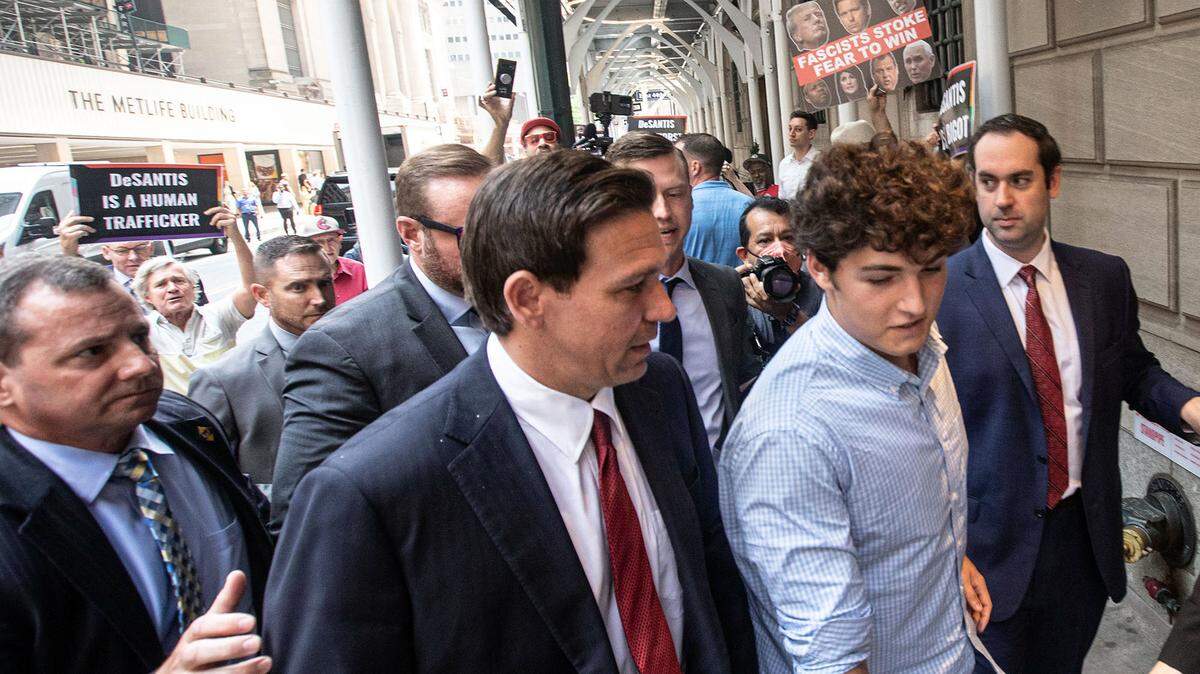
Florida Gov. Ron DeSantis’ pledge in 2018 to “drain the swamp in Tallahassee” is going really, really well.
The latest: Right after the governor’s reelection, the DeSantis administration directed an enormous sum of COVID relief money — $92 million — to a Florida developer and major political donor for a highway interchange near Daytona Beach next to the developer’s new housing and shopping development, The Washington Post reported.
That’s $92 million in federal COVID money that was part of the American Rescue Plan, the same plan DeSantis has derided as “Washington at its worst.”
And the developer who stands to benefit? None other than Mori Hosseini, the politically connected Floridian who, we found out last week, “loaned” a pricey golf simulator to the Governor’s Mansion in 2019. (DeSantis plays a lot of golf.) A golf simulator runs at least $27,500 and up to about $69,000 for the deluxe version. Installing it in the mansion doesn’t violate any rules, apparently, because it was a loan made to the mansion, rather than being an outright gift to the governor.
Oh, to have an entire (taxpayer-paid) legal staff at your fingertips so you can slide through those loopholes in the law.
Jessica Ottaviano, Florida Department of Transportation communications director, told the Post that the ”interchange project will help keep up with Florida’s growing population” and touted Florida’s in-migration of new residents, especially to Central and Southwest Florida.
Nice try, but that’s a deflection. This isn’t about whether we need more houses — though it should be noted there has been significant push-back against the idea of developing this project so close to environmentally sensitive lands. It’s about whether the governor of Florida and now presidential candidate is in a too-cozy relationship with a developer.
Among Hosseini’s other links to the DeSantis administration, as revealed so far: He apparently has allowed the governor and his wife, Casey, to use his private plane, according to reports. Companies controlled by Hosseini have given at least $361,000 to DeSantis-linked political groups for his reelection, The Washington Post said. And Hosseini, a University of Florida trustee whom DeSantis reappointed to that post, also was instrumental in helping the governor arrange a golfing session at Georgia’s Augusta National Golf Club in 2018, the Tampa Bay Times has reported.
Now his development winds up with shiny new, taxpayer-financed exits from Interstate 95. Without the new interchange, people might have to drive a whole three or four miles out of their way.
The Washington Post said that, according to state documents, the decision by the DeSantis administration to use Florida stimulus money to help pay for the new interchange “expedited the project by more than a decade.”
That leaves us with one question: Does that sound like draining the swamp to you?
BEHIND THE STORY
MOREWhat's an editorial?
Editorials are opinion pieces that reflect the views of the Miami Herald Editorial Board, a group of opinion journalists that operates separately from the Miami Herald newsroom. Miami Herald Editorial Board members are: opinion editor Amy Driscoll and editorial writers Isadora Rangel and Mary Anna Mancuso. Read more by clicking the arrow in the upper right.
What's the difference between an op-ed and a column?
How does the Miami Herald Editorial Board decide what to write about?
The Editorial Board, made up of experienced opinion journalists, primarily addresses local and state issues that affect South Florida residents. Each board member has an area of focus, such as education, COVID or local government policy. Board members meet daily and bring up an array of topics for discussion. Once a topic is fully discussed, board members will further report the issue, interviewing stakeholders and others involved and affected, so that the board can present the most informed opinion possible. We strive to provide our community with thought leadership that advocates for policies and priorities that strengthen our communities. Our editorials promote social justice, fairness in economic, educational and social opportunities and an end to systemic racism and inequality. The Editorial Board is separate from the reporters and editors of the Miami Herald newsroom.
How can I contribute to the Miami Herald Opinion section?
The Editorial Board accepts op-ed submissions of 650-700 words from community members who want to argue a specific viewpoint or idea that is relevant to our area. You can email an op-ed submission to oped@miamiherald.com. We also accept 150-word letters to the editor from readers who want to offer their points of view on current issues. For more information on how to submit a letter, go here.