
When it comes to trading punches, Trump, DeSantis campaigning like it’s 2021 | Opinion
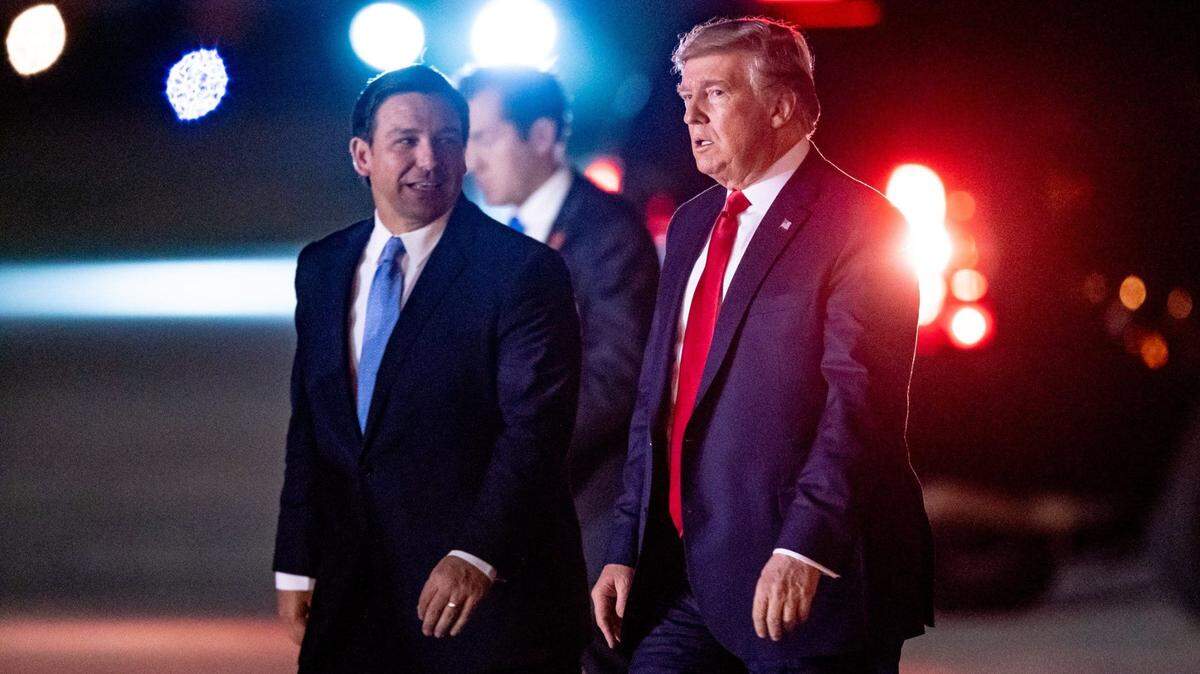
The feud between Donald Trump and Florida Gov. Ron DeSantis has taken a turn — back to circa 2021. While most of the country has moved on from the COVID-19 pandemic, the former allies seem stuck in a time warp, back to a time of lockdowns and vaccination campaigns.
Trump and DeSantis’ teams aren’t attacking each other over how many lives each might have saved, but over who supported pandemic restrictions the most. While both want to prove to voters they are the most anti-lockdown, anti-vaxx, anti-scientific-establishment, the truth is more nuanced than they would like to admit.
It seems absurd that overseeing “mass vaccinations” would be a weakness for a candidate running to be a major party nominee for the highest office in the nation. But Trump is betting that’s the case. His campaign has accused DeSantis of such inoculation sins — unthinkable until a public-health crisis became politicized.
Trump War Room, a Twitter account that supports the former president, posted a video Tuesday accusing DeSantis of lying to voters and claiming “Lockdown Ron DeSantis shut Florida down during the pandemic.” The DeSantis War Room, also a Twitter account, hit back with its own videos accusing Trump of supporting lockdowns and showing footage of him praising DeSantis’ pandemic response. The DeSantis team — infamous for its “Don’t Fauci My Florida” merchandise line — has also tried to link Trump to Dr. Anthony Fauci, who was part of the former president’s White House coronavirus task force.
COVID-19 remains important because, without the pandemic, we likely wouldn’t have DeSantis the presidential candidate. The governor showed little regard for the tens of thousands of Floridians who died from COVID, but the pandemic helped him build a brand known for balking at public-health restrictions, vaccine mandates and even the efficacy of vaccines. The pandemic might have been the darkest time America has faced in modern times but for an ambitious governor it turned out to be the opportunity of a lifetime.
While DeSantis did shutdown the state in 2020, he lifted restrictions and opened schools much earlier than other states. His biggest shift, however, happened regarding vaccinations.
Before DeSantis appointed a surgeon general skeptical of vaccines and asked for a statewide grand jury investigation into vaccines manufacturers, the governor traveled the state in early 2021 touting his administration’s efforts to get shots distributed to seniors. So pro-vaccination was DeSantis back then that he even faced accusations of giving preference to wealthy conservative enclaves when shots weren’t yet widely available. Ironically, the Trump administration approved the vaccines, and Trump has been open about getting a booster.
“We know that there is no time to waste when it comes to getting shots in arms,’’ DeSantis said in May 2021.
On another occasion, he said, “They’re safe. They’re effective vaccines.’’
As the winds began to shift in Republican politics, conservatives started to reject not only vaccine mandates, but also the proven efficacy of immunization in preventing deaths. So did the shrewd DeSantis, who already was said to be mulling a presidential campaign.
Call that a natural progression — or opportunism.
Nowadays, it’s more common to hear DeSantis say, “The benefit [of vaccines] is minuscule, but as Joseph Ladapo and other studies have shown there is a risk for doing it.”
Ladapo, Florida’s surgeon general, withheld key evidence from a state analysis when he issued guidance that young men not get the shots. Missing from his report was data that found young men faced greater risk of cardiac-related death after a COVID-19 infection than after a vaccine, public documents obtained by the Tampa Bay Times showed. Scientists called on Ladapo to rescind his recommendation, which obviously did not happen.
The discussion about vaccines and whether they work at this point seems futile. Most Americans have already made up their minds about getting a shot. But the pandemic response might be one of Trump’s few vulnerabilities DeSantis can exploit. DeSantis is certainly not converting Trump voters by attacking the former president for inciting the Jan. 6 riots or over the criminal charges he faced for withholding classified documents and for his alleged role in hush payments to a former adult-movie star.
It’s an upside-world, after all.
BEHIND THE STORY
MOREWho decides the political endorsements?
In advance of local and state elections, Miami Herald Editorial Board members interview political candidates, as well as advocates and opponents of ballot measures. The Editorial Board is composed of experienced opinion journalists and is independent of the Herald’s newsroom. Members of the Miami Herald Editorial Board are: Amy Driscoll, editorial page editor; and editorial writers Isadora Rangel and Mary Anna Mancuso. Read more by clicking the arrow in the upper right.
What does the endorsement process look like?
The Miami Herald Editorial Board interviews political candidates to better understand their views on public policy and how their policies will affect their constituents. Board members do additional reporting and research to learn as much as possible about the candidates before making an endorsement. The Editorial Board then convenes to discuss the candidates in each race. Board members seek to reach a consensus on the endorsements, but not every decision is unanimous. Candidates who decline to be interviewed will not receive an endorsement.
Is the Editorial Board partisan?
No. In making endorsements, members of the Editorial Board consider which candidates are better prepared to represent their constituents — not whether they agree with our editorial stances or belong to a particular political party. We evaluate candidates’ relevant experience, readiness for office, depth of knowledge of key issues and understanding of public policy. We’re seeking candidates who are thoughtful and who offer more than just party-line talking points.