
Haiti, a country desperate for reprieve, gets none as natural disasters lay siege | Opinion
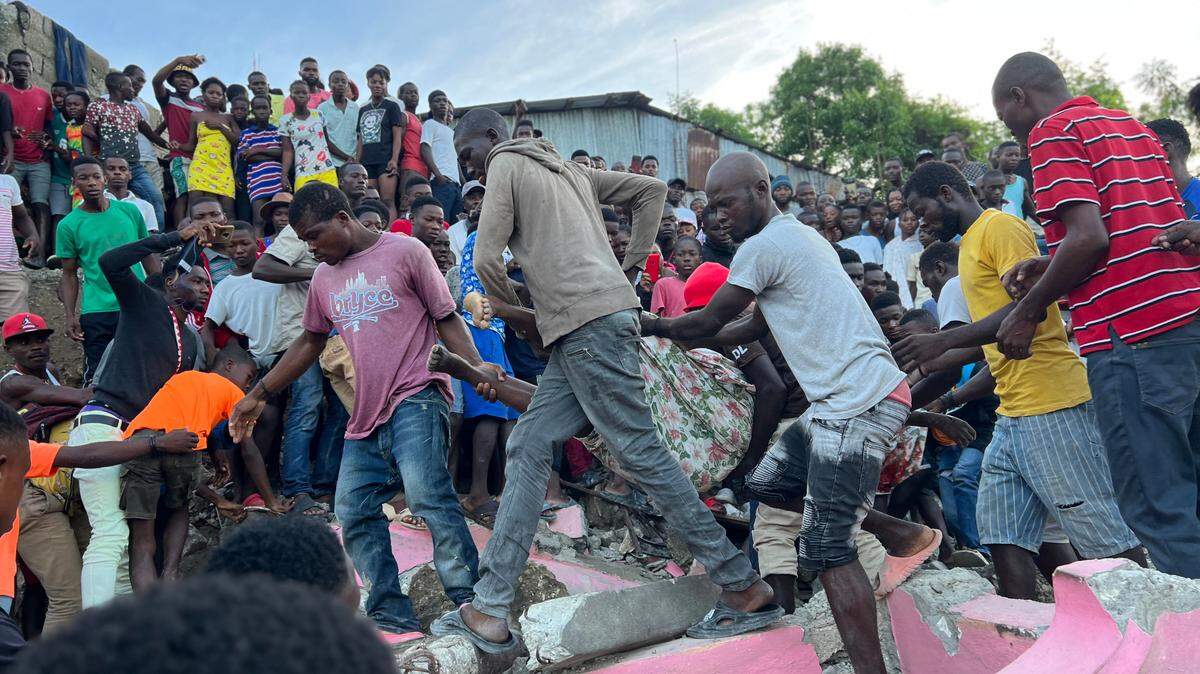
It’s an unimaginable predicament that Haiti, a country besieged by political instability, gang violence and a collapse of its government, is at the center of yet another natural crisis.
Days after heavy rain washed away part of a bridge and left 19,000 people homeless, a magnitude 5.5 earthquake struck the southwest part of the country on Tuesday. Considered moderate, the earthquake might not compare to the one that devastated the country in 2010. Yet disasters of any magnitude take a toll on a nation caught up in crisis after crisis.
As of Tuesday morning, three deaths had been confirmed, and dozens were injured by the earthquake, the Herald reported. Pictures shared on social media showed homes turned into rubble, people searching for their loved ones and a child covered in what appears to be debris dust. Days before, the storm claimed at least 42 lives, the Herald reported.
Bridge washed away
The bridge connecting the coastal city of Jérémie to the rest of Haiti had been rebuilt just 10 months ago after another bridge collapsed during a 2021 earthquake. One must wonder how long Haitians will have to wait until it’s rebuilt again.
Hurricane season has just begun, raising “concerns about the ability to provide a sustained response should extreme weather incidents continue to occur,” the World Food Program told the Herald this week. The control that gangs exert over parts of Haiti makes the delivery of aid even harder, potentially adding to Haitians’ suffering. Gangs now control 60% of capital Port-au-Prince and have expanded their reach into other regions.
With no elected government in place or elections in sight, Haiti is on the verge of anarchy. Its people have been left with few options. Some have tried desperately to reach the United States, and too many of them have died making that perilous journey by sea.
Others have tried to establish some sense of order by becoming vigilantes. In April, fed-up citizens savagely beat a group of suspected gang members and stoned some with boulders before throwing gasoline-doused tires on top of them and lighting a match. The gruesome scenes are a symptom of a country where human life has been so devalued that you must take someone else’s to protect yours.
No one to the rescue
But who can blame law-abiding Haitians for engaging in such extreme measures? The Biden administration has ruled out a U.S.-led intervention, and Canada has also backed out of taking a leadership role. The Herald reported in March that Biden is pushing the United Nations to put together a traditional peacemaking mission, something the United States previously tried to avoid. There have been eight of such missions in the past three decades.
As the Herald Editorial Board has said before, time is running out for real action from the international community.
The perpetual question surrounding Haiti has been how much worse its conditions can get before they improve. A U.N. report released in April perhaps answers that question: Violence and abuse have reached unprecedented levels, and nearly half of the Haitian population is going hungry.
The most recent natural disasters make the situation in Haiti even more dire. With no reprieve in sight, Haiti needs help.
BEHIND THE STORY
MOREWhat's an editorial?
Editorials are opinion pieces that reflect the views of the Miami Herald Editorial Board, a group of opinion journalists that operates separately from the Miami Herald newsroom. Miami Herald Editorial Board members are: opinion editor Amy Driscoll and editorial writers Isadora Rangel and Mary Anna Mancuso. Read more by clicking the arrow in the upper right.
What's the difference between an op-ed and a column?
How does the Miami Herald Editorial Board decide what to write about?
The Editorial Board, made up of experienced opinion journalists, primarily addresses local and state issues that affect South Florida residents. Each board member has an area of focus, such as education, COVID or local government policy. Board members meet daily and bring up an array of topics for discussion. Once a topic is fully discussed, board members will further report the issue, interviewing stakeholders and others involved and affected, so that the board can present the most informed opinion possible. We strive to provide our community with thought leadership that advocates for policies and priorities that strengthen our communities. Our editorials promote social justice, fairness in economic, educational and social opportunities and an end to systemic racism and inequality. The Editorial Board is separate from the reporters and editors of the Miami Herald newsroom.
How can I contribute to the Miami Herald Opinion section?
The Editorial Board accepts op-ed submissions of 650-700 words from community members who want to argue a specific viewpoint or idea that is relevant to our area. You can email an op-ed submission to oped@miamiherald.com. We also accept 150-word letters to the editor from readers who want to offer their points of view on current issues. For more information on how to submit a letter, go here.
This story was originally published June 6, 2023 at 1:52 PM.