
Florida doesn’t care that voters back abortion. Citizens have to take back their power | Opinion
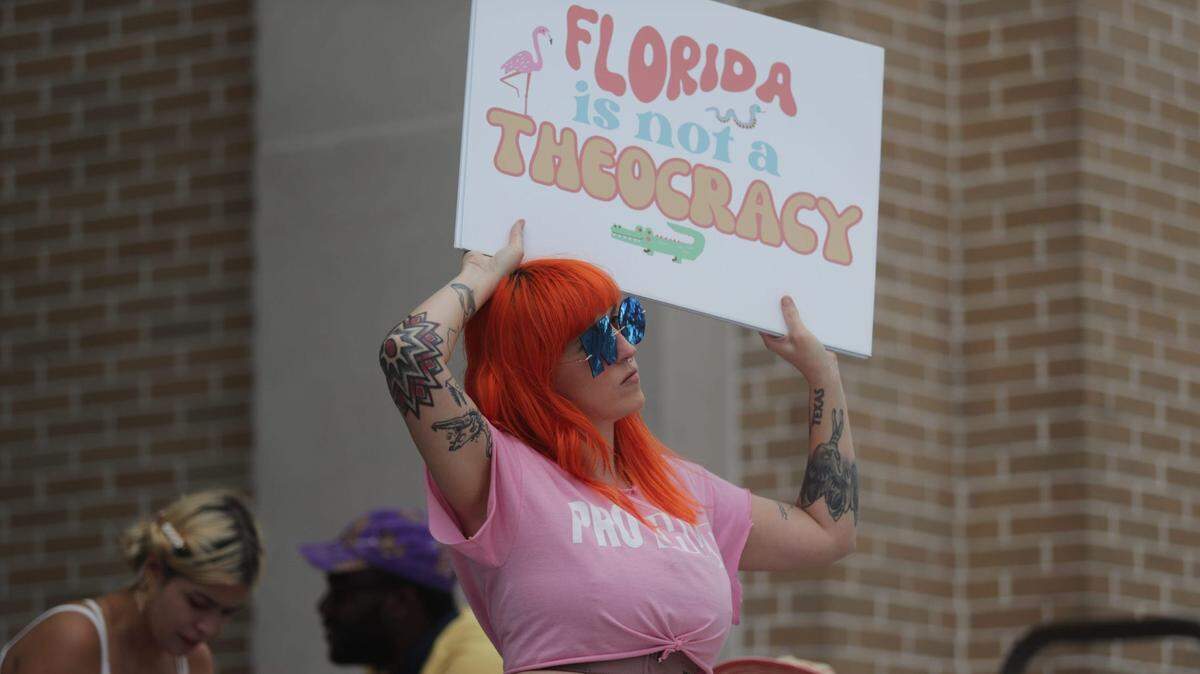
With abortion all but outlawed in Florida, a coalition of pro-choice groups is trying to do what lawmakers refused to do: Listen to voters.
They’re taking the question to the people. At least, they’re trying to.
Floridians Protecting Freedom announced a campaign this week to get the abortion question on the 2024 ballot, an effort that could cost an estimated $30 million and require nearly 900,000 signatures. The measure would bar restrictions on abortion before fetal viability, usually about 24 weeks of pregnancy.
Florida voters — similar to those nationally — have consistently said they wanted the right to choose. A 2022 poll by Florida Atlantic University found that 67% of respondents thought abortion should be legal in most or all cases. A national poll from last month indicated that 61% of Americans support abortion rights, up from 55% last June, when the U.S. Supreme Court essentially struck down Roe v. Wade.
Voters ignored
Quite clearly, it’s the Florida Legislature that’s out of step.
Even so, legislators have successfully forced their anti-woman agenda down Floridians’ throats, first with a 15-week abortion ban and now with a six-week ban approved in the legislative session that ended last week. Many women won’t even know they are pregnant in that brief period of time.
Florida’s extreme law, which would go into effect if the state’s current 15-week law survives an ongoing legal challenge, is a product of the Legislature’s zeal to give Florida Gov. DeSantis the most far-right profile possible. It’s part of an effort to help him challenge former President Donald Trump for the Republican nomination for president. Too bad if Florida’s women suffer, DeSantis’ political prospects are more important to lawmakers.
Being anti-abortion is a requirement for any Republican presidential candidate, but an abortion law too far to the right is a political risk in a general election. DeSantis signed the measure into law, but without fanfare, and he announced it late, after 11 p.m. on April 13.
This petition drive, backed by the ACLU of Florida, Florida Rising, Florida Planned Parenthood groups and Women’s Voices of Southwest Florida, will face a lot of hurdles. The coalition will need to gather about 892,000 signatures from at least half of Florida’s congressional districts, which means the petitions can’t all come from areas heavy with Democrats.
Long process
The language of the proposed constitutional amendment also must be reviewed by the Florida Supreme Court, dominated by conservatives, to make sure that it covers a single subject and won’t mislead voters. If the referendum actually makes it onto the ballot after all that, it would need to be approved by at least 60% of voters.
That all sounds very daunting, but there is no choice. Floridians want safe and legal access to abortions. The Legislature has tried to turn the clock back to the 1950s against the will of the voters. This petition drive is a chance for Floridians to take back their power from lawmakers who have stopped listening.
BEHIND THE STORY
MOREWhat's an editorial?
Editorials are opinion pieces that reflect the views of the Miami Herald Editorial Board, a group of opinion journalists that operates separately from the Miami Herald newsroom. Miami Herald Editorial Board members are: opinion editor Amy Driscoll and editorial writers Isadora Rangel and Mary Anna Mancuso. Read more by clicking the arrow in the upper right.
What's the difference between an op-ed and a column?
How does the Miami Herald Editorial Board decide what to write about?
The Editorial Board, made up of experienced opinion journalists, primarily addresses local and state issues that affect South Florida residents. Each board member has an area of focus, such as education, COVID or local government policy. Board members meet daily and bring up an array of topics for discussion. Once a topic is fully discussed, board members will further report the issue, interviewing stakeholders and others involved and affected, so that the board can present the most informed opinion possible. We strive to provide our community with thought leadership that advocates for policies and priorities that strengthen our communities. Our editorials promote social justice, fairness in economic, educational and social opportunities and an end to systemic racism and inequality. The Editorial Board is separate from the reporters and editors of the Miami Herald newsroom.
How can I contribute to the Miami Herald Opinion section?
The Editorial Board accepts op-ed submissions of 650-700 words from community members who want to argue a specific viewpoint or idea that is relevant to our area. You can email an op-ed submission to oped@miamiherald.com. We also accept 150-word letters to the editor from readers who want to offer their points of view on current issues. For more information on how to submit a letter, go here.