
Miami-Dade sheriff saga ends with a power grab by Florida lawmakers. As usual . . . | Opinion
It’s like Rocky versus Apollo Creed. In the first “Rocky” movie, Creed might’ve narrowly won, but we all knew that Rocky was meant to come back in a sequel to send his archrival into retirement.
If Miami-Dade County is Apollo Creed, the Florida Legislature is Rocky — using its power to punch rogue communities into submission. It happens whenever supposedly liberal bastions operate in ways conservatives in the state Capitol don’t like.
The latest example is the fight over the forced creation of a Miami-Dade Sheriff’s Office and an elected sheriff, shoved down our throats by a 2018 statewide referendum that local voters didn’t approve.
The Legislature passed, with bipartisan support, House Bill 1595 to dictate the powers of that sheriff. The legislation is a response to the County Commission’s move last year to outmaneuver that referendum by holding onto control of police services in unincorporated parts of the county even after a sheriff is elected in 2024. The legislation will kill that plan if Gov. Ron DeSantis signs it.
This is a battle for local control, but it’s also a battle for power and tax dollars. To understand it, let’s back up to 2018. That year, Florida voters decided whether to approve a dozen measures to amendment the Florida Constitution.
The state’s Constitution Revision Commission, a group of political appointees, pulled one over the voters. They grouped into single ballot items seemingly benign measures along with controversial ones that on their own might have failed. Amendment 10 was a prime example: It dealt with mundane issues, such as codifying a Department of Veterans’ Affairs, while also requiring Miami-Dade and other counties to elect a sheriff and other constitutional officers.
Voters give OK
Amendment 10 was approved by voters statewide. If it were only up to Miami-Dade voters, it would have failed to meet the necessary 60% approval threshold. However, the point wasn’t to listen to local opinion; it was to impose the political will of outsiders. Miami-Dade voters abolished the sheriff’s office in 1966 after a grand jury uncovered a burglary racket led by then-Sheriff T.A. Buchanan.
Since then, the Miami-Dade Police Department has come under the leadership of a director appointed by the county mayor. The mayor acts as the de facto sheriff. The 13 county commissioners also can exert their influence.
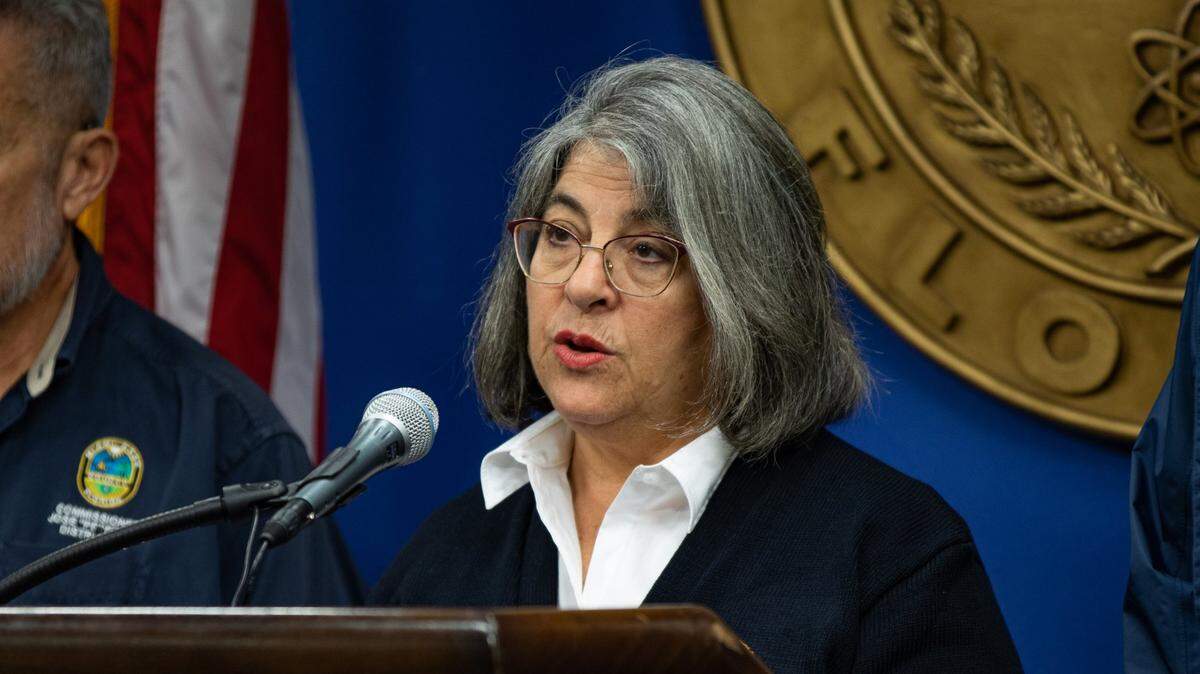
Running a police department, and the tax dollars needed to operate it, was not a power Mayor Daniella Levine Cava and the County Commission were ready to give up. Last year, the Commission approved Levine Cava’s plan to maintain police services in unincorporated areas (those that don’t belong to a municipality, like Kendall) under the county’s police department. HB 1595 undid that move, giving the sheriff “exclusive” authority to police those areas.
Lawsuit ditched
In the county’s plan, the sheriff’s office looked almost ceremonial. Under the state Constitution, the sheriff must be in charge of serving warrants, executing civil processes, such as evictions, and providing courthouse security.
The Commission’s budget office last year predicted higher costs were inevitable under this arrangement, the Herald reported. You also can also argue that when voters approved Amendment 10 they meant for a sheriff to be the main law enforcement officer.
Miami-Dade’s current police director, Freddy Ramirez, who has filed to run for sheriff as a Democrat, said he supports legislation to give more powers to the sheriff, the Herald reported.
There was also the potential of embroiling the county in expensive litigation. The Florida Sheriffs Association sued Miami-Dade, claiming its plan violated the state Constitution. A judge threw out the lawsuit, saying only a sheriff could sue after he or she takes office in 2025.
The county’s plan also had advantages. Law enforcement would continue to be run by a professional, not a politician. It’s impossible to remove politics from police under any arrangement, but having a police director between a mayor and police rank-and-file adds a layer of protection. It’s a lot easier to remove a bad police director than it is to remove a bad sheriff. Even in an election, a bad but powerful sheriff can neuter opposition. There’s also no requirement that a sheriff have law-enforcement experience.
Having one sheriff for a county of 2.6 million residents — roughly 1 million who live in unincorporated areas — also means less accountability. It’s in the best interest of each of the 13 county commissioners to address public-safety issues within the districts that elect them.
‘Smooth transition’
Levine Cava’s office defended her plan, though the state has killed most of it. She told the Herald Editorial Board: “I look forward to working with the newly elected sheriff after next year’s election to ensure a smooth transition that doesn’t disrupt any vital safety services for our residents or visitors.”
Ideally, this issue would have been solved locally. Only Miami-Dade County voters should have decided whether to elect a sheriff. Only Miami-Dade should have decided how to structure its new sheriff’s office.
In the end, the real losers are the taxpayers, who have a lost say in how to run their own communities.
BEHIND THE STORY
MOREWhat's an editorial?
Editorials are opinion pieces that reflect the views of the Miami Herald Editorial Board, a group of opinion journalists that operates separately from the Miami Herald newsroom. Miami Herald Editorial Board members are: opinion editor Amy Driscoll and editorial writers Isadora Rangel and Mary Anna Mancuso. Read more by clicking the arrow in the upper right.
What's the difference between an op-ed and a column?
How does the Miami Herald Editorial Board decide what to write about?
The Editorial Board, made up of experienced opinion journalists, primarily addresses local and state issues that affect South Florida residents. Each board member has an area of focus, such as education, COVID or local government policy. Board members meet daily and bring up an array of topics for discussion. Once a topic is fully discussed, board members will further report the issue, interviewing stakeholders and others involved and affected, so that the board can present the most informed opinion possible. We strive to provide our community with thought leadership that advocates for policies and priorities that strengthen our communities. Our editorials promote social justice, fairness in economic, educational and social opportunities and an end to systemic racism and inequality. The Editorial Board is separate from the reporters and editors of the Miami Herald newsroom.
How can I contribute to the Miami Herald Opinion section?
The Editorial Board accepts op-ed submissions of 650-700 words from community members who want to argue a specific viewpoint or idea that is relevant to our area. You can email an op-ed submission to oped@miamiherald.com. We also accept 150-word letters to the editor from readers who want to offer their points of view on current issues. For more information on how to submit a letter, go here.