
DeSantis distracts us with ‘Don’t say gay,’ so we don’t focus on all the failures in Florida | Opinion
Last year, Republicans pooh-poohed concerns over Florida’s “Don’t say gay” bill (official title: Parental Rights in Education Act) because, they insisted, the ban on teaching kids about sexual orientation or gender identity would only apply to children from kindergarten through third grade.
The next year, they insisted that no one should worry about a new, broader set of the restrictions because they would only apply to children through the eighth grade. That was the 2023 legislative proposal, still working its way through Tallahassee.
Now? The restrictions will be imposed all the way through high school.
That’s the upshot of a new Florida Board of Education rule approved Wednesday, bypassing the legislative process, after Gov. Ron DeSantis proposed the rule change. This expansion forbids teachers from “intentionally” teaching students about sexual orientation or gender identity in middle school and high school, unless the lessons are part of a reproductive health course or are “expressly required” by the state’s academic standards.
And teachers who don’t comply? They could be suspended or their teaching license could be revoked.
Looks like all that concern was totally justified.
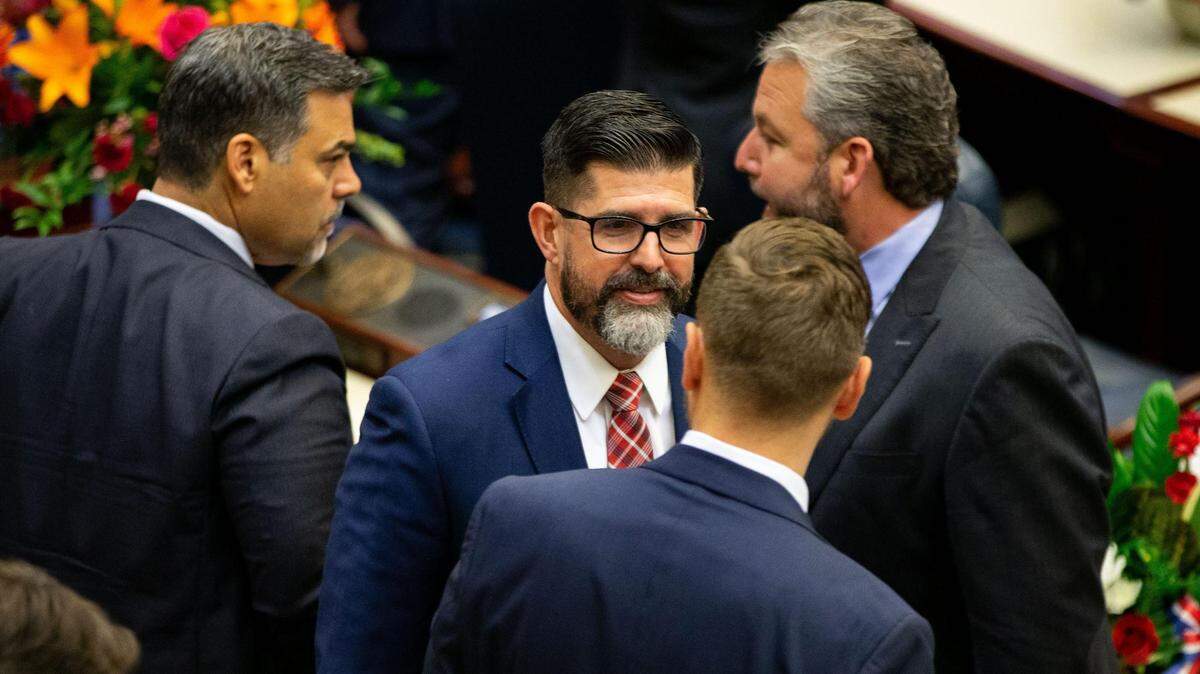
Education Commissioner Manny Diaz, a DeSantis appointee from Hialeah, said in a Miami Herald story that the rule is supposed to give teachers “clarity” on what they can and can’t teach on those topics.
Of course, it does the opposite, and that is most likely by design.
Just listen to Diaz try to explain the rule after Joe Saunders, the senior political director for Equality Florida, asked whether 11th graders would be allowed to learn in government and civics courses about landmark Supreme Court decision on same-sex marriage.
Teachers would be allowed to talk about the ruling, Diaz said — sort of. He said there would be a difference between “talking about Supreme Court cases and taking that and then going into something else that is subjective and trying to expand on that.”
If by “clarity” Diaz meant “absolutely unclear,” well, then he succeeded. He served us a word salad, and that’s being charitable.
Lack of clarity, of course, is a way to stifle discussion about lots of topics that might touch, even tangentially, on gender identity or sexual orientation. Can teachers talk about the 1969 Stonewall uprising that helped create the modern gay-rights movement? What about the horrific shooting at Pulse, a gay nightclub in Orlando? Threatened with potentially losing their teaching licenses, most teachers will probably veer away from any real discussions on topics like that. Their students will be the poorer for it.
Members of the conservative group Moms for Liberty have said this kind of restriction encourage discussions on those topics at home rather than in school. Maybe. But that claim ignores the clear evidence that this rule is part of a larger, very political agenda DeSantis is pushing in his drive toward the White House.
It’s “Don’t say gay,” plus the ban on transgender care for kids, plus the escalating fight with Disney, plus the fight over pronouns, plus the fight with Bud Light about its “wokeness.” It’s DeSantis’ pattern of targeting the LGBTQ community, not just in schools — and not just the LGBTQ community, but also other vulnerable groups for political gain.
This is not about protecting kids. It’s about roiling up voters. It’s about making a name on the national scene. And it’s about distraction. A governor who fought “wokeness” has something to talk about on the campaign trail. But he leads a state that suffers from unaffordable housing, skyrocketing insurance and 1,000-year-storm flooding?
Once, they’re really paying attention, nobody’s going to want to hear a thing the guy has to say.
BEHIND THE STORY
MOREWhat's an editorial?
Editorials are opinion pieces that reflect the views of the Miami Herald Editorial Board, a group of opinion journalists that operates separately from the Miami Herald newsroom. Miami Herald Editorial Board members are: opinion editor Amy Driscoll and editorial writers Isadora Rangel and Mary Anna Mancuso. Read more by clicking the arrow in the upper right.
What's the difference between an op-ed and a column?
How does the Miami Herald Editorial Board decide what to write about?
The Editorial Board, made up of experienced opinion journalists, primarily addresses local and state issues that affect South Florida residents. Each board member has an area of focus, such as education, COVID or local government policy. Board members meet daily and bring up an array of topics for discussion. Once a topic is fully discussed, board members will further report the issue, interviewing stakeholders and others involved and affected, so that the board can present the most informed opinion possible. We strive to provide our community with thought leadership that advocates for policies and priorities that strengthen our communities. Our editorials promote social justice, fairness in economic, educational and social opportunities and an end to systemic racism and inequality. The Editorial Board is separate from the reporters and editors of the Miami Herald newsroom.
How can I contribute to the Miami Herald Opinion section?
The Editorial Board accepts op-ed submissions of 650-700 words from community members who want to argue a specific viewpoint or idea that is relevant to our area. You can email an op-ed submission to oped@miamiherald.com. We also accept 150-word letters to the editor from readers who want to offer their points of view on current issues. For more information on how to submit a letter, go here.
This story was originally published April 19, 2023 at 4:45 PM.