
Parkland trial judge’s failure to live up to court standards has serious consequences | Opinion
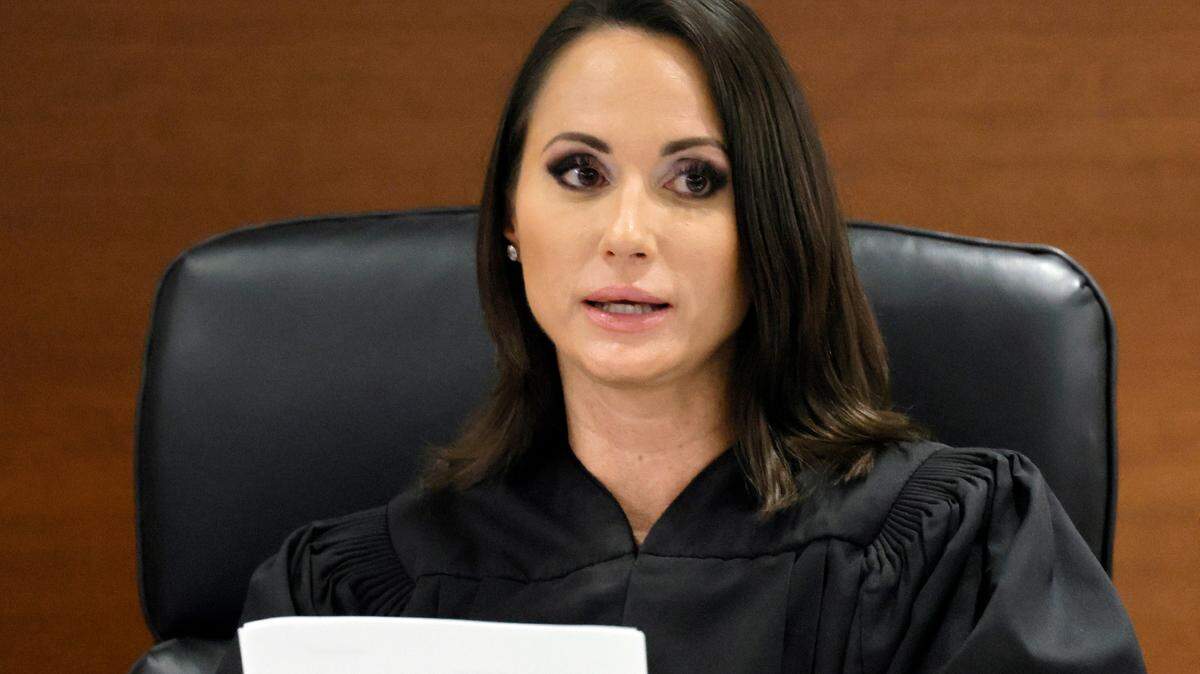
A jury’s decision to spare the Parkland school shooter from the death penalty last year caused a collective gasp. Indignation on the part of families, victims and the public was understandable. What was unexpected was seeing the judge who oversaw the case take part in it.
After sentencing the shooter to life in prison, Broward County Circuit Judge Elizabeth Scherer — still in her judicial robe — left the bench and hugged family members of victims and members of the prosecution team.
That action was unbecoming of an officer of the court who’s supposed to remain impartial and fair — no matter the gruesomeness of the acts committed by the convicted gunman. It also calls into question whether defendants going before her in the future will be assured of a fair shake.
The Florida Supreme Court unanimously ruled this week that at least one of those defendants had grounds to worry about that. The court determined that Scherer should be disqualified from an unrelated Death Row case. That’s a strong rebuke from a conservative court made up mostly by justices appointed by law-and-order Gov. Ron DeSantis.
The most recent case deals with Death Row inmate Randy Tundidor, convicted in the 2010 murder of a Nova Southeastern University professor. He was sentenced to death for breaking into the Plantation home of Joseph and Linda Morrissey. After brutally stabbing and killing Joseph Morrissey, he set the house on fire with Morrisey’s wife and son inside. They both escaped.
In 2019, Tundidor filed a motion to vacate his sentence and conviction. Scherer was the judge assigned to the case. The prosecutor working on the Tundidor case is the same one Scherer hugged at the Parkland sentencing trial. Tundidor’s defense told the Supreme Court that the judge and prosecutor had an off-the-record conversation during a hearing in Tundidor’s case. Both allegedly commiserated about the outcome of the Parkland case.
After Scherer turned down Tundidor’s motion to disqualify her from his case, his lawyers asked the Florida Supreme Court to weigh in. The issue here isn’t about Tundidor’s crime and its brutality, but about a judge’s conduct.
By displaying an apparent sympathy for prosecutors, Scherer’s actions “would create in a reasonably prudent person a well-founded fear of not receiving a fair and impartial proceeding,” the Florida Supreme Court opinion said.
Scherer is a former Broward County assistant state attorney, but that shouldn’t matter. She’s a judge now. The first three canons of Florida’s code of judicial conduct are explicit: “A Judge Shall Uphold the Integrity and Independence of the Judiciary. A Judge Shall Avoid Impropriety and the Appearance of Impropriety in all of the Judge’s Activities. A Judge Shall Perform the Duties of Judicial Office Impartially and Diligently.”
A basic tenet of America’s judicial system is that even defendants suspected, or convicted, of committing terrible crimes are entitled to due process. That’s what separates us from countries where justice is a sham and judges are nothing but pawns serving an agenda. We understand judges are human, too, but they signed up for a job that requires a certain demeanor and decorum. Our judicial system is not foolproof, but justice must be dispensed without favor — and it has to look that way, too. A perception by the public of a justice system that leans in one direction or another undermines the whole thing.
This was not the first time that Scherer came under scrutiny during the Parkland trial.
The Florida Association of Criminal Defense Lawyers wrote a letter to the 17th Judicial Circuit last year saying Scherer’s “hostility reveals a temperament ill-suited to the criminal bench,” NBC News reported. The letter was sent after Scherer publicly berated a defense team member, telling him to “go sit down.”
Public Defender Gordon Weekes had complained that Scherer allowed some Parkland families who spoke in court to personally attack his team and bring up the attorneys’ children. Defense team members were also harassed online and by phone. When Weekes asked Scherer how she would feel if threats were made against her children, she snapped and ordered him to leave the defense table.
Public defenders had no choice but to defend the shooter. They shouldn’t be the target of personal attacks.
The Parkland defense team, to be clear, hasn’t been above reproach. During the trial, Assistant Public Defender Tamara Curtis was seen flashing her middle finger to a camera crew that she didn’t want showing the defense table, prompting the now-convicted shooter to laugh. Parents of the victims were rightfully disgusted and the Florida Bar said it was investigating her last year.
These examples illustrate why there are rules for professional conduct in court. Carrying out justice is a grave responsibility. We don’t need judges, lawyers or prosecutors overshadowing that important task.
BEHIND THE STORY
MOREWhat's an editorial?
Editorials are opinion pieces that reflect the views of the Miami Herald Editorial Board, a group of opinion journalists that operates separately from the Miami Herald newsroom. Miami Herald Editorial Board members are: opinion editor Amy Driscoll and editorial writers Isadora Rangel and Mary Anna Mancuso. Read more by clicking the arrow in the upper right.
What's the difference between an op-ed and a column?
How does the Miami Herald Editorial Board decide what to write about?
The Editorial Board, made up of experienced opinion journalists, primarily addresses local and state issues that affect South Florida residents. Each board member has an area of focus, such as education, COVID or local government policy. Board members meet daily and bring up an array of topics for discussion. Once a topic is fully discussed, board members will further report the issue, interviewing stakeholders and others involved and affected, so that the board can present the most informed opinion possible. We strive to provide our community with thought leadership that advocates for policies and priorities that strengthen our communities. Our editorials promote social justice, fairness in economic, educational and social opportunities and an end to systemic racism and inequality. The Editorial Board is separate from the reporters and editors of the Miami Herald newsroom.
How can I contribute to the Miami Herald Opinion section?
The Editorial Board accepts op-ed submissions of 650-700 words from community members who want to argue a specific viewpoint or idea that is relevant to our area. You can email an op-ed submission to oped@miamiherald.com. We also accept 150-word letters to the editor from readers who want to offer their points of view on current issues. For more information on how to submit a letter, go here.
This story was originally published April 14, 2023 at 4:26 PM.