
Florida lawmakers found it easy to scream ‘stop the woke.’ But, then, they ran into reality | Opinion
It’s one thing for Gov. Ron DeSantis — and the Republicans who control the Legislature — to get on their soap boxes decrying “woke indoctrination” at state universities. It’s another to hurt Florida’s higher-education standing because someone wants to run for president.
The Florida Legislature nowadays operates as a factory that turns cultural grievances into policy that’s often vague and — as if by design — full of unforeseen consequences. Take the confusion caused by last year’s laws dealing with school books and restrictions on lessons about sexual orientation, gender identity and race. Afraid to run afoul of the new rules, some school districts pulled books from their shelves. In Miami-Dade County Public Schools, LGBTQ history month got the ax.
But, every now and then, lawmakers give us a small glimpse that they might know that culture wars are not necessarily conducive to good legislation.
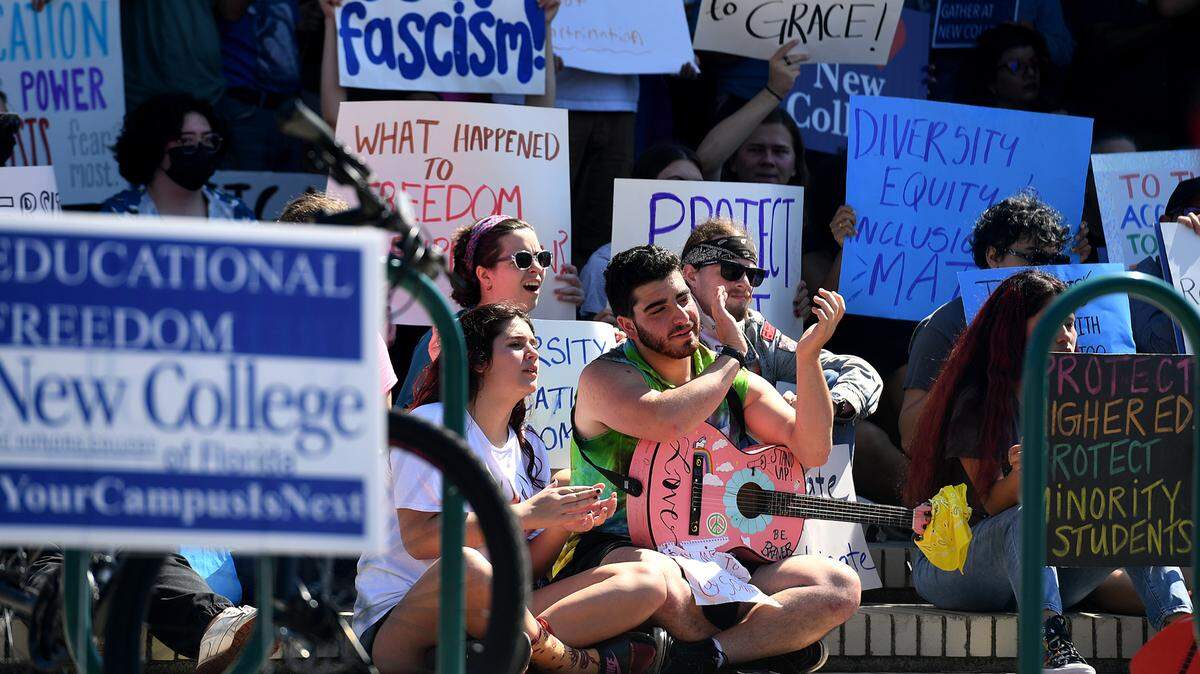
The Herald recentlly reported about the complete rewriting of a bill touted by the governor to get rid of diversity, equity and inclusion efforts — known as DEI — in higher ed. Faced with the possibility that Senate Bill 266 could threaten the accreditation of some college courses and programs, a GOP-led Senate committee on Wednesday scrubbed any references to DEI.
Bill still a bad one
We would normally call that “watering down” bad and unnecessary legislation. But, at the end of the day, SB 266 — and its House version — still exerts unprecedented control over the type of curriculum that’s allowed in classrooms and who’s entitled to academic freedom. That is the opposite of what the college experience should be: the exploration of ideas that might challenge a student’s perception of the world, sometimes causing discomfort.
The Senate legislation still would require colleges to review their programs and ensure they are complying with Florida’s mission to not teach “theories that systemic racism, sexism, oppression and privilege are inherent in the institutions of the United States and were created to maintain social, political and economic inequities.”
As opponents of the bill pointed out, the legislation creates a broad ban against those concepts, leaving lots of room for interpretation. A ban on “systemic racism” theories, for example, can touch any major, from English literature to pre-law. It muzzles academics and creates an environment where paranoia, not intellectual exploration, reigns. That’s why some professors are warning that their colleagues from out of state are thinking twice before taking a job in the Sunshine State, as WFSU recently reported.
Deans sidelined
The bill also potentially inserts politics into the hiring and firing of full-time faculty by putting those decisions under university presidents without requiring them to seek any input from others. This is an improvement from a previous bill version that left that decision to a university’s politically appointed board of trustees, but, again, it’s unnecessary. Currently, deans, department chairs and faculty committees make most hiring decisions, the Herald reported. The bill also makes it harder for faculty to appeal their firing or loss of tenure.
These changes wouldn’t be so worrisome were it not for DeSantis’ explicit mission to exert granular, ideological control over Florida’s prestigious university system.
Take the appointment of former House Speaker and DeSantis ally Richard Corcoran to run New College of Florida. The tiny liberal arts college in Sarasota went through a conservative takeover by DeSantis’ cronies, who pushed out its previous leadership. They shut down the school’s diversity and inclusion office.
Even scarier is the possibility that the power to chose faculty could rest in the hands of Central Florida state Rep. Randy Fine, known for his revenge style of politics. Fine told the Sun Sentinel he’s been approached by the governor’s office as a potential pick for president at Florida Atlantic University. Among the egregious things Fine is known for saying is that drag queen performers groom children, a term normally used to describe child molesters.
It’s easy then to see how quickly higher-education decisions can be made not for academic rigor, not by educators, but by elected officials with a political agenda. This is the kind of dangerous meddling lawmakers are inviting into our university system.
Ideological battles are better fodder for cable-TV punditry than lawmaking. It’s time they take notice.
BEHIND THE STORY
MOREWhat's an editorial?
Editorials are opinion pieces that reflect the views of the Miami Herald Editorial Board, a group of opinion journalists that operates separately from the Miami Herald newsroom. Miami Herald Editorial Board members are: opinion editor Amy Driscoll and editorial writers Isadora Rangel and Mary Anna Mancuso. Read more by clicking the arrow in the upper right.
What's the difference between an op-ed and a column?
How does the Miami Herald Editorial Board decide what to write about?
The Editorial Board, made up of experienced opinion journalists, primarily addresses local and state issues that affect South Florida residents. Each board member has an area of focus, such as education, COVID or local government policy. Board members meet daily and bring up an array of topics for discussion. Once a topic is fully discussed, board members will further report the issue, interviewing stakeholders and others involved and affected, so that the board can present the most informed opinion possible. We strive to provide our community with thought leadership that advocates for policies and priorities that strengthen our communities. Our editorials promote social justice, fairness in economic, educational and social opportunities and an end to systemic racism and inequality. The Editorial Board is separate from the reporters and editors of the Miami Herald newsroom.
How can I contribute to the Miami Herald Opinion section?
The Editorial Board accepts op-ed submissions of 650-700 words from community members who want to argue a specific viewpoint or idea that is relevant to our area. You can email an op-ed submission to oped@miamiherald.com. We also accept 150-word letters to the editor from readers who want to offer their points of view on current issues. For more information on how to submit a letter, go here.
This story was originally published April 17, 2023 at 3:21 PM.