
Florida told young men the COVID vaccine was dangerous, but failed to tell them the full story | Opinion
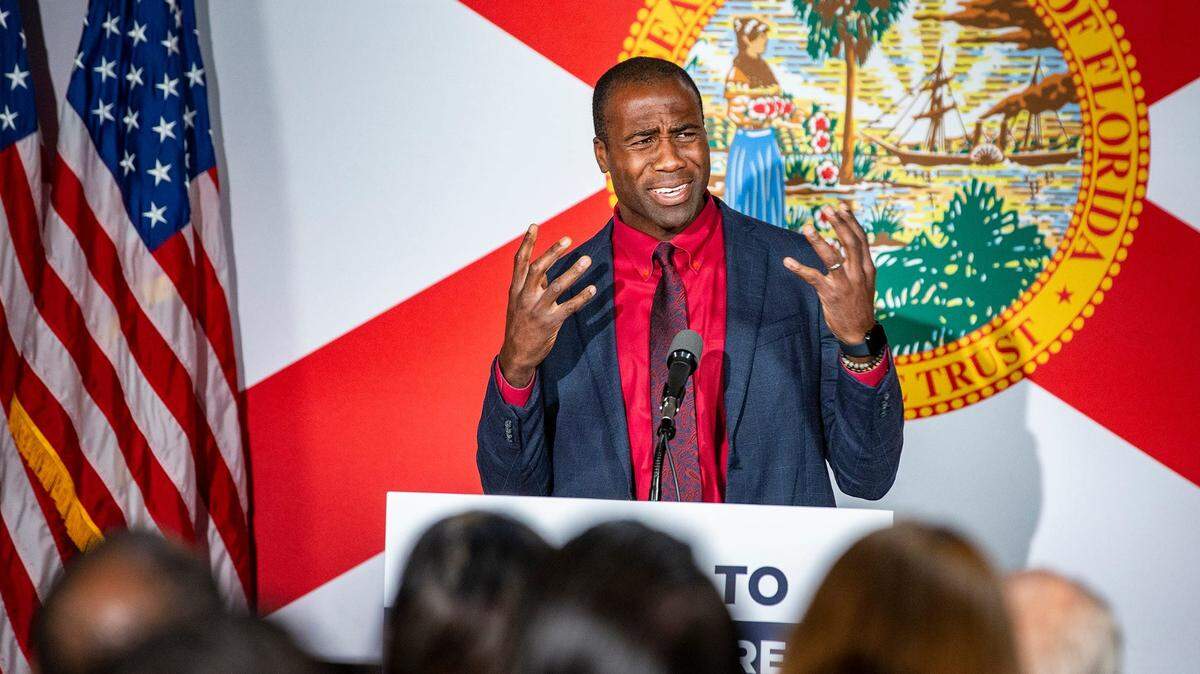
Back in October, when Florida Surgeon General Joseph Ladapo issued an ominous warning that young men shouldn’t get the COVID vaccine because it might cause heart problems, he seemed to be acting more as a politician than a doctor.
His advice ran counter to recommendations of the Centers for Disease Control and Prevention. The analysis he cited was not peer-reviewed, had no named authors and was missing key details in the methodology section.
Top epidemiologists and doctors blasted his conclusions, with the director of the Institute for Vaccine Safety at Johns Hopkins University, Daniel Salmon, telling Politico that it looked like “politics driving science. And the result is you get terrible science.”
Now more information has come to light. And it makes Ladapo and the state health department look even more irresponsible — and more political. According to draft versions of the state-produced analysis obtained by the Tampa Bay Times through Florida’s public records law, Florida had data showing that contracting COVID-19 was actually much riskier than the vaccine — about five times riskier when it came to cardiac-related deaths.
Yet, by the time the analysis made it online for Floridians to see — it was posted by the Florida Department of Health — that critically important bit of data was missing. And it was never mentioned by Ladapo.
Sketchy medical advice
Ladapo, remember, also promoted Ivermectin and hydroxychloroquine as legitimate treatments for COVID — they are not — and said last year that the state is against COVID vaccines for children. (The vaccines are considered safe and effective for children.)
Three epidemiologists who reviewed the drafts told the Tampa Bay Times that leaving the information out means the recommendation is so flawed it should be rescinded. Not massaged. Not tweaked. Rescinded.
One — Matt Hitchings, an infectious-disease epidemiologist and professor of biostatistics at the University of Florida — called it “a grave violation of research integrity.”
And yet how many young men and their parents relied on Ladapo’s guidance and made decisions that could have created far more risk for individuals than the shot?
Ladapo told the Times that his decisions are “led by the raw science — not fear.” But what about the other “raw science,” the part that said getting COVID was a lot riskier than getting the shot?
The Florida Department of Health responded to our request for more information about the data that was excluded by pointing to a Twitter thread by Ladapo. It discussed “bias in disease reporting” and said that most mild cases don’t appear in databases. In it, he said that “COVID has corrupted scientists’ ability to think clearly about epidemiology” and added that it’s “sad that people rush to defend a vaccine that has shown increased cardiovascular risk in multiple studies.”
But that still leaves us wondering: Why not simply post all the data?
The risk is mild
As we’ve said before, it is true that COVID vaccines can cause heart inflammation in young men and boys, but that’s a rare occurrence, and symptoms are typically temporary and mild. The protective effect of the vaccine is widely considered to outweigh the risks. Hundreds of millions of people have gotten the vaccines in this country alone.
We’ll never know for sure how much damage Ladapo and the state health department have done by taking this position. They hold sway over some folks — though asking your own doctor is generally the best idea when it comes to medical advice.
But we do know this: By removing critical information from the COVID risk analysis, Florida is continuing to create mistrust in the health system. That’s doing a disservice to us all — not least, Ladapo himself.
BEHIND THE STORY
MOREWhat's an editorial?
Editorials are opinion pieces that reflect the views of the Miami Herald Editorial Board, a group of opinion journalists that operates separately from the Miami Herald newsroom. Miami Herald Editorial Board members are: opinion editor Amy Driscoll and editorial writers Isadora Rangel and Mary Anna Mancuso. Read more by clicking the arrow in the upper right.
What's the difference between an op-ed and a column?
How does the Miami Herald Editorial Board decide what to write about?
The Editorial Board, made up of experienced opinion journalists, primarily addresses local and state issues that affect South Florida residents. Each board member has an area of focus, such as education, COVID or local government policy. Board members meet daily and bring up an array of topics for discussion. Once a topic is fully discussed, board members will further report the issue, interviewing stakeholders and others involved and affected, so that the board can present the most informed opinion possible. We strive to provide our community with thought leadership that advocates for policies and priorities that strengthen our communities. Our editorials promote social justice, fairness in economic, educational and social opportunities and an end to systemic racism and inequality. The Editorial Board is separate from the reporters and editors of the Miami Herald newsroom.
How can I contribute to the Miami Herald Opinion section?
The Editorial Board accepts op-ed submissions of 650-700 words from community members who want to argue a specific viewpoint or idea that is relevant to our area. You can email an op-ed submission to oped@miamiherald.com. We also accept 150-word letters to the editor from readers who want to offer their points of view on current issues. For more information on how to submit a letter, go here.