
The Newsom v. DeSantis arms race is the culture war they both need | Opinion
If fighting “woke” has elevated Florida Gov. DeSantis to potential presidential-candidate status, then fighting his fight against “woke” seems like the natural progression for another ambitious politician. That one, too, with his own rumored White House aspirations.
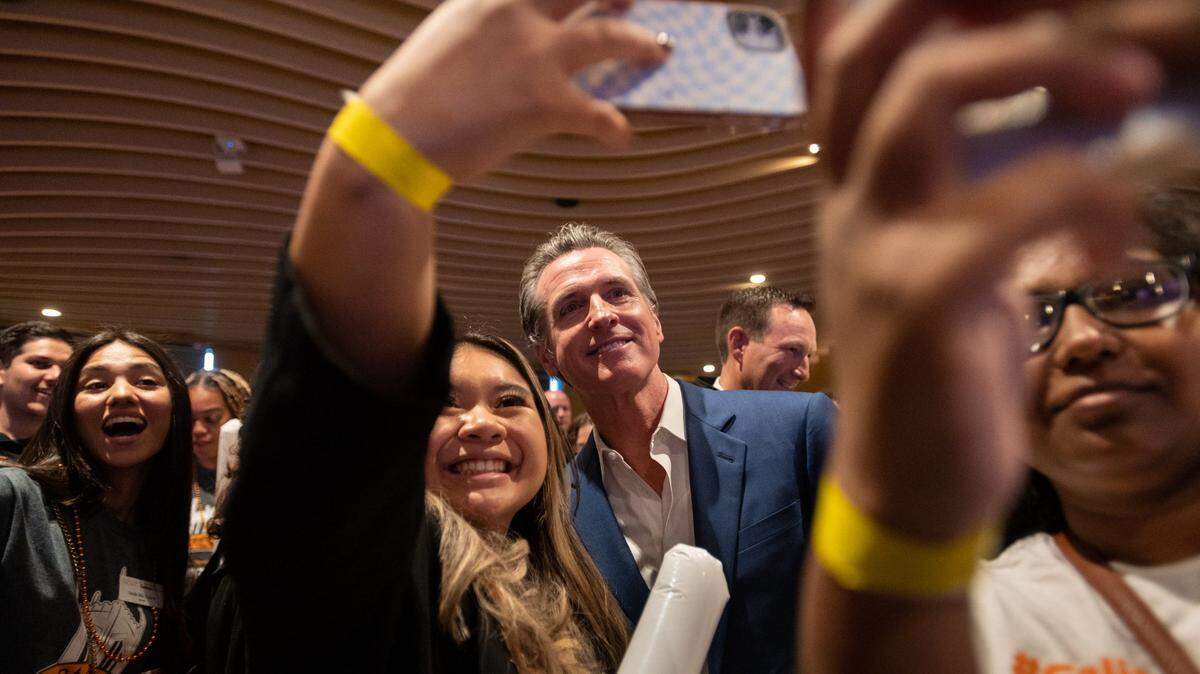
California Gov. Gavin Newsom’s is showing a growing interest in the Sunshine State. The Democrat paid a visit this week to Sarasota to speak about the reinvented New College of Florida, the small liberal-arts school that recently underwent a conservative takeover by DeSantis appointees.
The rivalry between Newsom and DeSantis has been escalating for some time. Newsom aired commercials last year urging Floridians to fight for their rights or “join us in California, where we still believe in freedom.” He also challenged DeSantis to a debate after Florida’s transport of migrants to Martha’s Vineyard and pledged support for DeSantis’ Democratic opponent in the 2022 governor’s race.
“We have plenty of challenges in [California], and I own every single one of them,” Newsom said at a Sarasota public library. “But the last guy — truly the last guy — I’m interested in the lecture from is Ron DeSantis when it comes to foundational principles that he claims to champion.”
Newsom has said he’s got “sub-zero interest” in running for president despite his tour across the South as part of his newly formed “Campaign for Democracy.” As ideologically opposed as the two governors are, Newsom is taking a page out of DeSantis’ playbook. The instructions say: Build a maverick reputation for protecting someone’s side in the country’s culture wars by stumping in someone else’s turf. The California governor has made it clear the left needs a counter-offense to the right’s attacks against abortion and LGBTQ rights.
DeSantis, who nowadays spends considerable time away from Florida, recently visited California. Naturally, he took swipes at Newsom.
“I know you guys got a lot of problems out here, but your governor is very concerned about what we’re doing in Florida, so I figured I had to come by,” DeSantis said at the Ronald Reagan Presidential Library on March 5, ABC News reported.
Nothing props up a politician like creating and fighting enemies. The red state-versus-blue-state dynamic, as divisive and toxic as it is, galvanizes voters on both sides, especially the right. The true winners in this arms race are DeSantis and Newsom, thanks to the free media and social media buzz they get. Only in a polarized environment are both parties allowed to overindulge with policies they say are meant to “protect” someone’s rights.
In Florida, DeSantis and Republican lawmakers have made it easier to ban books, limited what teachers can say in the classroom and targeted Disney in the name of parental rights and fighting “woke” corporations. In California, the same excess can be seen from the other side of the political spectrum.
Take Newsom’s order to not renew a $54 million contract with Walgreens after the company agreed to not dispense abortion-inducing pills by mail in states that have banned them. California has also banned state-sponsored travel to states with anti-LGBTQ laws, covering almost half the country, including Florida. That has forced state college sport teams to find alternate ways to pay for trips to compete in places like Arizona, the Associated Press reported.
Florida’s culture-war laws have run into judicial challenges; so have some of California’s. In 2018, the U.S. Supreme Court struck down a law that forced pro-life pregnancy centers to tell patients about the availability of state-offered abortion services. A narrow conservative court majority found the law violated those clinics’ First Amendment rights.
Potshots aside, DeSantis and Newsom have a symbiotic relationship. They need what each other represents way more than they let on.
BEHIND THE STORY
MOREWhat's an editorial?
Editorials are opinion pieces that reflect the views of the Miami Herald Editorial Board, a group of opinion journalists that operates separately from the Miami Herald newsroom. Miami Herald Editorial Board members are: opinion editor Amy Driscoll and editorial writers Isadora Rangel and Mary Anna Mancuso. Read more by clicking the arrow in the upper right.
What's the difference between an op-ed and a column?
How does the Miami Herald Editorial Board decide what to write about?
The Editorial Board, made up of experienced opinion journalists, primarily addresses local and state issues that affect South Florida residents. Each board member has an area of focus, such as education, COVID or local government policy. Board members meet daily and bring up an array of topics for discussion. Once a topic is fully discussed, board members will further report the issue, interviewing stakeholders and others involved and affected, so that the board can present the most informed opinion possible. We strive to provide our community with thought leadership that advocates for policies and priorities that strengthen our communities. Our editorials promote social justice, fairness in economic, educational and social opportunities and an end to systemic racism and inequality. The Editorial Board is separate from the reporters and editors of the Miami Herald newsroom.
How can I contribute to the Miami Herald Opinion section?
The Editorial Board accepts op-ed submissions of 650-700 words from community members who want to argue a specific viewpoint or idea that is relevant to our area. You can email an op-ed submission to oped@miamiherald.com. We also accept 150-word letters to the editor from readers who want to offer their points of view on current issues. For more information on how to submit a letter, go here.