
DeSantis’ bogus rule on rallies at Florida Capitol just another scheme to restrict free speech | Opinion
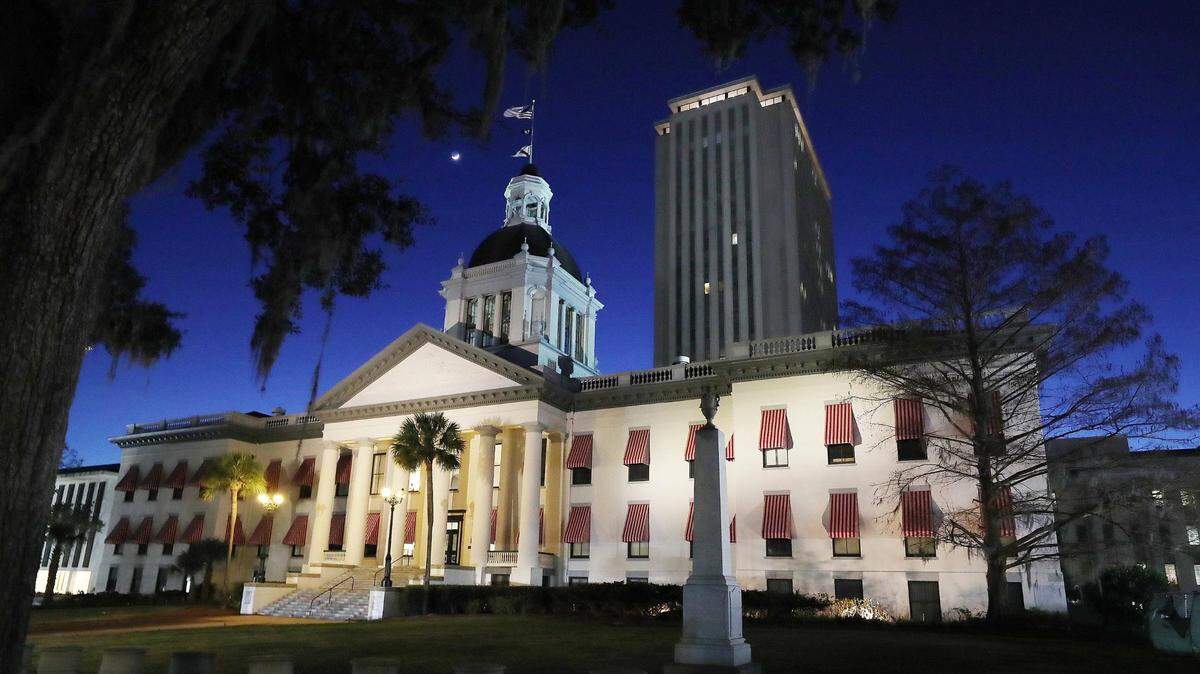
Last week, Florida’s government refused to grant permission to the League of Women Voters to hold a rally on the steps of the Old Capitol in Tallahassee, according to a ProPublica story. The group was told that, under a DeSantis administration rule, its rally needed to be sponsored by a state agency.
A thwarted rally during the legislative session may not seem like it warrants a ton of attention in the torrent of bad ideas pouring out of Tallahassee, but this is not small; it’s one more way the state is tightening its chokehold on free speech in Florida.
The league said it was denied permission by the Florida Department of Management Services under a rule that went into effect March 1 that says the use of the space must be “consistent with the Agency’s official purposes.”
In other words, if it isn’t part of Gov. Ron DeSantis’ anti-woke agenda or some other Republican cause, you need not apply.
The supposed reason is to protect public safety and make sure state workers and officials can do their jobs. Funny how, in all these years, that hasn’t been an issue. The area around the state Capitol has long been the site of all sorts of demonstrations, rallies and marches. But suddenly, that’s a problem.
Call us crazy, but could it have something to do with the perception that the league is left-leaning? Last year, a local official in Lake County, Illinois, called league members there “partisan hags” in a Facebook posting, apparently because he thought their debate formats favored Democrats. He later apologized — for the “hag” part, anyway.
In Florida, the league has taken an openly adversarial stance against the DeSantis administration in at least one instance. The group went to court to fight a 2021 voting law, with a judge striking down several provisions on grounds they were discriminatory. The state is appealing.
The change in rules for rallies — an excuse to restrict speech — isn’t happening in a vacuum. We’ve already had the effort by the Republican Legislature to stop discussion of systemic racism at universities and in workplace training, the smackdown of Disney for daring to oppose the governor’s “Don’t say gay” law on sexual orientation and gender identity instruction in schools and a bill to make it easier to sue for defamation that would have a chilling effect on public discourse.
In this latest iteration, the government is using state rules and red tape to stop dissent from being heard. What are lawmakers so afraid of?
And while the league managed to hold its event on a plaza nearby and discussed the muzzling of free speech, that’s poor consolation. Lawmakers need to be open to hearing dissent if they are truly representing the will of the people — and not just the will of one man.
BEHIND THE STORY
MOREWhat's an editorial?
Editorials are opinion pieces that reflect the views of the Miami Herald Editorial Board, a group of opinion journalists that operates separately from the Miami Herald newsroom. Miami Herald Editorial Board members are: opinion editor Amy Driscoll and editorial writers Isadora Rangel and Mary Anna Mancuso. Read more by clicking the arrow in the upper right.
What's the difference between an op-ed and a column?
How does the Miami Herald Editorial Board decide what to write about?
The Editorial Board, made up of experienced opinion journalists, primarily addresses local and state issues that affect South Florida residents. Each board member has an area of focus, such as education, COVID or local government policy. Board members meet daily and bring up an array of topics for discussion. Once a topic is fully discussed, board members will further report the issue, interviewing stakeholders and others involved and affected, so that the board can present the most informed opinion possible. We strive to provide our community with thought leadership that advocates for policies and priorities that strengthen our communities. Our editorials promote social justice, fairness in economic, educational and social opportunities and an end to systemic racism and inequality. The Editorial Board is separate from the reporters and editors of the Miami Herald newsroom.
How can I contribute to the Miami Herald Opinion section?
The Editorial Board accepts op-ed submissions of 650-700 words from community members who want to argue a specific viewpoint or idea that is relevant to our area. You can email an op-ed submission to oped@miamiherald.com. We also accept 150-word letters to the editor from readers who want to offer their points of view on current issues. For more information on how to submit a letter, go here.
This story was originally published March 22, 2023 at 12:00 AM.