
‘Parental rights’ isn’t about true education. It’s another shot fired in Florida’s culture wars | Opinion
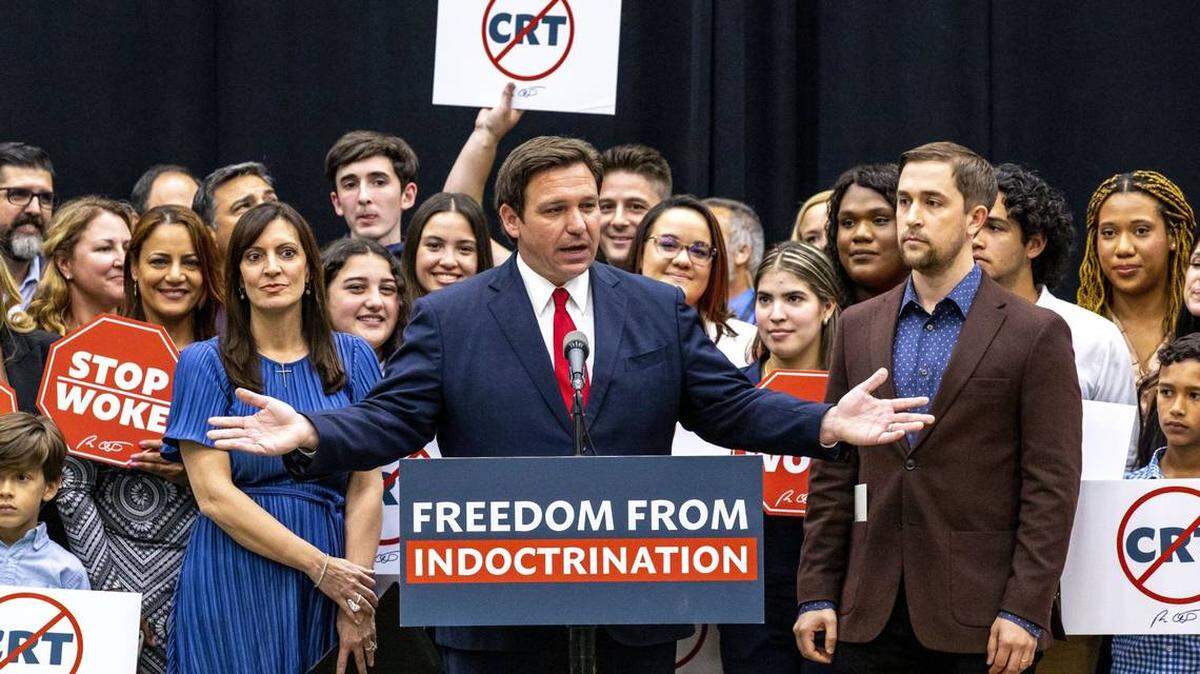
Perhaps there’s no more potent political strategy — and misnomer — than the appropriation by conservatives of the term “parental rights.”
Gov. DeSantis has announced he is targeting more than a dozen school board members in next year’s elections, including Miami-Dade County’s Luisa Santos, who’s considered liberal. The Republican vision for school boards is “pro-parent” and “pro-kids,” in the words of Republican Party of Florida Chair Christian Ziegler, the Herald reported.
Their narrative goes that to be “pro-parent” you must not want your children exposed to topics like “critical race theory,” or you only support a whitewashed version of this country’s history of racism. Being pro-kid means you don’t want them to learn that there are men who date men, women who date women and people who don’t identify with the gender assigned to them at birth. It means you want school libraries sanitized from content that might offend your sensibilities.
It means that there’s one way to look at America and education and anyone with a different opinion be damned, called names like leftist, communist, anti-American.
It’s as if only groups like Moms for Liberty represent what parents want. The group seems more preoccupied with banning books than concerned that too many kids in our schools cannot read at grade level. The leader of its Miami chapter once called the protests after the death of George Floyd at the hands of police “race wars” and repeated QAnon conspiracy theories on Instagram, Politico reported.
To be a parent, under this definition, means to be a conservative in the most extreme sense of the word. So much for the parents who want teachers to speak freely in the classroom. And what about Black parents who want their children’s life experiences to be reflected in school material and who worry their children will suffer from Florida’s attack on how educators can discuss race? They, too, have a right to recourse when their public schools fail to follow a state mandate that Black history be taught. The Herald reported this month that only 11 of Florida’s 67 school districts have developed a plan for teaching African-American studies, and that DeSantis and the Legislature have in the past rejected requests for more resources.
Very little is said about these parents in the so-called parental-rights movement. But, oh, watch out for teachers and librarians indoctrinating our children!
It’s undeniable that there are many parents who agree with DeSantis, who won reelection in November by a margin unheard of in Florida. Without a doubt, the momentum turned in favor of conservatives after parents of all political stripes became frustrated with school closures and mask mandates during the pandemic. If hindsight is 20-20, closing schools did do some damage, as evidenced by declining student achievement across the country. That has turned the assumption that school officials know best how to educate students on its head. Still, closing schools also likely saved many lives, which should count for something.
However, what should have led to a healthy debate on parental participation in education, unfortunately, has been co-opted by culture wars.
Politics 101 says that anger and frustration are the best motivators. People don’t usually organize to keep things as they are. There’s no organized movement to counter or redefine what parental rights mean. Where are the “Moms for the Truth” or “Dads for the Proper Teaching of History?”
The groups that do exist are getting overshadowed by groups like Moms for Liberty, which DeSantis and the media have propped up as the only valid version of parental dissatisfaction with public education.
DeSantis and the Republican Party aren’t hiding their agenda to transform school boards from local nonpartisan bodies into an arm of partisan politics. Opposition has all but been neutered as the Democratic Party has pretty much given up on Florida.
Without a clear opposing point of view on what parental rights means, the loudest voices will dominate. Soon, local control over K-12 will be replaced with a top-to-bottom remake of education that serves only one type of parent and one — blindered — way of thinking.
BEHIND THE STORY
MOREWhat's an editorial?
Editorials are opinion pieces that reflect the views of the Miami Herald Editorial Board, a group of opinion journalists that operates separately from the Miami Herald newsroom. Miami Herald Editorial Board members are: opinion editor Amy Driscoll and editorial writers Isadora Rangel and Mary Anna Mancuso. Read more by clicking the arrow in the upper right.
What's the difference between an op-ed and a column?
How does the Miami Herald Editorial Board decide what to write about?
The Editorial Board, made up of experienced opinion journalists, primarily addresses local and state issues that affect South Florida residents. Each board member has an area of focus, such as education, COVID or local government policy. Board members meet daily and bring up an array of topics for discussion. Once a topic is fully discussed, board members will further report the issue, interviewing stakeholders and others involved and affected, so that the board can present the most informed opinion possible. We strive to provide our community with thought leadership that advocates for policies and priorities that strengthen our communities. Our editorials promote social justice, fairness in economic, educational and social opportunities and an end to systemic racism and inequality. The Editorial Board is separate from the reporters and editors of the Miami Herald newsroom.
How can I contribute to the Miami Herald Opinion section?
The Editorial Board accepts op-ed submissions of 650-700 words from community members who want to argue a specific viewpoint or idea that is relevant to our area. You can email an op-ed submission to oped@miamiherald.com. We also accept 150-word letters to the editor from readers who want to offer their points of view on current issues. For more information on how to submit a letter, go here.
This story was originally published February 27, 2023 at 6:31 PM.