
DeSantis gets executive privilege. Floridians (and public records laws) get the shaft | Opinion
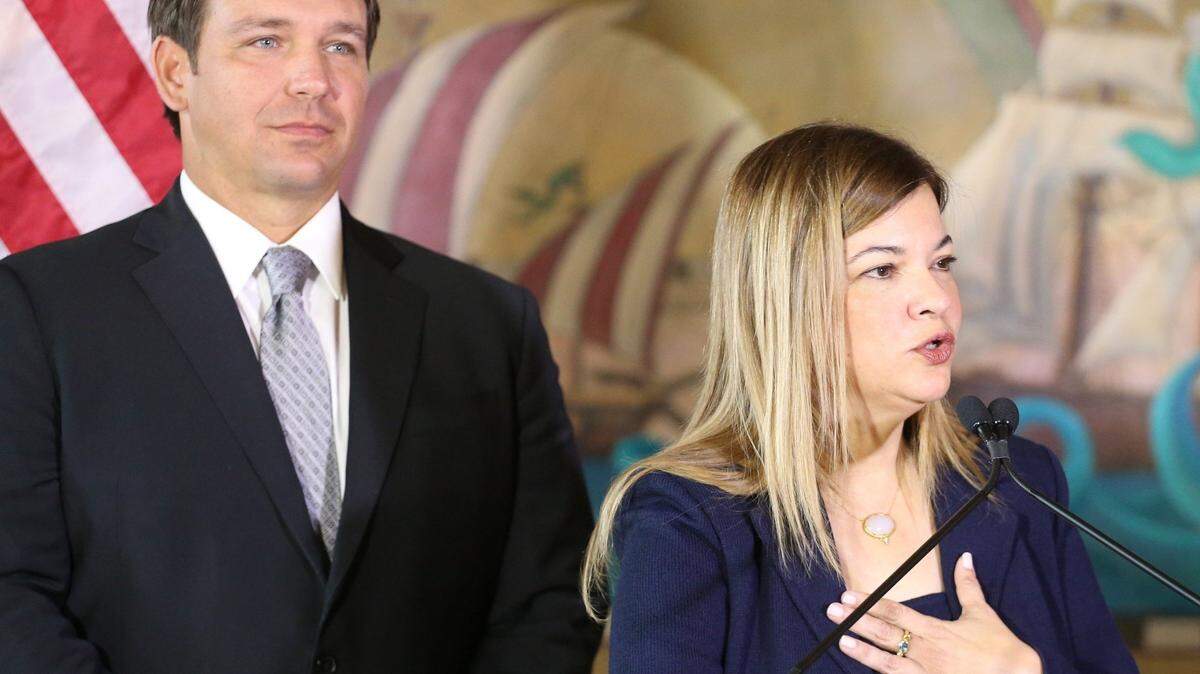
Gov. Ron DeSantis has opened yet another front in his endless war to remake Florida in his image. This time, it’s an attack on the public’s right to know and a claim of “executive privilege” that could result in a new level of unfettered power for the governor.
The latest effort to control our state goes to the heart of what government is supposed to do: Represent the people.
Governors are not kings. They cannot do whatever they like. Their work is our work. Their records are our records. We paid for them with our taxes — just like we pay for all the work that is done in Tallahassee, work done in our name and to which we should have almost complete access, except for rare situations in which the government can prove the reason for a (narrow) exception.
But now we have a ruling in a lawsuit, John Doe v. Gov. Ron DeSantis and the Executive Office of the Governor, that runs counter to all of those well-defined concepts of government-by-the-people. As the Miami Herald reported, an anonymous person filed suit last year asking for documents showing any communication between the governor’s office and “six or seven pretty big legal conservative heavyweights” that DeSantis revealed on a podcast that he’d consulted when making judicial picks for the Florida Supreme Court.
DeSantis’ legal team (which we are no doubt paying for) argued in court that he shouldn’t have to hand over the documents because such things should be kept secret. The governor needs to be able to talk to anyone and everyone in private if it helps him make good decisions for the rest of us, or so the argument went.
In other words, just trust DeSantis, voters. He knows best. Now run along outside and play.
DeSantis is claiming that he does not have to reveal the names of what may amount to a shadow Cabinet because he has executive privilege, a hazy concept even on a federal level, though many presidents have tried to assert it. Perhaps Florida’s governor has gotten confused about which job he has, amid the talk of a 2024 presidential run.
But the fact remains: No such thing was ever agreed on by voters in this state. Executive privilege is not in the state Constitution or statutes; DeSantis’ lawyers just want it to be so. They want it so badly they’ve tried it in other cases.
This time, though, the judge bought it.
Behind closed doors
In a Jan. 3 ruling, Leon County Circuit Judge Angela C. Dempsey said the governor does indeed have executive privilege and therefore John Doe — and the rest of us — aren’t entitled to see what he does behind closed doors.
How does he select judicial nominees? None of your business, you annoying voters. (We’ll be over here cashing your checks, though.)
The ruling isn’t binding on other courts. But what’s to stop DeSantis from claiming the same thing on anything else he doesn’t want to talk about? How much more information would be wrongfully kept from the public? Could we find out whom the governor consulted when he pushed the College Board to change its Advanced Placement course in African American studies? What about his process for appointing six new members to the New College board? Most likely, no and no.
If the ruling stands, it “guts the public records act at the state level,” Michael Barfield, director of public access for the Florida Center for Government Accountability, told the Editorial Board. “It would be devastating to the public’s right to know what their state government is up to.”
And while executive privilege isn’t in the Florida Constitution, public records laws are. Florida voters in 1992 amended the Constitution to include open records and open meeting laws.
Only the Legislature can make exceptions. Take a look at Article 1, Section 249(c) of the Constitution if you want to read it for yourself. The exceptions must be approved by a two-thirds vote of both houses. And any exception must overcome high hurdles including that it be a “public necessity” and narrowly tailored to fit only the specific bit of information to be kept secret.
It’s not supposed to be used just because the governor doesn’t want people to know the identities of his secret advisers.
The lawyer for John Doe is appealing. The Miami Herald is joining other media outlets in a friend of the court brief to advocate against the withholding of records.
But for DeSantis, there’s also the legislative route. Will the governor get his rubber-stamp Legislature to grant him whatever exemptions from the law that he wants? That’s certainly possible.
If that happens, and we fear it will, the Legislature will go down in history as well and truly abdicating its responsibility to serve as a check on the governor’s power. We wouldn’t blame Floridians for wondering why we even have a Legislature.
One more word on this, to the rest of the country: A governor whose actions won’t be subject to the sunshine of public scrutiny is a danger to Floridians. A president who does that would be a danger to us all.
BEHIND THE STORY
MOREWhat's an editorial?
Editorials are opinion pieces that reflect the views of the Miami Herald Editorial Board, a group of opinion journalists that operates separately from the Miami Herald newsroom. Miami Herald Editorial Board members are: opinion editor Amy Driscoll and editorial writers Isadora Rangel and Mary Anna Mancuso. Read more by clicking the arrow in the upper right.
What's the difference between an op-ed and a column?
How does the Miami Herald Editorial Board decide what to write about?
The Editorial Board, made up of experienced opinion journalists, primarily addresses local and state issues that affect South Florida residents. Each board member has an area of focus, such as education, COVID or local government policy. Board members meet daily and bring up an array of topics for discussion. Once a topic is fully discussed, board members will further report the issue, interviewing stakeholders and others involved and affected, so that the board can present the most informed opinion possible. We strive to provide our community with thought leadership that advocates for policies and priorities that strengthen our communities. Our editorials promote social justice, fairness in economic, educational and social opportunities and an end to systemic racism and inequality. The Editorial Board is separate from the reporters and editors of the Miami Herald newsroom.
How can I contribute to the Miami Herald Opinion section?
The Editorial Board accepts op-ed submissions of 650-700 words from community members who want to argue a specific viewpoint or idea that is relevant to our area. You can email an op-ed submission to oped@miamiherald.com. We also accept 150-word letters to the editor from readers who want to offer their points of view on current issues. For more information on how to submit a letter, go here.