
DeSantis is getting tough on crime, pushing what’s popular, but not necessarily right | Opinion
Gov. Ron DeSantis is behaving more and more like an early-stage presidential candidate, and on Thursday hinted he will be a tough-on-crime crusader, red meat for his troops.
The affirmation came as the governor unveiled a major crime-fighting measure he will ask lawmakers to consider this legislative session, which begins in March.
Of course, in the process, DeSantis chummed the waters again. We predict plenty of hot-button issues will be pushed as he fights for the “safety of Floridians” — and many will be hurt in the process.
Topics like the death penalty, incarceration of the poor and disadvantaged and whether a jury’s supermajority vote should be sufficient to impose the death penalty, even though the law was changed in 2013, will pepper the session.
DeSantis is also pushing measures that are difficult to push back against, like making the sexual assaults of children eligible for the death penalty; or throwing the book at those who peddle fentanyl in candy-looking form.
In short, the governor is saying criminals will find no mercy in the free state of Florida, hoping it resonates across the country.
But the sad truth is that we know all these measures will fall crushingly hard on minorities, the undocumented, the mentally ill and the drug-addicted, which is just fine with DeSantis and many of his followers.
DeSantis’ crime-fighting had an immediate impact in Miami-Dade, where judges and law enforcement officials were preparing to unveil a “no cash bail” system for the poor that would allow some low-level offenders in Miami-Dade to be freed from jail without posting a bond or seeing a judge, something more flush offenders can afford to do.
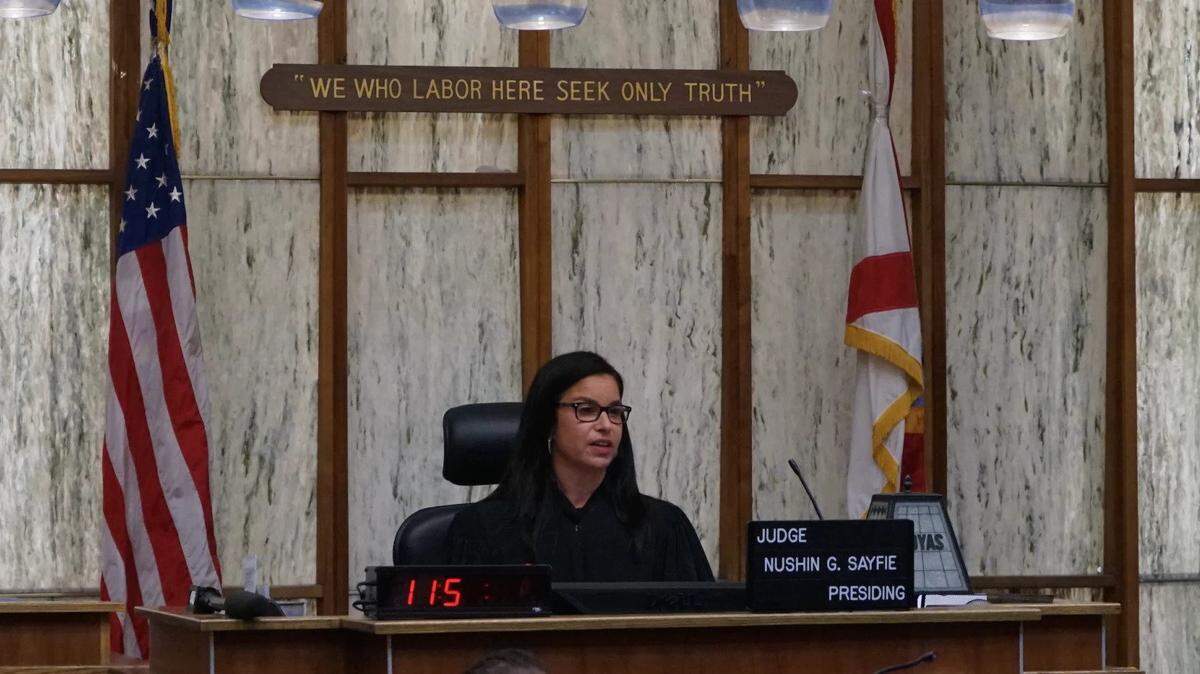
DeSantis labeled “rogue” those judges pursuing bail reform, a simplistic knee-jerk reaction. In Miami-Dade, justice system leaders announced they would delay new rules to be rolled out this year, which would make it easier for people with low incomes to leave jail while they await trial, said Chief Judge Nushin Sayfie.
“Our pretrial justice improvement project focuses on public safety, and a key element of the project is that judges should be the determinants of whether or not an individual remains in jail on serious charges,” Sayfie said in the statement.
That’s not “rogue.” Though the proposal has supporters and critics, Sayfie’s comments, at least, reflect the observations and experiences of those laboring in the trenches of the justice system.
DeSantis’ proposed laws would tighten the state rules for when judges could release someone from jail as they await trial.
Politicians like DeSantis, looking to bolster their reputations as being tough on crime, have been critical of this no-bail system, as has Miami Mayor Francis Suarez, who’s also been trying to present himself as presidential material.
At the U.S. Conference of Mayors’ winter summit on Wednesday in Washington, D.C., Suarez said it was “time to discontinue the no-cash-bail experiment,” the Miami Herald reported.
After DeSantis’ castigation, the Miami-Dade plan, crafted by the state attorney’s Office, the Miami-Dade Homeless Trust and Miami-Dade Corrections and Rehabilitation, has been put on hold, awaiting lawmakers’ response.
We suspect the Republican-led Legislature will roll over, yet again, for the governor and say No to no cash bail. End of discussion.
BEHIND THE STORY
MOREWhat's an editorial?
Editorials are opinion pieces that reflect the views of the Miami Herald Editorial Board, a group of opinion journalists that operates separately from the Miami Herald newsroom. Miami Herald Editorial Board members are: opinion editor Amy Driscoll and editorial writers Isadora Rangel and Mary Anna Mancuso. Read more by clicking the arrow in the upper right.
What's the difference between an op-ed and a column?
How does the Miami Herald Editorial Board decide what to write about?
The Editorial Board, made up of experienced opinion journalists, primarily addresses local and state issues that affect South Florida residents. Each board member has an area of focus, such as education, COVID or local government policy. Board members meet daily and bring up an array of topics for discussion. Once a topic is fully discussed, board members will further report the issue, interviewing stakeholders and others involved and affected, so that the board can present the most informed opinion possible. We strive to provide our community with thought leadership that advocates for policies and priorities that strengthen our communities. Our editorials promote social justice, fairness in economic, educational and social opportunities and an end to systemic racism and inequality. The Editorial Board is separate from the reporters and editors of the Miami Herald newsroom.
How can I contribute to the Miami Herald Opinion section?
The Editorial Board accepts op-ed submissions of 650-700 words from community members who want to argue a specific viewpoint or idea that is relevant to our area. You can email an op-ed submission to oped@miamiherald.com. We also accept 150-word letters to the editor from readers who want to offer their points of view on current issues. For more information on how to submit a letter, go here.
This story was originally published January 28, 2023 at 11:59 AM.