
Two Miami-Dade municipal mayors in hot water, accused of deceptive ways. Voters should take note | Opinion
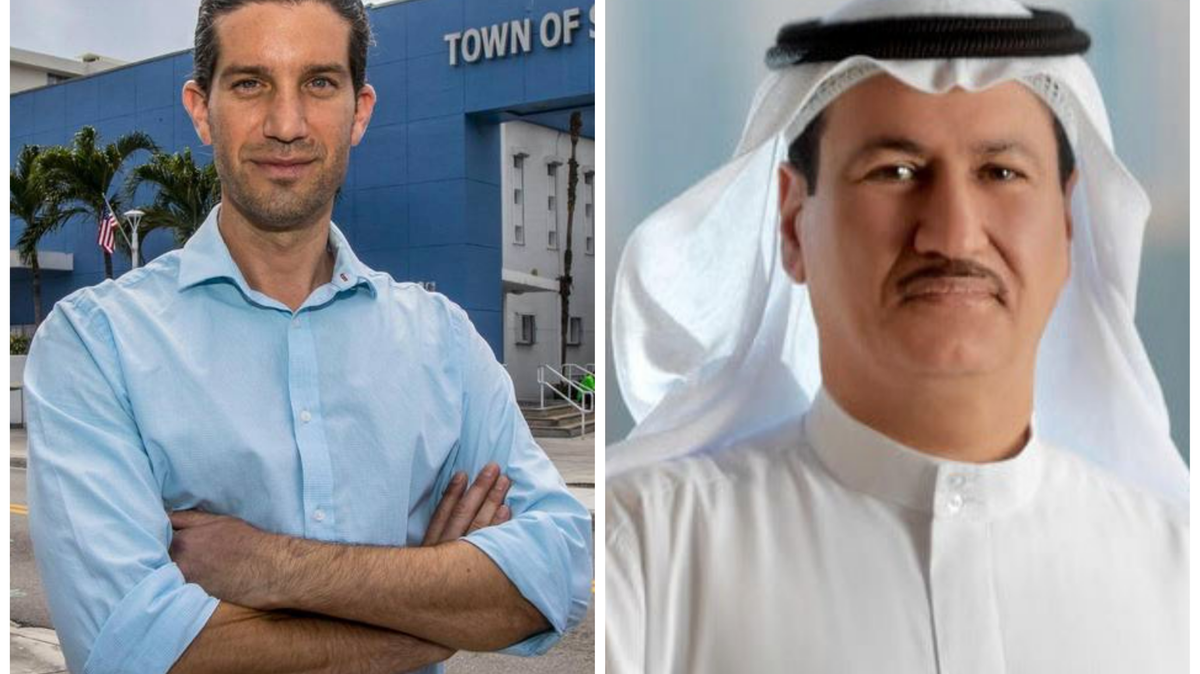
Two Miami-Dade city mayors are in hot water, and their offenses may not necessarily be crimes but are disrespectful to their constituents.
Both have gone rogue by keeping secrets from the residents they serve. Voters in North Miami Beach and Surfside should take note.
First up is Surfside Mayor Shlomo Danzinger, who is said to have not told the city or the families of the victims of the Champlain Tower South collapse that he traveled to Dubai late last year to meet with the developer hoping to bring luxury condos to the site. Once confirmed by the Miami Herald, the overseas meeting was news to many.
Danzinger said he stopped in Dubai as part of a trip to Israel to see his son. In other words, he was in the neighborhood.
Danzinger confirmed that he met in October with Emirati billionaire Hussain Sajwani to discuss the possibility of placing a memorial to the 98 collapse victims close to the site.
DAMAC Properties, the company Sajwani leads, offered Danzinger a tour of Dubai to see other buildings developed by the firm, a company spokesperson said. The mayor said he took the side trip at his own expense on his way to Israel.
“Sajwani seemed open to letting a future memorial stand partially on the former Champlain property,” Danzinger told Herald reporter Aaron Leibowitz.
Yes, a committee of victims’ family members has been calling for a memorial. But they told the Herald that Danzinger never revealed the meeting with Sajwani in Dubai. “There is zero transparency with the town mayor,” said Martin Langesfeld, a committee member whose sister, Nicole Langesfeld, and brother-in-law, Luis Sadovnic, died in the June 2021 collapse. “It is excruciating for the families to find out about secret meetings.”
Danzinger told the Herald that he, indeed, did tell committee members. Those interviewed, however, have no recollection.
Elected officials are allowed to meet with developers, so we have to ask: Why was Danzinger so cagey when Pablo Langesfeld, who also survives Nicole Langesfeld, sent him several emails asking the mayor if he had met with the developer and where? Though he eventually confirmed the meeting, he wouldn’t say the location.
We think Danzinger, elected to office following the collapse, owes city residents an explanation.
Also accused of secrecy — with a side of alleged deception — is the mayor of perennially troubled North Miami Beach.
A controversy involving Mayor Anthony DeFillipo’s residency has brought city business to a standstill.
DeFillipo denies having moved out of the city into a new home in Davie. Still, no one at City Hall seems to believe his denials after an outside law firm’s findings he no longer lives in North Miami Beach. Property records show he did purchase a $1.2 million home in Sierra Ranches. DeFillipo says he owns a two-bedroom condo in North Miami Beach, too. You can only claim homestead exemption on one residence, your legal residence.
Also, as reported by Miami Herald reporter Raisa Habersham on Saturday, DeFillipo confirmed through his attorney that he sat on the board of the Sierra Ranches Community homeowners association in the Town of Davie.
The mayor’s attorney, Michael Pizzi, also said that his client had resigned from that board, though no reason was given.
DeFillipo insists he lives in the city and calls the accusations a political attack.
Commissioners want him to resign, as required by the city charter of elected officials living outside city limits.
Last Tuesday, at the first City Commission meeting of the year, DeFillipo insisted on controlling the gavel, but several commissioners protested by skipping the meeting. City business still needs to be done, but it’s stalled. for now.
DeFillipo is now appealing to a judge to allow him to run meetings without a quorum, as required by the city. A court date is set for Jan. 31.
If DeFillipo cannot definitively prove he lives within North Miami Beach city limits, he should resign — which would really serve the people who elected him.
BEHIND THE STORY
MOREWhat's an editorial?
Editorials are opinion pieces that reflect the views of the Miami Herald Editorial Board, a group of opinion journalists that operates separately from the Miami Herald newsroom. Miami Herald Editorial Board members are: opinion editor Amy Driscoll and editorial writers Isadora Rangel and Mary Anna Mancuso. Read more by clicking the arrow in the upper right.
What's the difference between an op-ed and a column?
How does the Miami Herald Editorial Board decide what to write about?
The Editorial Board, made up of experienced opinion journalists, primarily addresses local and state issues that affect South Florida residents. Each board member has an area of focus, such as education, COVID or local government policy. Board members meet daily and bring up an array of topics for discussion. Once a topic is fully discussed, board members will further report the issue, interviewing stakeholders and others involved and affected, so that the board can present the most informed opinion possible. We strive to provide our community with thought leadership that advocates for policies and priorities that strengthen our communities. Our editorials promote social justice, fairness in economic, educational and social opportunities and an end to systemic racism and inequality. The Editorial Board is separate from the reporters and editors of the Miami Herald newsroom.
How can I contribute to the Miami Herald Opinion section?
The Editorial Board accepts op-ed submissions of 650-700 words from community members who want to argue a specific viewpoint or idea that is relevant to our area. You can email an op-ed submission to oped@miamiherald.com. We also accept 150-word letters to the editor from readers who want to offer their points of view on current issues. For more information on how to submit a letter, go here.
This story was originally published January 21, 2023 at 5:53 PM.