
If you play in Biscayne Bay, thank Miami-Dade’s Harvey Ruvin | Opinion
Harvey Ruvin was there long before the rest of us.
Long before “sea-level rise” and “climate-change” were household words in South Florida; long before pumps and elevated streets; long before we became aware of sunny-day flooding and king tides.
Most in this community knew Ruvin, who died on Dec. 31 at age 85, as the clerk of the county courts or, if one lived here long enough, a Miami-Dade county commissioner. For 30 years, his was the name associated with — among other things — traffic tickets or a summons for jury duty.
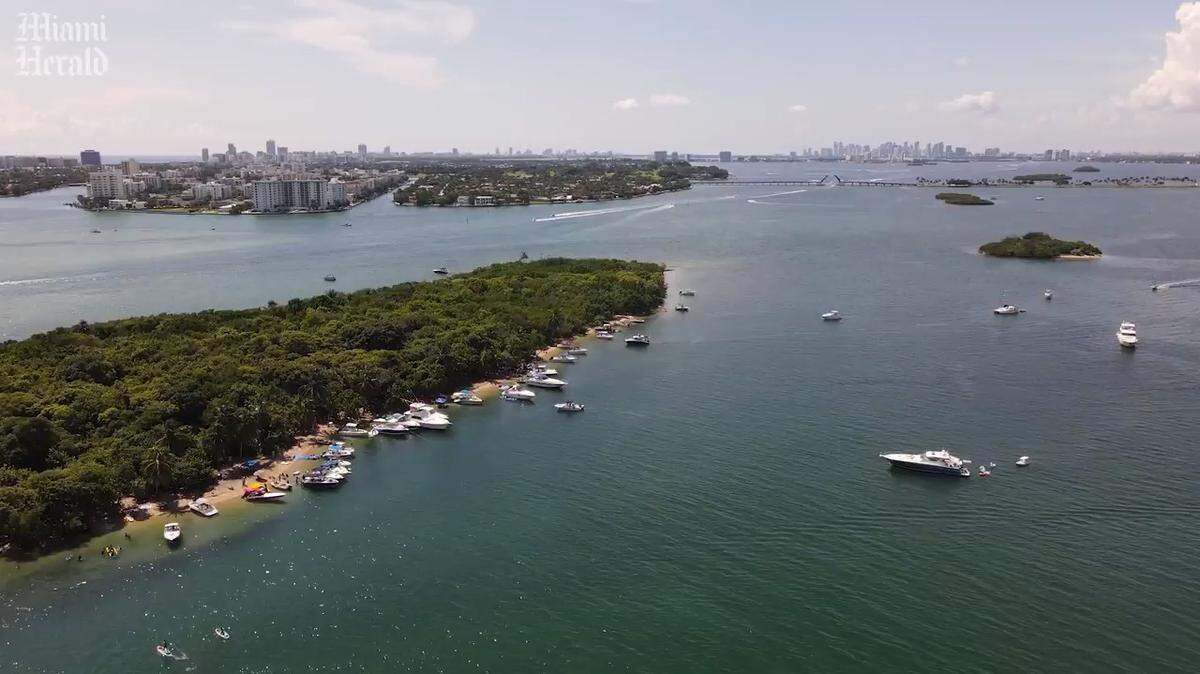
But his name and his vision are also indelibly stamped on South Florida’s efforts to not only hold back the rising tide, but also to ensure that Biscayne Bay, long under pressure — still is — be a clean, sparkling body of water that can sustain marine life, provide recreation and help drive the local economy.
“He was the first person I heard the words ‘sea-level rise’ from, back when I was serving on the Miami River Commission — and “climate change” and “greenhouse gas emissions,” Irela Bagué told the Editorial Board.
Bagué, a Miami businesswoman, is a long-time advocate for good stewardship of water resources, having also served on the South Florida Water Management District. She now is Miami-Dade’s first chief bay officer.
She and Ruvin were kindred spirits. “He was just one of those visionaries, but always kept it positive, he was not one of those doom-and-gloom people.”
As a county commissioner, Ruvin was the driving force behind the creation of the 1981 Biscayne Bay Management Plan, which laid out a series of recommendations to keep the bay healthy, pristine. Doing so remains a challenge. Unfortunately, fish kills that have fouled the bay during the past few years and distressing seagrass die-off speak volumes of how much remains to be done.
Decades later, while clerk of the courts, his commitment to the environment and sustainability had not wavered. He worked closely with Rebeca Sosa, then chair of the County Commission, on task forces concerned with Biscayne Bay and sea-level rise and served on the Climate Change Advisory Task Force. Keep in mind, he had a day job.
He cast his concern across the region, too, playing an instrumental role in the creation in 2009 of the South Florida Climate Compact, a collaboration between Miami-Dade, Broward, Palm Beach and Monroe counties. He wrote in a 2018 Miami Herald op-ed that the compact is “essential to harness solutions on the scale of the regional challenge.”
To honor this quintessential public servant, environmental stewardship is a challenge that we all should rise to meet.
BEHIND THE STORY
MOREWhat's an editorial?
Editorials are opinion pieces that reflect the views of the Miami Herald Editorial Board, a group of opinion journalists that operates separately from the Miami Herald newsroom. Miami Herald Editorial Board members are: opinion editor Amy Driscoll and editorial writers Isadora Rangel and Mary Anna Mancuso. Read more by clicking the arrow in the upper right.
What's the difference between an op-ed and a column?
How does the Miami Herald Editorial Board decide what to write about?
The Editorial Board, made up of experienced opinion journalists, primarily addresses local and state issues that affect South Florida residents. Each board member has an area of focus, such as education, COVID or local government policy. Board members meet daily and bring up an array of topics for discussion. Once a topic is fully discussed, board members will further report the issue, interviewing stakeholders and others involved and affected, so that the board can present the most informed opinion possible. We strive to provide our community with thought leadership that advocates for policies and priorities that strengthen our communities. Our editorials promote social justice, fairness in economic, educational and social opportunities and an end to systemic racism and inequality. The Editorial Board is separate from the reporters and editors of the Miami Herald newsroom.
How can I contribute to the Miami Herald Opinion section?
The Editorial Board accepts op-ed submissions of 650-700 words from community members who want to argue a specific viewpoint or idea that is relevant to our area. You can email an op-ed submission to oped@miamiherald.com. We also accept 150-word letters to the editor from readers who want to offer their points of view on current issues. For more information on how to submit a letter, go here.
This story was originally published January 6, 2023 at 4:00 AM.