
South Florida Haitians achieving American Dream, despite 50 years of fighting to be truly welcome here | Opinion
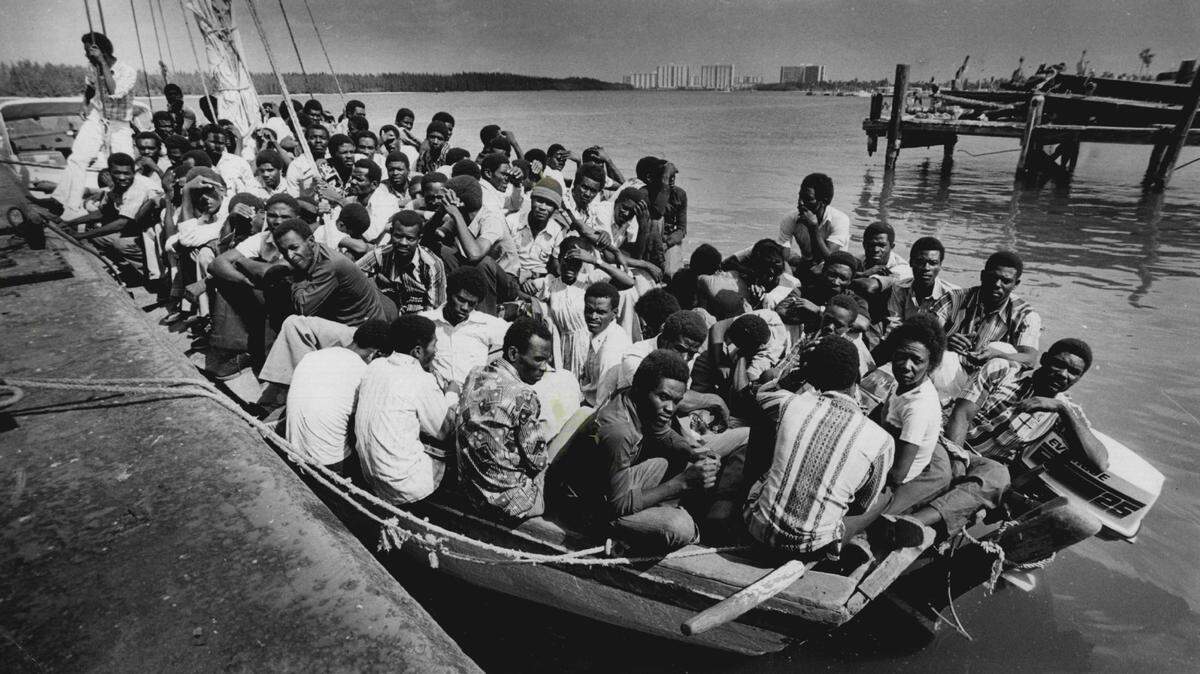
Fifty years ago this week, on Dec. 12, 1972, the first documented boat full of Haitian refugees came ashore in Pompano Beach.
Today it seems, sadly, commonplace. Back then, the sight was a shock for South Floridians.
It was the first time local residents had to consider how horrible life must have been in Haiti. We were used to seeing Cuban refugees float 90 miles to Miami, a relative breeze compared to the more than 800 miles between Haiti and Florida; how horrible conditions in Haiti must have been to make people risk their lives to cross an ocean, with some pit stops, for as long as three weeks, aboard what the Miami Herald and other media came to call “overloaded rickety wooden sailboats.”
Unfortunately, some of those overloaded sailboats still ply the treacherous waters, the lives lost unknown.
As bad, in terms of their immigration status, little has changed for asylum-seeking Haitians in South Florida. Their treatment by the U.S. government has always been harsh compared to that of Cuban refugees, whose departure and arrival in the United States was cushioned by the Cuban Adjustment Act of 1966 and, later, by the wet foot/dry foot policy.
Haitians have long had to badger a reluctant government to extend their Temporary Protected Status, meted out in miserly bits by Republican and Democratic administrations alike.
Granted TPS again
Just last week, Haitians were given another extension by the Biden administration. It was the correct thing to do. And the Herald reported on Wednesday that what the administration has given with one hand, it might take back with the other. It’s considering placing limits on the number of Haitians, Cubans and Nicaraguans who can claim asylum at the U.S.-Mexico border, while providing other parole programs for them.
But wait. This editorial is not a rehashing of the trials Haitians have unfairly faced here. Rather, it’s a statement of praise and admiration. The Haitian story in South Florida is one of facing adversity and overcoming it with hope, and persevering for a better life in a new country. Haitians have done that, and few here have fought harder for the right to pursue the American Dream.
Through political upheaval in their country, dictatorships and gangs, disease and poverty, floods and a killer earthquake, Haitians have too often been greeted with South Florida’s unwelcome mat. And despite it all, they have persevered.
Their resilience can be seen in the number of Haitian Americans who currently hold elected office in Miami-Dade, for instance; lead professional organizations; and have made a name for themselves in the fields of education, medicine, business and the law, as Miami Herald Caribbean Correspondent Jacqueline Charles pointed out this week in an article marking the 50th anniversary of that first voyage to Pompano Beach.
New U.S. attorney
Fittingly, last week, the first Haitian American ever appointed U.S. attorney for the Southern District of Florida was announced.
On Dec. 6, Markenzy Lapointe was confirmed by the U.S. Senate, making him the first Haitian-American attorney to serve in the region’s most powerful law enforcement post.
Lapointe, a former U.S. Marine and ex-federal prosecutor, was raised in Haiti and Miami. He was nominated by President Biden and will oversee about 250 prosecutors in a district extending from Key West to Fort Pierce.
It’s a sign that Haitian Americans, the children of those early arrivals, have made their mark and their voices heard in South Florida’s power circles.
“Those who have been allowed to stay in the U.S. have made tremendous strides during the past 50 years,” said Marleine Bastien, a community and immigration activist. Last month, she became the second Haitian American and first woman of Haitian descent elected to the Miami-Dade Commission.
Still, five decades later, unbelievably, Haitians are still taking to the sea only to be detained and deported — if they arrive alive.
They are not fleeing the brutal Duvalier regime anymore, as they did in 1972; they are leaving because of gang violence, kidnappings, fuel and food shortages and political turmoil, all made worse by last year’s assassination of Haitian President Jovenel Moïse.
But Haitians will survive this, too. In South Florida, we all have been witnesses to their strength and resiliency.
This story was originally published December 15, 2022 at 4:00 AM.