
Republicans swore ‘Don’t Say Gay’ isn’t anti-gay, Now they’re going after school LGBTQ protections | Opinion
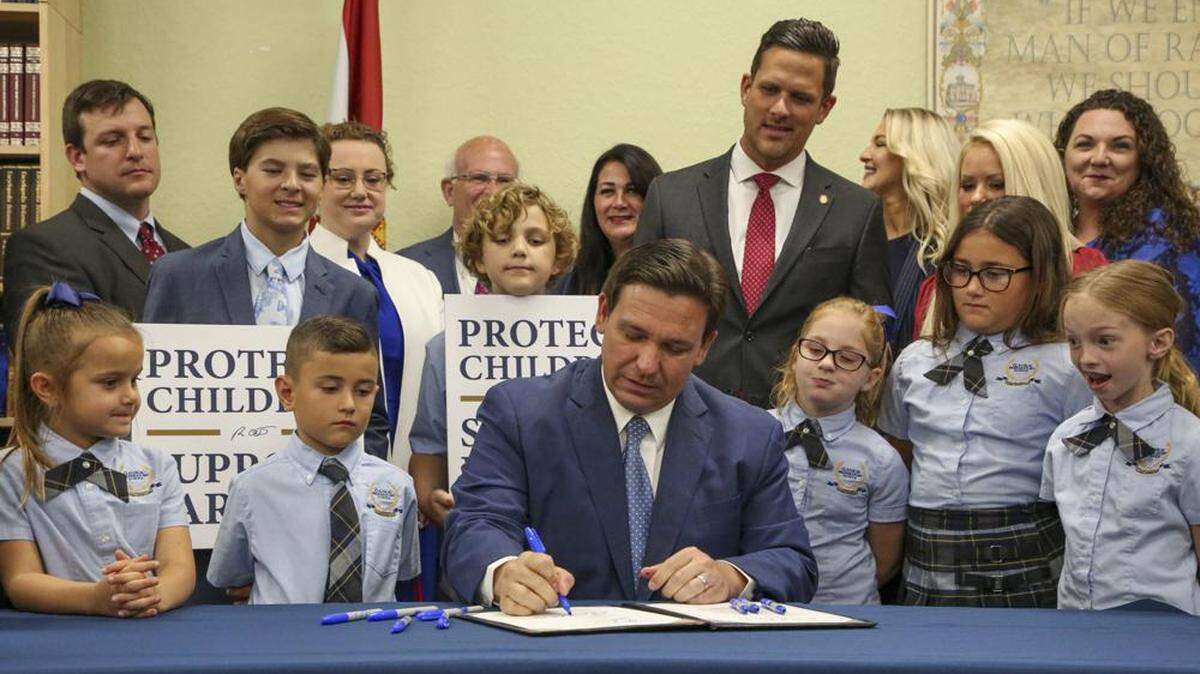
When Republican lawmakers were pushing Florida’s new “parental rights” law this year, they feigned indignation when critics labeled it “Don’t Say Gay.” They boasted the word “gay” wasn’t even in the legislation. They acted as if critics were hysterical for worrying schools would be forced to out LGBTQ students to their parents and dismantle polices that protect transgender kids.
Indeed, the word “gay” wasn’t mentioned in the “Parental Rights in Education” bill. The trick, it seems, is that it was purposely vaguely worded to avoid any accusations of homophobia. Even after Gov. Ron DeSantis signed the law, Miami-Dade County Public Schools officials had no idea what it would mean for them.
Now that the state has come back to the district to ask it to conform to the new law, it’s crystal clear what Republicans wanted to achieve. In a letter to the district, the Florida Department of Education, which answers to DeSantis, listed a number of school policies that might fall out of compliance with the new statute or rules created by state regulators. They center on the district’s “Guidance to Support Transgender and Gender Expansive Students.”
In state’s sights
Among the guidelines in question are recommendations that school staff use a student’s preferred pronoun and make accommodations for transgender students who want to use a restroom or locker room in accordance with their gender identity (that may include allowing them to change in a private area or use a staff or single-use bathroom ). Also illegal now might be respecting a student’s decision on when and how to come out.
Florida’s State Board of Education will meet next week to scrutinize whether Miami-Dade and nine other school districts — including Broward and Palm Beach — are carrying out the law properly, the Herald reported.
READ MORE: Miami-Dade, Broward schools under scrutiny by state over LGBTQ, racial equity policies
The policies being challenged in those other districts also aim to protect LGBTQ students. The state puts them in question in the name of the rights of parents. But what parents exactly are protected? Certainly not those who want their children to attend schools that are inclusive, or the parents of gay or transgender kids who want them to feel welcomed and protected. The state also doesn’t seem to care for the opinion of Black parents who are a mere afterthought in another “parental rights” law that limits how teachers can discuss race and racism. The “anti-woke” measure forces them to avoid topics like systemic racism, which DeSantis and conservatives dismiss as a leftist fantasy, but that indeed is a reality in America.
School districts have taken it upon themselves to wipe out any vestige of their past support for minority students. The Miami-Dade County School Board, for example, voted not to observe LGBTQ history month this year out of fear it could run afoul of the “Don’t Say Gay” law. Other districts have started banning books dealing with race and LGBTQ issues that some parents — some — call offensive and explicit.
Purposely vague
“Don’t Say Gay” is a hodgepodge of vague and bad lawmaking that will be used as a vehicle — or excuse — to deny gay and, especially, trans children the right to exist in peace.
The law bans instruction on sexual orientation and gender identity in K-3 or in a manner that’s not “age appropriate or developmentally appropriate,” according to state standards. It also requires districts notify parents “if there’s a change in the student’s services or monitoring related to the student’s mental, emotional or physical health.” LGBTQ advocates flagged that latter provision from the get-go as forcing schools to out students to their parents before they’re ready. Turns out they weren’t crazy.
The result is that many teens no longer will feel comfortable to come out to a teacher or school employee they trust, or to ask for restroom accommodations out of fear of being denied, bullied or becoming the subject of a parental complaint. The law seems like a vain attempt at stopping kids from being gay or trans — and based on the misconception that schools have any influence over someone’s gender identity or sexual orientation. Just like you can’t beat or pray the gay out of someone, you can’t legislate it, either.
BEHIND THE STORY
MOREWhat's an editorial?
Editorials are opinion pieces that reflect the views of the Miami Herald Editorial Board, a group of opinion journalists that operates separately from the Miami Herald newsroom. Miami Herald Editorial Board members are: opinion editor Amy Driscoll and editorial writers Isadora Rangel and Mary Anna Mancuso. Read more by clicking the arrow in the upper right.
What's the difference between an op-ed and a column?
How does the Miami Herald Editorial Board decide what to write about?
The Editorial Board, made up of experienced opinion journalists, primarily addresses local and state issues that affect South Florida residents. Each board member has an area of focus, such as education, COVID or local government policy. Board members meet daily and bring up an array of topics for discussion. Once a topic is fully discussed, board members will further report the issue, interviewing stakeholders and others involved and affected, so that the board can present the most informed opinion possible. We strive to provide our community with thought leadership that advocates for policies and priorities that strengthen our communities. Our editorials promote social justice, fairness in economic, educational and social opportunities and an end to systemic racism and inequality. The Editorial Board is separate from the reporters and editors of the Miami Herald newsroom.
How can I contribute to the Miami Herald Opinion section?
The Editorial Board accepts op-ed submissions of 650-700 words from community members who want to argue a specific viewpoint or idea that is relevant to our area. You can email an op-ed submission to oped@miamiherald.com. We also accept 150-word letters to the editor from readers who want to offer their points of view on current issues. For more information on how to submit a letter, go here.
This story was originally published December 9, 2022 at 6:20 PM.