
Mayor’s veto was right: Miami’s growth can’t come at the expense of the Everglades, flood risk | Editorial
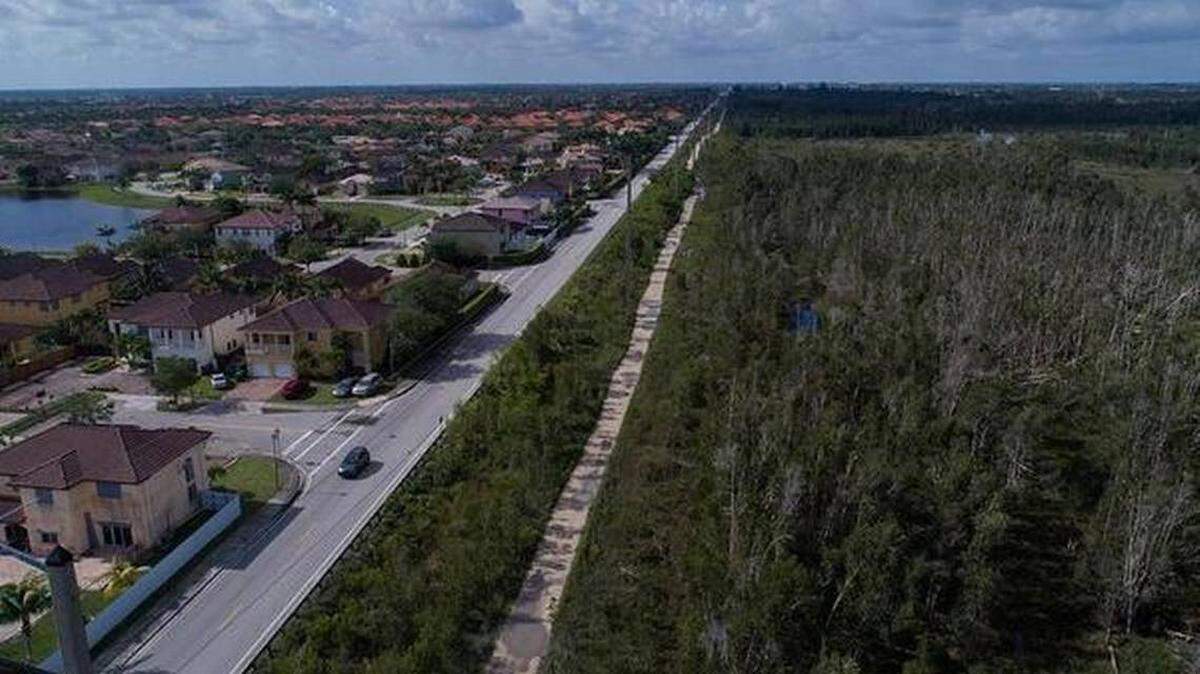
County commissioners last week decided, for the first time in nine years, to allow development past the boundary line that separates Miami-Dade County’s suburbs from agricultural land and the Everglades.
On Thursday, Miami-Dade County Mayor Daniella Levine Cava vetoed their decision, forcing a new vote on the issue and, with it, another chance for a discussion that this community sorely needs.
The commission may override her veto — although if just one ‘No” vote flips, there’s no override — but it was still the right thing to do. Going past the Urban Development Boundary, or UDB, for even this one project is the kind of decision that may seem small, but it will have long-lasting consequences, particularly for Everglades restoration and because the area is prone to flooding. Florida was built on bad development decisions — draining the Everglades springs to mind — and we don’t need any more.
BEHIND THE STORY
MOREWhat's an editorial?
Editorials are opinion pieces that reflect the views of the Miami Herald Editorial Board, a group of opinion journalists that operates separately from the Miami Herald newsroom. Miami Herald Editorial Board members are: opinion editor Amy Driscoll and editorial writers Isadora Rangel and Mary Anna Mancuso. Read more by clicking the arrow in the upper right.
What's the difference between an op-ed and a column?
How does the Miami Herald Editorial Board decide what to write about?
The Editorial Board, made up of experienced opinion journalists, primarily addresses local and state issues that affect South Florida residents. Each board member has an area of focus, such as education, COVID or local government policy. Board members meet daily and bring up an array of topics for discussion. Once a topic is fully discussed, board members will further report the issue, interviewing stakeholders and others involved and affected, so that the board can present the most informed opinion possible. We strive to provide our community with thought leadership that advocates for policies and priorities that strengthen our communities. Our editorials promote social justice, fairness in economic, educational and social opportunities and an end to systemic racism and inequality. The Editorial Board is separate from the reporters and editors of the Miami Herald newsroom.
How can I contribute to the Miami Herald Opinion section?
The Editorial Board accepts op-ed submissions of 650-700 words from community members who want to argue a specific viewpoint or idea that is relevant to our area. You can email an op-ed submission to oped@miamiherald.com. We also accept 150-word letters to the editor from readers who want to offer their points of view on current issues. For more information on how to submit a letter, go here.
Not a good idea
Miami-Dade shouldn’t be encouraging development on that land for both reasons — flooding and the Everglades — which Levine Cava cited in her decision. Her planning staff recommended against it on grounds that enough industrial space already exists within the UDB to accommodate economic growth. Levine Cava also brought up the horrific floods caused by Hurricane Ian on Florida’s West Coast. The proposed development sits in a low-lying area about three miles west of Biscayne Bay that’s vulnerable to severe flooding during a hurricane.
She was far from alone in her opposition. Environmental groups, farming advocates, environmental regulators and U.S. Sen. Marco Rubio were similarly opposed, based on the potential for the project — the South Dade Logistics and Technology District, a nearly 400-acre complex of warehouses, call centers and other businesses — to interfere with Everglades restoration. That’s a pretty broad coalition of interests uniting against this change.
The Editorial Board has long advocated to keep the line in place. Growth cannot come at the price of the Everglades — at least, more than it already has in so much of South Florida. A federal group planning the next phase of wetlands restoration is considering this particular area for projects. Flooding also is getting worse, and Florida must take that into account.
Opening the floodgates
We also know that once one developer crosses the UDB line, it opens the door for many to follow.
Or as Commissioner Danielle Cohen Higgins, in whose district this project falls, put it, the approval amounts to “eviscerating” the line. “We are sending the message to every developer in the county: Come on down,” she said.
Developers already have tried for years to chip away at the boundary line, citing jobs and growth in South Dade even as commissioners held the line. This particular project failed to secure enough votes from the commission three other times — in May, September and October. Each time, the developers continued to revise it. They finally won the 8-4 approval after cutting the size of the project to about half of the original 800 acres and agreeing to give the county about two acres of environmentally sensitive land for every acre approved for new construction. The land would go into Miami-Dade’s Environmentally Endangered Land program.
Commissioners Cohen Higgins, René Garcia, Sally Heyman and Eileen Higgins voted No. Commissioner Raquel Regalado changed her position and voted for the project after the developers agreed to the land donation, saying she’d rather have the new land for preservation than kill a project on grounds the site might someday be needed for Everglades restoration work.
There are pressures to build and to create jobs. We get that. But move the line this once, and it’ll set off a deluge of development requests. And the line that was supposed to keep development in check? It will be nothing but a dim memory.
This story was originally published November 10, 2022 at 5:49 PM.